BoG rate cut to ease borrowing costs — Stanbic CEO
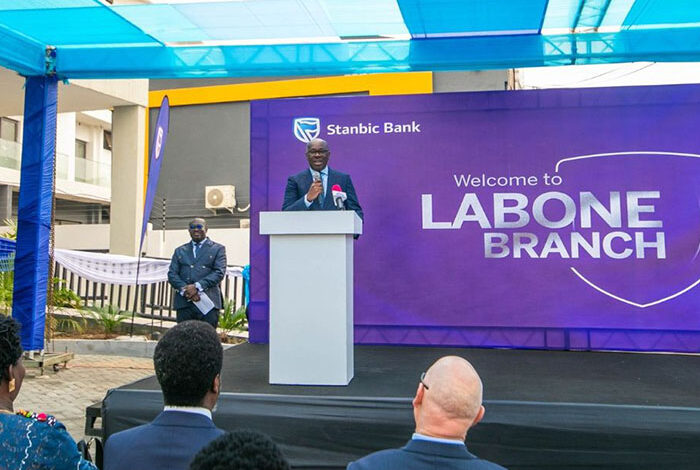
Consumers and businesses may soon benefit from lower borrowing costs following the Bank of Ghana’s decision to reduce its benchmark policy rate to 25 percent.
The move, according to Kwamina Asomaning, Chief Executive of Stanbic Bank Ghana and President of the Ghana Association of Banks, is expected to ease interest rates across the financial sector.
Speaking at the official opening of Stanbic Bank’s new branch in Labone, Accra, Mr. Asomaning expressed optimism about the trajectory of Ghana’s macroeconomic indicators, citing declining inflation and improved monetary conditions.
“Inflation has come down. Inflation is now at 13 percent. You recall a year ago, we were in the 20s… it has come down to 13 percent. We expect that the policy rate will fall even further.
“For consumers, what to expect is lower interest rates. Lower interest rates are good not only for consumers but for banks alike. The burden on Ghanaian consumers from high interest rates has been severe. It has primarily been due to the high inflation rate that we have experienced, and so we are thankful that those inflation rates have come down, and we are seeing interest rates coming down,” he explained.
Mr. Asomaning noted that bank lending rates have responded positively to the macroeconomic improvements. “
We can make the point that bank interest rates have even moved down quicker than the policy rate, and consumers should begin to enjoy some relief very soon,” he stated.
The central bank’s policy rate acts as a signal for commercial lending rates in the country. A reduction in this rate generally leads to cheaper credit for businesses and households, helping to stimulate economic activity.
Stanbic Bank’s Labone branch launch comes at a time when banks are repositioning to enhance customer engagement through both digital and physical touchpoints.
According to Mr. Asomaning, while digital banking continues to expand, physical branches still play a critical role in deepening client relationships.
“There still is a place for physical branches, and so we look at the physical and digital as complementing each other. We don’t expect branches to go out of fashion completely,” he remarked, underscoring the importance of in-person financial service delivery, especially for SMEs and affluent clients.
As part of its broader branch strategy, the bank aims to integrate customer service with tailored financial products to meet the evolving needs of its clients. Margaret Obimpeh, Head of Affluent Banking at Stanbic Bank Ghana, revealed that the Labone branch would be instrumental in executing a renewed SME-focused agenda.
“Even though we are not the newest bank in this enclave… a lot of our competitors are already there, we have a well-defined strategy to storm the market,” she noted.
Ms. Obimpeh explained that Stanbic Bank intends to roll out targeted support initiatives for SMEs, which form a critical part of the bank’s retail portfolio. The aim is to both attract and retain clients through differentiated offerings and superior service delivery.
With inflation easing and interest rates expected to continue their downward trend, banks such as Stanbic are positioning themselves to support the anticipated economic recovery. The financial sector remains a critical player in delivering credit and enabling private sector-led growth.