BoG warns against dollarisation
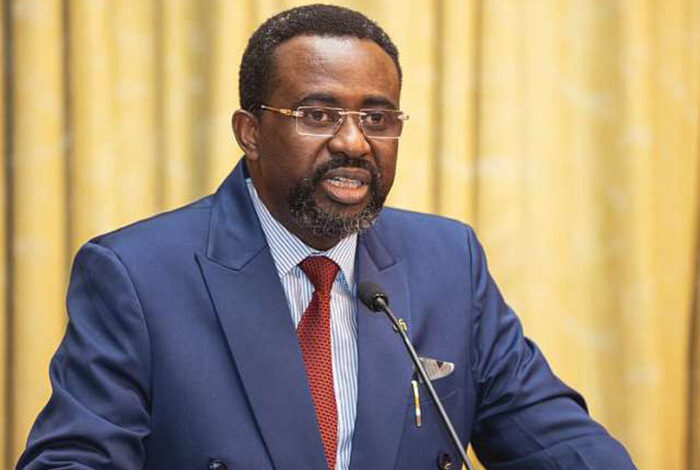
The Governor of the Bank of Ghana, Dr. Johnson Pandit Asiama, has expressed deep concern over the persistent dollarisation of the Ghanaian economy despite recent signs of stability in the local currency.
Speaking at the Graphic Business/Stanbic breakfast meeting in Accra under the theme “Sustaining forex gains: Business and economic impact,” Dr. Asiama urged businesses to conduct transactions in Ghanaian Cedis within the country’s borders.
“We are still grappling with a deep-rooted culture of dollarisation. Many businesses continue to price goods and services in dollars—in sectors like real estate, education, and luxury retail—even though transactions occur entirely within Ghana,” he said. “This practice violates legal tender laws and erodes confidence in the Cedi.”
The Governor also highlighted the worrying trend of limited reinvestment of foreign exchange earnings into the domestic economy.
“While export receipts have increased, a significant portion of these earnings is held offshore or not directed back into productive activities at home,” Dr. Asiama noted.
He identified Ghana’s heavy reliance on commodity exports—gold, cocoa, and oil—as a key challenge to economic transformation, given the volatility of global prices.
“Gold prices, which have bolstered our export earnings, currently sit above US$3,200 per ounce due to geopolitical tensions such as the Iran-Israel conflict. Although this is beneficial now, any price correction could quickly reduce our trade surplus,” he warned.
Dr. Asiama acknowledged the delicate balance the central bank must maintain in managing the currency. Excessive appreciation of the Cedi could hurt export competitiveness and slow industrial recovery.
“The Bank of Ghana is carefully managing forex strength without tightening liquidity too much, as that could restrict private sector credit and hamper the government’s growth agenda,” he explained.
He stressed that merely stabilizing the Cedi is not enough. Success depends on converting forex gains into broad-based economic transformation that empowers businesses, creates jobs, and builds productive capacity.
“Let’s base our outlooks on data—not hearsay or rumors. What does the data say?” he urged.
To support these goals, the Bank of Ghana is rolling out hedging programs and the e-Cedi to integrate retail payments. A regulatory framework is also being developed to bring cryptocurrency exchanges and digital asset platforms under formal oversight.
Dr. Asiama further revealed that weekly economic policy coordination meetings and enhanced exchange rate monitoring are underway to guide responsive decision-making.
He called on small and medium-sized enterprises (SMEs) and the informal sector to increase savings and invest locally to strengthen the economy.
Dr. Adu Anane-Antwi, Board Chairman of the Securities and Exchange Commission (SEC), also advocated for policies encouraging the conversion of foreign currency into Cedis to stabilize the forex market, citing successful examples from South Africa, Kenya, Ethiopia, and South Korea.