Afreximbank predicts slow growth for Ghana in 2025
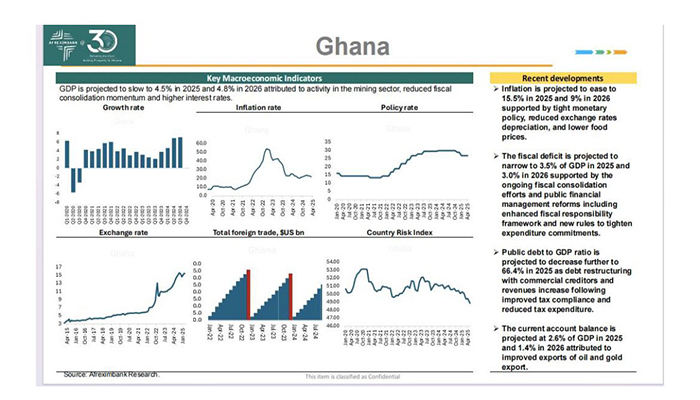
The country’s economy is projected to expand at a slower pace in 2025, with GDP growth expected to decelerate to 4.5 percent before marginally increasing to 4.8 percent in 2026, according to a new macroeconomic outlook by Afreximbank Research.
The report attributes the slowdown to reduced momentum in fiscal consolidation, high interest rates, and subdued activity in the mining sector.
However, despite the expected moderation in growth, the broader macroeconomic picture suggests a steady recovery driven by improved inflation control, fiscal reforms, and a strengthening external position.
Inflation, which has been a key concern in recent years, is forecast to average 15.5 percent in 2025 before declining to single digits 9 percent by 2026. This decline is anticipated to result from a combination of tighter monetary policy, exchange rate stability, and softening food prices. Ghana’s current inflation rate stands at 13.7 percent, according to the latest report by the Ghana Statistical Service.
The fiscal outlook also appears more positive. Ghana’s fiscal deficit is projected to narrow to 3.5 percent of GDP in 2025 and further to 3.0 percent in 2026. These improvements are expected to stem from ongoing public financial management reforms, including enhanced fiscal responsibility frameworks, expenditure controls, and improved revenue mobilization.
On the debt front, Ghana’s public debt to GDP ratio is forecast to fall to 66.4 percent by 2025. Afreximbank attributes this to progress made in debt restructuring negotiations with commercial and multilateral creditors, as well as efforts to reduce tax expenditures and boost tax compliance.
The report also highlights a modest improvement in Ghana’s external position. The country’s current account balance is projected to reach a surplus of 2.6 percent of GDP in 2025, before easing slightly to 1.4 percent in 2026. This performance will be driven by increased exports of oil and gold, Ghana’s two main export commodities.
Meanwhile, the country’s total foreign trade volumes, measured in US dollars, continue to grow steadily, reflecting resilience in external trade despite ongoing global economic challenges.
The monetary policy stance remains tight, with the Bank of Ghana maintaining a high policy rate to curb inflation and support the local currency. Although the Ghana cedi continues to face depreciation pressures, the rate of depreciation has slowed in recent months, pointing to some level of exchange rate stabilization.
Afreximbank notes that while the outlook presents a mixed picture, the foundations for recovery are being laid.
“Sustaining momentum in fiscal reforms and ensuring macroeconomic stability will be key to restoring investor confidence and unlocking Ghana’s long term growth potential,” the report stated.