

Ghana’s comeback: data, debt, and discipline
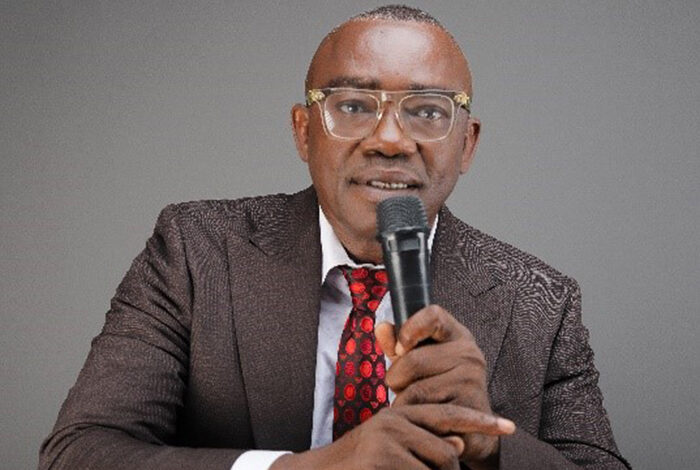
By Surv. Prof. Forster Sarpong
A Nation at the Crossroads of Recovery
In the first half of 2025, Ghana stands at a pivotal juncture. With a new administration navigating the turbulent economic tides left behind by its predecessor, the call for a national reset echoes across government chambers, private boardrooms, and bustling markets. The theme “Ghana’s Comeback: Data, Debt, and Discipline” is not a slogan it’s a necessary doctrine. The path to Ghana’s economic revival lies not only in borrowing or taxation but in confronting uncomfortable truths about fiscal recklessness, data opacity, structural inefficiencies, and institutional indiscipline that have derailed the country’s potential.
1. The Inheritance: A Mountain of Debt and a Trust Deficit
At the end of 2023, Ghana’s public debt stood at GH₵658.6 billion, representing 66.4% of GDP, according to the Ministry of Finance. The previous Nana Akufo-Addo/Dr. Bawumia administration faced significant headwinds: COVID-19, global commodity shocks, and domestic overspending. However, critics argue that despite these external shocks, internal mismanagement exacerbated Ghana’s economic vulnerability.
By 2022, inflation peaked at 54.1%, while the cedi depreciated by over 30% against the US dollar one of the worst performances globally. The domestic debt exchange programme launched in December 2022, though fiscally necessary, eroded investor confidence and strained pension funds and banks.
The result? A fragile economy marked by fiscal deficits, reduced investor trust, weakened public institutions, and elevated unemployment (hovering around 13.5% in 2023).
2. The Current Administration: Steps Towards Stabilisation
Six months into office, the John Dramani Mahama-led administration has taken bold, if painful, steps to restore macroeconomic stability. The government’s strategy hinges on three pillars:
- Data Transparency:
The Ministry of Finance now publishes real-time fiscal data dashboards online, offering stakeholders access to expenditure breakdowns, revenue collection trends, and debt service ratios. This open-data initiative, launched in April 2025, seeks to rebuild public trust and invite scrutiny.
- Debt Management:
Ghana’s renegotiation of its bilateral and multilateral obligations under the IMF-supported Extended Credit Facility (ECF) programme has shown modest results. As of June 2025, the country secured an additional $1.5 billion in concessional loans from the World Bank and AfDB, earmarked for agriculture, infrastructure, and health.
- Fiscal Discipline:
The introduction of the Public Financial Discipline Act (PFDA) in May 2025 imposes penalties on ministers and public officers who breach budget ceilings. In a recent case, the Ministry of Roads had its Q3 budget suspended for unauthorised expenditure, marking a shift toward real accountability.
5. Comparing Performances: Akufo-Addo/Bawumia vs Mahama 2025
Indicator Akufo-Addo/Bawumia (2020–2024) Mahama (2025, 6 months)
Public Debt to GDP Rose from 62.3% to 76.6% Reduced to 66.4% (due to restructuring and IMF program)
Inflation Rate Peaked at 54.1% (2022) Down to 22.3% (June 2025)
Currency Depreciation -30% in 2022 +7% appreciation in Q2 2025
Fiscal Deficit Averaged 10–12% Targeted at 6.8% (IMF)
GDP Growth 0.4% (2020), 5.4% (2021), 3.2% (2023) Projected at 4.8% for 2025
(IC Research, June 2025)
While the Akufo-Addo government invested significantly in infrastructure (e.g., roads, Free SHS), critics argue that many initiatives lacked fiscal backing, bloated public payrolls, and worsened arrears to contractors and suppliers. Conversely, Mahama’s comeback has focused less on grand projects and more on stabilization a return to basics.
6. What Must Be Done Differently: Resetting for the Future
To pivot from recovery to sustainable growth, Ghana must undertake a disciplined, data-led reset. The following strategic actions are urgent:
a) Institutionalise Data-Driven Governance
- Digitise all government payment systems, including procurement, to cut leakages.
- Establish an independent Fiscal Data Verification Authority under Parliament to audit economic figures.
b) Redesign the Tax Framework
- Shift from over-reliance on VAT and import duties to wealth, digital, and property taxes.
- Encourage informal sector inclusion through digitisation incentives and tax credits.
c) Restructure the Public Sector
- Freeze new recruitments in non-critical areas.
- Automate services and encourage performance-based promotions and budget allocations.
d) Reprioritise Public Investment
- Divert funds from prestige projects to agriculture, SMEs, and energy.
- Create a Public Investment Fund insulated from political interference.
e) Support the Private Sector and Citizens
- Reduce base lending rates (currently 29.5%) by easing the Ghana Reference Rate (GRR) mechanism.
- Create a Credit Guarantee Scheme for youth- and women-led businesses.
- Institutionalise a Citizens Economic Health Tracker to monitor income, employment, and household debt trends.
7. Financial Implications: The Cost of Inaction
According to the IMF 2024 Article IV Report on Ghana, every 1% delay in fiscal consolidation leads to a GH₵1.8 billion interest burden. Without a credible comeback plan, Ghana risks entering a debt spiral by 2027, as external amortisation obligations increase from $2.5 billion (2025) to $3.8 billion (2027).
In contrast, a disciplined, data-led approach could:
- Save GH₵12 billion annually in expenditure leakages (World Bank, 2023).
- Attract $4 billion in FDI by 2026 through improved credit ratings and investor confidence.
- Reduce poverty by 6 percentage points (from 23.4% to 17.4%) by 2028.
Building the Republic of Accountability
Ghana’s comeback is possible but not without data integrity, debt realism, and institutional discipline. The difference between the recent past and the potential future lies in doing fewer things better, and doing them transparently.
The citizenry must demand results, not rhetoric. Government must show frugality, not fanfare. And businesses must be empowered not burdened to innovate and employ. Only then can Ghana write a new chapter in its economic history: one where growth is not just a number, but a lived reality.
The comeback is not automatic. It is earned. And it begins with discipline.



