Stakeholders seek public backing for Ghana’s nuclear energy future
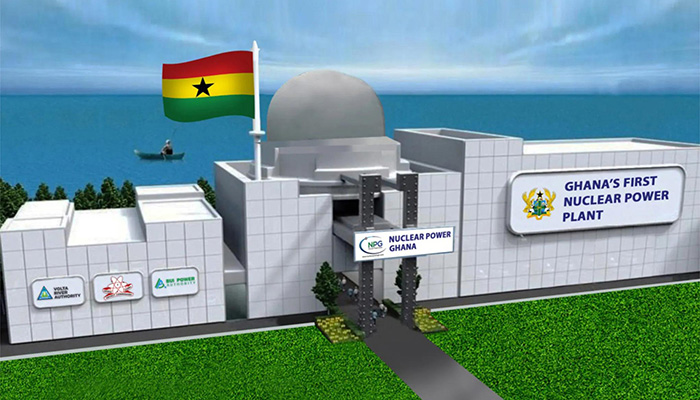
Stakeholders in Ghana’s energy sector have renewed calls for public backing of the country’s Nuclear Power Programme, describing it as a transformative solution for long-term energy security, industrialization, and economic growth.
The appeal was made during a high-level stakeholder engagement held in Accra on Tuesday, aimed at reviewing the draft bill to establish Nuclear Power Ghana Limited.
The bill, when passed, will provide the legal framework for developing, constructing, operating, and maintaining Ghana’s first commercial nuclear power plant.
The session brought together key actors, including government officials, civil society organizations (CSOs), industry experts, and members of the media. The goal was to solicit input to refine the bill and ensure it meets the highest standards for governance, safety, and implementation.
A Longstanding National Vision
Ghana’s ambitions in nuclear energy date back to the early 1960s under President Kwame Nkrumah. In 1961, he launched the Kwabenya Nuclear Reactor Project and established the Ghana Atomic Energy Committee, which became the Ghana Atomic Energy Commission (GAEC) in 1963. However, progress was stalled following the 1966 coup.
In 1994, Ghana commissioned its first research reactor, Ghana Research Reactor-1 (GHARR-1), primarily for research and training. The country’s renewed push for nuclear power followed the 2007 energy crisis, leading to the formation of the Ghana Nuclear Power Programme Organization (GNPPO) in 2012 and the passage of legislation in 2015 to establish the Nuclear Regulatory Authority (NRA).
In 2018, Nuclear Power Ghana (NPG) was officially registered as the entity responsible for overseeing Ghana’s first commercial nuclear plant. By 2024, five international vendors from countries including the United States, China, France, South Korea, and Russia had submitted bids to construct a NuScale Small Modular Reactor. Ghana has signed agreements with both China and the US, with plans to commission its first plant by 2034.
Focus of the Draft Bill
The current bill under review seeks to establish the Ghana Nuclear Power Corporation. Its mandate will include managing all aspects of nuclear power development, from planning and construction to decommissioning. It will also oversee safety, radiation management, waste storage, and operational compliance.
Speaking at the forum, Ing. William Amuna, chairman of the Stakeholder Engagement and former CEO of GRIDCo, emphasized the critical role of nuclear power in strengthening Ghana’s energy mix.
“Nuclear power is stable and reliable relative to crude. It is cleaner since it reduces carbon emissions and is environmentally friendly,” he stated.
While acknowledging the high initial capital investment, Ing. Amuna maintained that nuclear power offers long-term economic benefits, including cheaper energy and enhanced investor confidence.
Wider Stakeholder Support
Deputy Minister for Energy and Green Transition Richard Gyan Mensah endorsed the program, noting that his prior skepticism about nuclear safety was overturned during his recent visit to the United Kingdom.
“My experience in the UK, where a nuclear power plant is sited within a community without any safety concerns, ‘converted’ me. A significant number of the safety issues associated with nuclear energy are myths,” he said.
Chief Executive Officer of the National Petroleum Authority (NPA), Godwin Edudzi Tamakloe, also expressed optimism, stating: “I look forward to the day Ghana generates electricity from nuclear for commercial and industrial use.”
He added that nuclear-generated electricity would reduce reliance on imported petroleum products, thereby easing pressure on the cedi and insulating the economy from external shocks.
Concerns Over Governance and Financing
While stakeholders broadly supported the bill, several concerns were raised. Chief among them was the issue of political appointments. Sections of the bill allow the President to appoint the board, CEO, and senior management of the Corporation, which some believe could lead to politicization and the selection of unqualified individuals.
Other issues included transparency in fund management—particularly regarding decommissioning and waste management—and the need for a clear financing strategy for the nuclear program. Safety and compliance with international nuclear standards were also highlighted.
The drafting committee assured participants that all feedback would be carefully considered in finalizing the bill.