Wall Street stocks rise despite Middle East tensions; oil prices drop
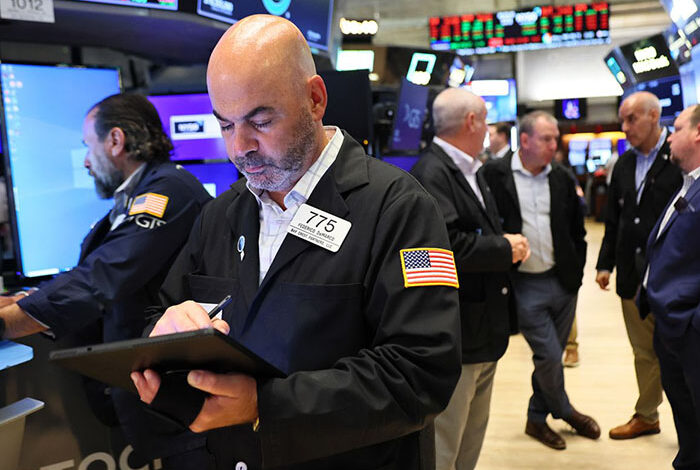
Global equities edged higher Monday, brushing off escalating Middle East tensions and U.S. airstrikes on Iranian targets, as investors appeared increasingly immune to geopolitical shockwaves.
Oil prices retreated from multi-month highs despite threats to global supply routes.
On Wall Street, all three major indexes closed in the green. The Dow Jones Industrial Average rose 0.17 percent to 42,279.55, the S&P 500 gained 0.48 percent to finish at 5,996.40, and the Nasdaq Composite climbed 0.61 percent to 19,565.74. Gains were broad-based, with 9 of 11 S&P 500 sectors advancing, though energy stocks lagged, mirroring crude’s pullback.
Oil prices slid as Brent crude settled down 0.83 percent at USD76.37 per barrel, and U.S. West Texas Intermediate (WTI) dropped 0.88 percent to USD73.14. Both benchmarks had earlier touched five-month highs — USD81.40 for Brent and USD78.40 for WTI — amid fears of supply disruptions following U.S. support for Israeli airstrikes in Iran.
The situation intensified Monday after Israel bombed Tehran’s Evin Prison and several Revolutionary Guard facilities. In response, Iran’s parliament voted to close the Strait of Hormuz, a critical chokepoint through which nearly 25 percent of global oil trade and 20 percent of liquefied natural gas flows.
Despite the threat, markets remained calm.
“The market being higher signals a risk-on sentiment, which is somewhat surprising considering the volatility over the weekend. Headline events seem to have less sway since the onset of the trade tariffs — what some call ‘Liberation Day’ — which redefined market risk,” said Andrew Wells, CIO at SanJac Alpha
In Europe, the Stoxx 600 index edged down 0.2 percent, while Asia-Pacific shares outside Japan fell 0.66 percent. Still, the MSCI All-Country World Index rose 0.28 percent, reflecting broad global resilience.
In currency markets, the dollar was mixed. It rose 0.41 percent to 146.68 yen, fell 0.39 percent to 0.814 Swiss francs, and gained modestly against the euro, which rebounded 0.09 percent to USD1.1532 following comments from Federal Reserve Vice Chair Michelle Bowman. Bowman signaled that rate cuts could arrive soon, citing concerns about labor market softness and downplaying inflation risks from recent import tariffs.
The dollar index, which tracks the greenback against six major currencies, fell 0.19 percent.
In commodities, gold slipped slightly, with spot prices up 0.56 percent at USD3,387.00 per ounce, and U.S. gold futures settling 0.5 percent higher at USD3,385.10 — reflecting some lingering safe-haven interest amid geopolitical uncertainty.