

Gov’t to supply only made-in-Ghana pads to schools
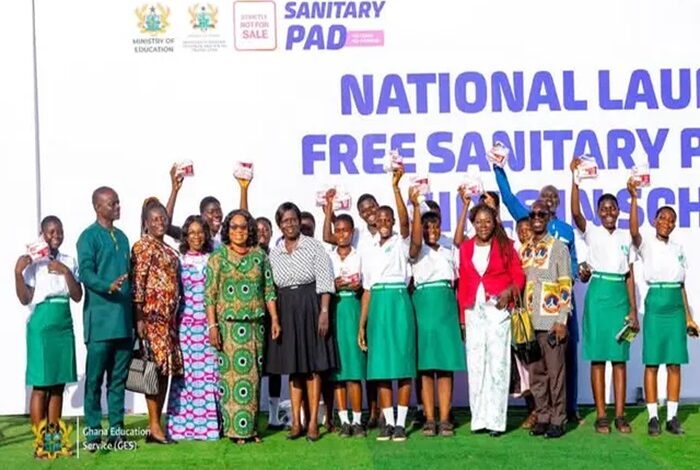
The Minister for Education, Haruna Iddrisu, has reaffirmed that no sanitary pads will be procured from outside Ghana under the government’s National School Support Initiative, stressing a firm commitment to local production as a means to drive economic development and ensure consistent access for schoolgirls.
Speaking at a press briefing at the Presidency, the Minister said the directive, issued by President John Dramani Mahama, mandates that all sanitary pads supplied to schoolgirls under the program be sourced exclusively from local manufacturers.
This policy, he explained, forms part of the government’s broader effort to boost local industry, create jobs, and reduce import dependency.
“Let me make it clear that no sanitary pads will be imported. The President has been very clear on this. Every pad supplied under this program must be produced here in Ghana,” Mr. Iddrisu stated.
The Education Minister noted that this strategic decision is not only about meeting the hygiene needs of girls in school but also about strengthening the domestic manufacturing sector, which he described as vital to long-term national development.
“We are looking at a holistic approach, one that addresses menstrual hygiene challenges for our girls, while also stimulating local production and empowering small and medium enterprises involved in the manufacture of sanitary products,” he added.
The Education Minister emphasized that local producers have the capacity to meet demand if adequately supported and promised government collaboration with relevant agencies to ensure quality assurance and supply consistency.
The initiative is expected to create hundreds of direct and indirect jobs across the supply chain, from raw material sourcing and manufacturing to packaging and distribution.
Industry analysts say the move could provide a significant boost to Ghana’s private sector, especially small-scale women-led businesses operating in the sanitary product space.
The Minister assured that standards will not be compromised and that the Ghana Standards Authority (GSA) and Food and Drugs Authority (FDA) will be fully involved in monitoring quality and compliance.
“We want to support local businesses, yes, but we also want to ensure that our schoolgirls receive safe, reliable, and high-quality products,” Mr. Iddrisu stressed.
The policy has drawn praise from civil society groups advocating for menstrual equity and local economic empowerment. Some stakeholders have called for additional incentives, including tax breaks and subsidized raw materials, to help local producers scale up efficiently.
The National School Support Initiative, under which the sanitary pad program falls, is part of the government’s strategy to reduce school absenteeism among girls and promote gender equality in education.



