

Lands Minister flags soaring water pollution from galamsey
By Praisebell Rosemond Larbi
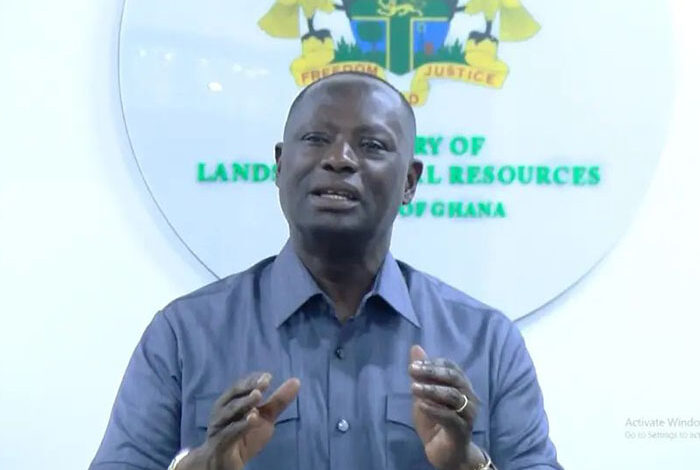
The Minister for Lands and Natural Resources, Emmanuel Armah Kofi Buah, has issued a stern warning about the deteriorating quality of Ghana’s water bodies, describing current turbidity levels as “alarming” and a threat to national sustainability.
Speaking at the Global Mining Summit in Accra on Monday, June 2, 2025, Mr. Buah disclosed that recent measurements show turbidity levels in several water bodies ranging between 5,000 and 12,000 Nephelometric Turbidity Units (NTU), far exceeding acceptable limits for safe consumption and ecological balance.
“These figures are deeply disturbing, they reflect the extent of environmental degradation we are facing, particularly as a result of irresponsible mining activities,” the Minister said.
Turbidity, which measures the cloudiness or haziness of water caused by suspended solids, is a key indicator of water quality. The World Health Organization (WHO) recommends a turbidity level below 5 NTU for safe drinking water. Ghana’s reported levels, therefore, represent a more than thousand-fold deviation from the global safety threshold.
Mr. Buah pointed to illegal mining operations—popularly known as galamsey—as the primary culprit behind the pollution of rivers and streams. He stressed that many water bodies across the country have become heavily silted and contaminated, endangering both aquatic life and the millions of Ghanaians who rely on these resources for drinking water and farming.
“If we do not act decisively, future generations will inherit a water crisis that could have been prevented,” he warned.
The Minister reiterated the government’s commitment to enforcing environmental regulations and implementing tougher measures against illegal mining. He said inter-agency collaboration is being strengthened, with a focus on using real-time monitoring technologies and community involvement to track and report illegal mining activities.
The Global Mining Summit brought together stakeholders from across the extractive industry, including policymakers, environmental experts, private sector actors, and traditional authorities. Many participants echoed the Minister’s concerns and pledged to support efforts aimed at ensuring responsible mining and ecological protection.
Environmental advocates have long cautioned that Ghana is approaching a critical water shortage if mining-induced pollution continues unchecked. In 2023, the Ghana Water Company Limited announced rising costs of water treatment due to increased turbidity and chemical contamination.
Mr. Buah also urged mining companies to adopt more sustainable practices, saying environmental responsibility should be integral to the operations of every player in the sector.
“We cannot continue to mine at the cost of our rivers. The health of our environment is non-negotiable,” he declared.



