US Court blocks Trump’s sweeping tariffs
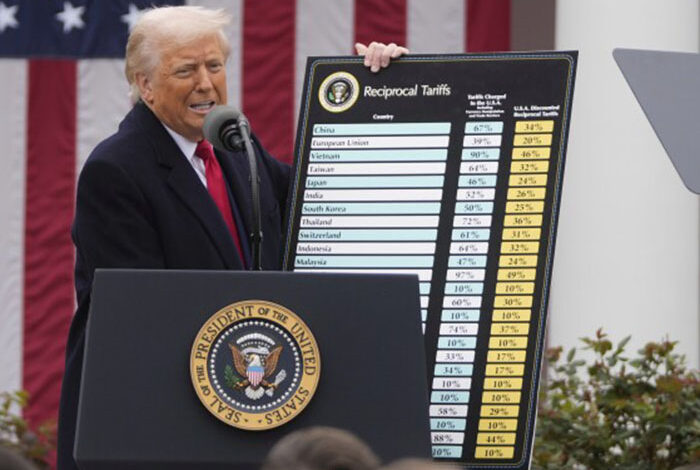
The U.S. Court of International Trade has blocked a sweeping set of global tariffs imposed by President Donald Trump under his “Liberation Day” trade policy, ruling that he overstepped his authority.
The New York-based federal court stated that the Constitution grants Congress—not the president—exclusive power over international commerce. The ruling invalidates import duties affecting dozens of countries, including key allies, and throws uncertainty over the future of U.S. trade relations.
The court’s decision came after two major lawsuits—one brought by the Liberty Justice Center on behalf of small businesses affected by the tariffs, and another filed by a coalition of U.S. states led by New York.
At the core of the ruling is the court’s interpretation of the International Emergency Economic Powers Act (IEEPA), which Trump cited to justify his actions. The three-judge panel found that the law does not permit the president to impose such broad unilateral tariffs, especially not as a long-term economic strategy.
While the decision does not apply to specific duties on goods like steel, aluminum, and cars—imposed under different laws—it covers most of the global levies Trump announced in April, including a baseline 10 percent tariff on a wide range of imports.
The court has given the Biden administration 10 days to begin rolling back the tariffs. However, the White House has filed a motion to pause the ruling while it launches an appeal. Legal experts say the case could eventually reach the U.S. Supreme Court.
Even if the court ruling is upheld, Trump could attempt to reintroduce tariffs using different legal channels. Analysts at Goldman Sachs noted that the administration still has the authority to impose temporary tariffs—up to 15 percent for 150 days—under trade balance concerns, or up to 50 percent under rarely used provisions of a 1930 trade law targeting discriminatory practices by foreign governments.
The White House condemned the ruling, with Deputy Press Secretary Kush Desai saying, “It is not for unelected judges to decide how to properly address a national emergency.”
Meanwhile, New York Attorney General Letitia James hailed the decision as a victory for constitutional checks and balances. “No president has the power to single-handedly raise taxes whenever they like,” she said.
Stock markets responded positively to the ruling, with U.S. and Asian indexes climbing in early Thursday trading. European markets remained flat.
The ruling could significantly impact ongoing trade negotiations, including talks with the European Union, China, and Mexico. Experts warn that the court’s decision weakens the administration’s leverage and could slow progress on any new agreements.
In particular, Trump’s broader tariff strategy had created confusion and pushback from international partners. Now, some may choose to delay commitments until the legal situation is resolved.
The U.S. and U.K. recently reached a tentative agreement to reduce tariffs on certain goods like cars and steel. That deal remains intact for now, but the court ruling could undermine the broader 10 percent blanket tariff on other U.K. exports. British officials have yet to comment but say they remain focused on ensuring the deal benefits U.K. businesses as quickly as possible.