Ngũgĩ wa Thiong’o, African literary icon, dies at 87
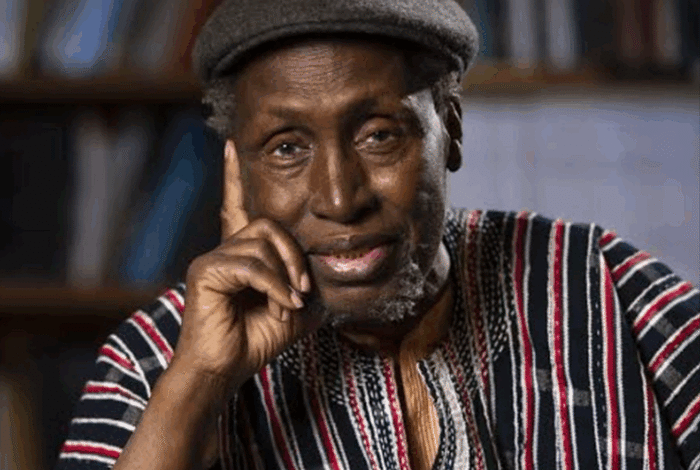
The literary world is mourning the loss of one of Africa’s most celebrated writers and intellectuals. Ngũgĩ wa Thiong’o, the prolific Kenyan novelist, playwright, scholar, and fierce advocate for African languages and decolonization, has died at the age of 87.
His death was announced in a heartfelt social media post by his daughter, Wanjiku wa Ngugi, who described the revered writer as having “lived a full life and fought a good fight.” He passed away on the morning of Wednesday, May 28, 2025.
“It is with a heavy heart that we announce the passing of our dad, Ngũgĩ wa Thiong’o… As was his last wish, let’s celebrate his life and work,” Wanjiku wrote. Family spokesperson Nducu wa Ngugi is expected to release details of memorial arrangements in the coming days.
Born James Ngugi on January 5, 1938, in Kamiriithu, central Kenya, Ngũgĩ wa Thiong’o was a towering figure in postcolonial literature and a lifelong champion for the cultural, linguistic, and political liberation of African people.
His early novels, such as Weep Not, Child (1964), The River Between (1965), and A Grain of Wheat (1967), are widely regarded as foundational texts in African literature. These works captured the tensions of colonial rule and the struggle for independence in Kenya.
In the 1970s, Ngũgĩ made a dramatic shift — choosing to abandon English as his primary language of literary expression in favor of Gikuyu, his mother tongue. This bold decision, marked by the publication of Caitaani Mutharaba-Ini (Devil on the Cross) and later Matigari, symbolized his commitment to decolonizing African literature and reasserting the value of indigenous languages.
Ngũgĩ’s political outspokenness led to his imprisonment without trial in 1977 by the Kenyan government after the staging of his play Ngaahika Ndeenda (I Will Marry When I Want), which criticized corruption and inequality. He was later forced into exile, spending years abroad — in Britain and the United States — but never wavering in his advocacy for justice, democracy, and cultural self-determination.
Despite years away from home, Ngũgĩ remained deeply connected to Kenya and the African continent. His essays, lectures, and academic work continued to shape discourse on African identity, language, and liberation across the globe.
Ngũgĩ served as Distinguished Professor of English and Comparative Literature at the University of California, Irvine, and his writings were translated into dozens of languages. He received numerous international awards and honors, including honorary doctorates and literary prizes, and was often cited as a perennial nominee for the Nobel Prize in Literature.
More than a writer, Ngũgĩ was a symbol — of resilience, intellectual courage, and cultural pride. His call to African writers to embrace their mother tongues and his critique of neocolonialism made him a singular voice in world literature.
As tributes pour in from around the world, his family and admirers are preparing to celebrate not only a life well lived, but a legacy that will inspire generations to come.
Ngũgĩ wa Thiong’o leaves behind a vast body of work, a devoted global readership, and a literary tradition that he helped shape, defend, and elevate.
He is survived by his children and grandchildren, many of whom have followed in his creative and academic footsteps.
In his own words: “The writer cannot be a mere mouthpiece of the state or the established order; the writer must be a witness to their times.” Ngũgĩ wa Thiong’o was just that — a witness, a fighter, and above all, a voice for Africa.