Target slashes annual forecast amid tariffs, weak demand
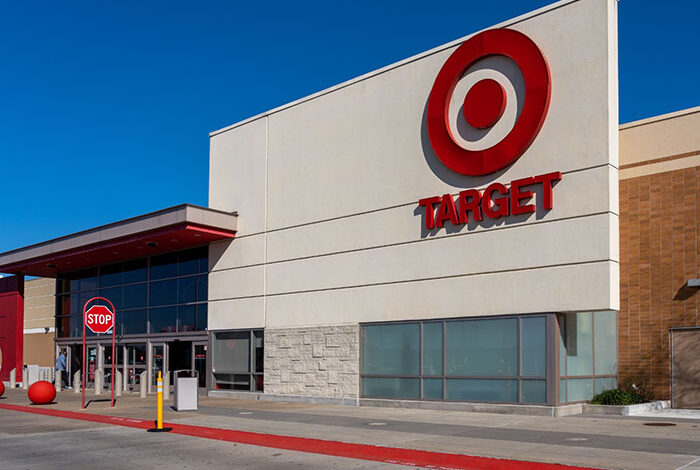
Retail giant Target Corporation (NYSE: TGT) has slashed its annual sales and earnings forecast following a disappointing first quarter, citing weakened consumer confidence, mounting tariff pressures, and fallout from its rollback of diversity, equity, and inclusion (DEI) policies earlier this year.
The Minneapolis-based retailer said Wednesday it now expects a low-single-digit decline in full-year sales, a sharp reversal from its prior forecast of approximately 1% growth. Adjusted earnings per share for the year are projected between $7.00 and $9.00, compared to a previous estimate of $8.80 to $9.80. Wall Street analysts, on average, had expected $8.40.
Shares of Target fell 7.3% in early trading, deepening year-to-date losses to nearly 28%, in stark contrast to competitors like Walmart (+9%) and Home Depot (-2.3%).
Target reported that first-quarter comparable sales dropped 3.8%, significantly worse than analysts’ expectations of a 1.08% decline. Adjusted earnings came in at $1.30 per share, well below the expected $1.61.
The company blamed diminished discretionary spending, missteps in merchandising, and the broader economic climate—particularly the impact of U.S. tariffs on Chinese imports—for the slump in performance.
“Our results reflect the ongoing challenges consumers face in this inflationary environment and the operational adjustments we’re making to adapt,” said CEO Brian Cornell during a media call.
Target, which sources nearly 30% of its store-label merchandise from China, has been particularly vulnerable to the 30% tariffs imposed on Chinese imports. Though the company has reduced its dependence on China from 60% in 2017, the remaining exposure still places it at a disadvantage.
Cornell said the company is working to diversify its supply chain, with efforts to increase sourcing from other Asian nations and the United States. Target executives also noted that negotiations with suppliers and changes in product assortment and inventory management are underway to offset the bulk of tariff-related costs.
However, pricing adjustments have not been ruled out. “We view raising prices as a last resort,” said Rick Gomez, Target’s Chief Commercial Officer. “Our first priority is to limit the impact on customers through smarter sourcing and better inventory planning.”
Unlike Walmart, whose business is heavily anchored in essential goods like groceries and household staples, Target’s offerings are more focused on non-essential categories such as apparel, beauty products, and home furnishings—all more susceptible to shifts in discretionary spending.
In addition to supply chain pressures, Target’s January rollback of several DEI initiatives has come under scrutiny and is believed to have impacted its first-quarter performance. While Cornell did not provide specific figures, he acknowledged that the reversal—announced shortly after President Donald Trump’s executive order eliminating DEI mandates in federal agencies and schools—played a role in softening demand.
Critics argue that the move alienated a key segment of Target’s consumer base, particularly younger and more diverse shoppers. Notably, Reverend Jamal-Harrison Bryant, a Georgia pastor, organized a 40-day boycott of Target stores in response to the changes. The boycott gained renewed attention this month as the country marks the fifth anniversary of George Floyd’s murder, which took place in Minneapolis, Target’s home city.
“Target’s (results) do nothing to restore confidence in the company,” said Neil Saunders, managing director at GlobalData. “They are emblematic of a business that has made too many mistakes and has lost its way on several fronts.”
Analysts point to a growing list of challenges: weak inventory controls, uninspiring merchandise assortments, the lingering effects of pandemic-era supply chain disruptions, and an increasingly polarized brand identity.
Michael Baker, retail analyst at D.A. Davidson, was blunt: “Expectations were already low for Target’s first quarter. Even against that backdrop, these results missed the mark.”
With the U.S. economy showing its first quarterly contraction in three years and inflation expectations rising, retailers like Target are under increasing pressure to adapt—or risk falling further behind.
For now, Target executives remain cautiously optimistic that operational changes, supply chain diversification, and efforts to rebuild trust with core customers will stabilize the business.
“Pricing, sourcing, and customer trust will be the pillars of our recovery,” Cornell said. Founded in 1902 and headquartered in Minneapolis, Minnesota, Target operates over 1,900 stores across the United States and is known for its affordable yet stylish merchandise, particularly in clothing, home goods, and beauty.