

GACC, partners fund stakeholder-advocacy project to tackle examination malpractices
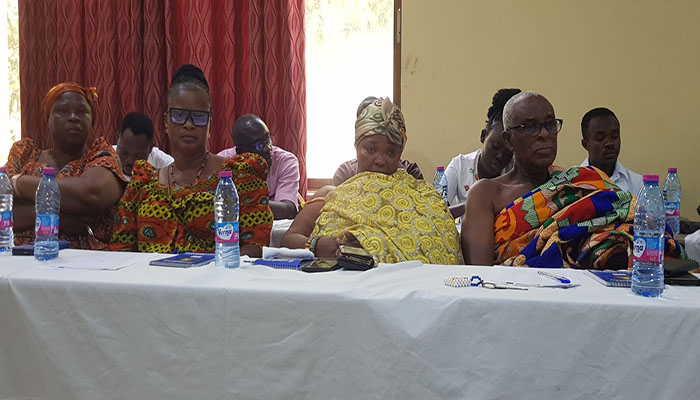
The Ghana Anti-Corruption Coalition (GACC) has provided funding for stakeholders to undertake three-month advocacy to tackle examination malpractices in some Senior High and Basic Schools in the Sunyani Municipality.
As candidates prepare for this year’s Basic Education Certificate Examination and the West African Secondary School Certificate Examination (WASSCE), the stakeholders commit to extensively engage Parent Associations, School heads, WAEC officials and the Ghana Education Service to bring the recurring examination malpractices under control.
They comprise representatives from the Commission on Human Rights and Administrative Justice (CHRAJ), National Commission for Civic Education (NCCE), Sunyani Municipal Assembly, Civil Society Organisations and the media and traditional authorities.
The stakeholders access the funding support after going through a-two-day sensitization training and capacity building held at Abesim, near Sunyani organised by the GACC in collaboration with the Center for Democratic Development (CDD-Ghana).
It was in line with implementation of the three-year project dubbed “Strengthening Accountability, Rule of Law and Institutional Responsiveness in Ghana (SARI), an initiative, being funded by the European Union.
The project implementation is a consortium initiative by the Ghana Integrity Initiative (GII), the CDD-Ghana and the GACC and aimed at empowering citizens and promoting transparency.
According to their action plan, the stakeholders targeted three schools, including the Sunyani High School (SHS), Abesim Community SHS, Ideal College, a remedial school, and some basic schools at Abesim.
Mr Raphael Godlove Ahenu, the Chief Executive Officer of the Sunyani-based Global Media Foundation (GloMeF) and the Convener of the Group, expressed concern about the growing trend of examination malpractices in the Bono Region.
He said fighting the menace required collective approach and asked the other stakeholders to remain committed in the implementation of the action plan to achieve desirable outcomes.
Madam Pamela Laourou, Assistant Communication Officer at the GACC, took the stakeholders through advocacy actions and implementation and urged them to work hard to bring about positive change.
She said effective advocacy enabled citizens to contribute to the decision-making process, policy formulation and implementation, saying that it challenges the structural causes and helped reduce poverty and ills in society.
Effective advocacy leads to improved governance and empowered marginalised or interest groups to participate in decision making processes.
Mr Samuel Harrison-Cudjoe, Programs Officer at the GACC, said it was also the responsibility of the nation to imbibe a sense of patriotism in school children.
That, he added remained, one of the surest ways in tackling corruption, saying the “GACC also targets school children in the fight against corruption in the country”.
Mr Harrison-Cudjoe called on the stakeholders to use the GACC online reporting platform to report on alleged cases of bribery, abuse of public office, embezzlement, fraud, and other social ills and corrupt practices in the public space.



