Cedi Gains Global Spotlight, But Policy Think Tank Warns of Fragile Foundations
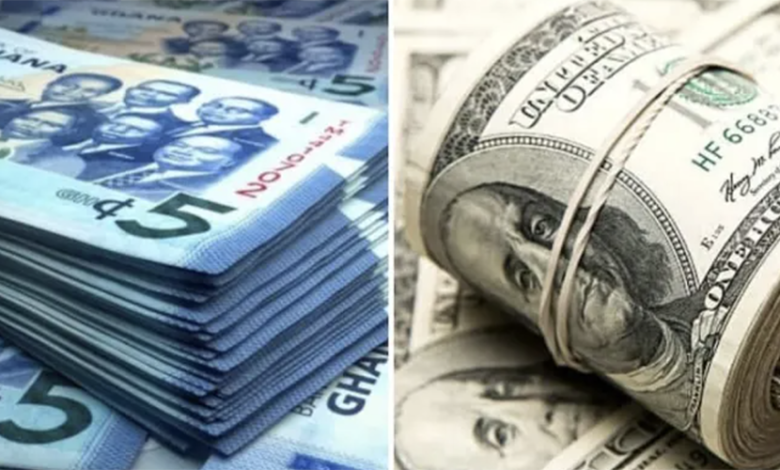
Ghana’s cedi has earned international acclaim in recent weeks as one of the world’s best-performing currencies, with businesses and investors hailing its strong rebound. However, a new report by the Centre for Policy Scrutiny (CPS) has sounded a note of caution, warning that the currency’s recent gains may rest on unstable ground unless deeper economic reforms are implemented.
Titled “Ghana’s Cedi Holds Steady – But Can the Calm Last?”, the CPS policy paper examines the currency’s rise from GH¢15.50 to the U.S. dollar in mid-April to GH¢13.30 as of May 7. According to the report, this appreciation has been driven by a mix of global and domestic factors—including a weaker U.S. dollar, improved international reserves, restrained public spending, and growing investor confidence.
While these developments have provided welcome relief to businesses and helped ease inflationary pressures, the CPS warns that the underlying drivers may not be sustainable in the medium to long term.
“The cedi’s recent appreciation is encouraging, but many of the factors behind it—such as lower debt servicing and constrained public expenditure—are temporary,” the paper notes. “Without comprehensive structural policies, the cedi’s strength may be short-lived.”
Positive Signals, But Caution Remains
The business community, particularly importers, has welcomed the cedi’s stability. The Ghana Union of Traders Association (GUTA) praised the Bank of Ghana and government authorities, noting improved price predictability and better business planning. Some traders even report signs of capital recovery, long hampered by exchange rate volatility.
The stronger cedi has also supported efforts to reduce inflation. CPS reports that imported inflation has declined, contributing to a broader easing of consumer prices. “Ghanaians may begin to see some cost-of-living relief,” the paper states.
Additionally, Ghana’s rising international reserves—up from $6.2 billion in March 2024 to $9.4 billion by March 2025—have enhanced the country’s creditworthiness in the eyes of foreign investors.
Yet, CPS cautions that the currency’s appreciation may carry side effects. A stronger cedi risks reducing export competitiveness by making Ghanaian goods more expensive on the global market. It could also lead to an increase in imports, threatening local industries and expanding the trade deficit.
There are also concerns about the impact on households dependent on foreign remittances. As the cedi gains value, the local equivalent of money sent from abroad declines, potentially reducing domestic consumption.
Call for Structural Reforms
To make the cedi’s stability sustainable, CPS recommends a four-pronged reform strategy:
Expand domestic gold purchasing: CPS highlights the Bank of Ghana’s efforts to build gold reserves—rising from 8.78 tonnes in 2023 to 31.37 tonnes in April 2025—and urges further scale-up to support the cedi.
Prioritise import substitution: The think tank calls for accelerated implementation of local production policies to reduce reliance on imported goods.
Reinforce fiscal discipline: Stronger controls on government spending and improved domestic revenue mobilisation are needed to prevent future deficits and safeguard currency stability.
Maintain tight monetary policy: Keeping inflation and liquidity in check remains critical to long-term macroeconomic health.
CPS concludes that while the cedi’s current performance is commendable, this is no time for complacency. The organisation stresses that sustaining currency strength must go beyond short-term fixes.
“The stability of the cedi is non-negotiable,” the paper declares. “It is time for bold policy choices—not to defend the currency at all costs, but to make it sustainably strong.”