Cedi Appreciation Will Be Sustained – Ato Forson
By Praisebell Rosemond Larbi
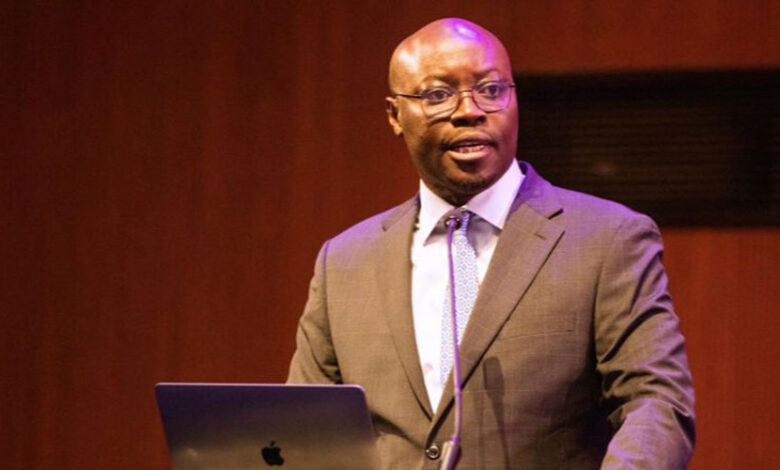
Ghana’s Finance Minister, Dr. Cassiel Ato Forson, has reaffirmed government’s commitment to sustaining the recent gains made by the Ghanaian cedi, describing the currency’s resurgence as a direct outcome of strategic, deliberate, and well-coordinated economic management—not a passing trend.
Addressing members of the Food and Beverage Association of Ghana (FABAG) during a stakeholder engagement in Accra, Dr. Forson sought to allay fears that the cedi’s appreciation against major international currencies might be short-lived.
“I want to use this opportunity to assure all of you that what you are seeing — the appreciation of the cedi — will not only continue but will be sustained,” the Minister declared.
He emphasized that the current trend is not a reactionary phenomenon, but rather the result of intentional policies focused on macroeconomic stabilization, investor confidence, and monetary discipline.
“The stability and appreciation you are witnessing is not a knee-jerk reaction; it is the product of careful, well-thought-out planning,” Dr. Forson stressed.
The Ghanaian cedi has seen significant gains over the past month. According to interbank data, the cedi is currently trading at GH¢13.29 to the US dollar, a sharp rebound from the GH¢16-plus levels recorded earlier this year. The 16% appreciation in April alone made the cedi the best-performing currency in the world for the month, according to a recent Bloomberg analysis.
Dr. Forson noted that one of his administration’s first goals upon assuming office was to stabilize the cedi, curb inflation, and drive job creation through fiscal responsibility.
“This is not a nine-day wonder,” he emphasized. “There will be stability, the cedi will be stronger, and we expect you to support these efforts so that Ghanaians can feel the impact.”
The Minister’s remarks come against the backdrop of renewed international support and positive momentum in Ghana’s economic recovery program. Just last week, the country secured a staff-level agreement with the International Monetary Fund (IMF) on the fourth review of Ghana’s ongoing IMF-supported program. Once approved by the IMF’s Executive Board, Ghana is expected to receive an additional $370 million in budgetary support, further reinforcing its fiscal position.
The agreement also signals confidence in the Mahama-led administration’s ongoing efforts to restore macroeconomic stability. Government insiders say additional disbursements under the IMF Extended Credit Facility (ECF) will boost reserves, reduce external vulnerability, and provide a buffer for future shocks.
Dr. Forson urged stakeholders in the private sector, particularly FABAG, to align with government’s stabilization agenda by adopting responsible pricing, production, and import strategies that reflect the improving macroeconomic indicators.
“If the cedi is stabilizing and inflation is going down, we expect producers and importers to play their part in ensuring the Ghanaian consumer benefits,” he stated.
Industry players present at the meeting commended the government for the transparent engagements and called for continued collaboration to address bottlenecks in the supply chain, high freight charges, and access to credit for small businesses.
The Finance Minister reiterated that the road to full economic recovery will require discipline, cooperation, and consistency, but stressed that government remains determined to deliver lasting results. Ghana’s economy has battled multiple challenges in recent years, including high inflation, currency depreciation, and a ballooning debt burden. But the new administration’s swift reforms, including a leaner government structure, anti-corruption code of conduct, renewed engagement with development partners, and targeted fiscal policies, have begun yielding signs of stabilization—most notably seen in falling inflation, a more stable exchange rate, and improving business confidence.