Homeless by Default: The Cost of Finding a Home in Ghana
In a country where every citizen dreams of a safe roof over their head, Ghana’s housing crisis is a festering wound that continues to deepen with each passing year. Despite the pledges of successive governments, a decent and affordable home remains a luxury for millions. In the words of a young teacher in Accra, “I have a good job, but after paying rent, utilities, and transport, I can barely breathe.”
This is the daily reality of many Ghanaians caught in the web of soaring rents, urban congestion, and poor housing conditions. The situation is dire and yet, the national conversation around it is often muted or buried under the weight of more politically fashionable topics.
According to the Ghana Statistical Service (GSS), the country faces a housing deficit of over 1.8 million units. While this figure has reduced slightly from the over 2 million reported in previous years, it still means that millions either live in overcrowded, substandard homes or are unable to afford a home at all.
Urban centers like Accra, Kumasi, and Takoradi are bursting at the seams. Families are crammed into single rooms, young professionals share apartments meant for one and low income workers are pushed to the periphery of cities where infrastructure is weak, transportation is costly, and services are scant.
The challenge isn’t merely the lack of homes but rather the absence of affordable and dignified housing. A cursory browse through rental listings in Accra or East Legon reveals two bedroom apartments going for as much as GH¢3,000 per month. This, in a country where the national minimum wage is around GH¢18.15 per day.
Finding accommodation in Ghana is not just financially draining, it is emotionally exhausting. Renters are at the mercy of accommodation agents who often charge exorbitant fees without delivering no service or results.
It’s common for agents to demand 10% of the total rent payable to the landlord, even before tenants are allowed to move into the property. On top of that, they may charge “moving fees” ranging from GH¢100 to GH¢200 just to escort the tenant to view potential properties. These expenses pile up quickly, especially when multiple viewings yield no tangible results.
Couples looking to settle down face unique frustrations. Many spend months hopping from one agent to another, only to be met with uncompleted buildings, occupied spaces, or landlords with prejudices against unmarried tenants. Some even fall victim to scams where agents vanish after collecting deposits.
“We paid three different agents over a month and still didn’t get a single room, we eventually gave up and moved into a friend’s storeroom temporarily.” said a newlywed in Kasoa.
The unregulated nature of the housing market has turned the search for accommodation into a gamble, one where the odds are rarely in favor of the tenant.
Ghana’s housing challenge is not without proposed solutions. Several initiatives have been announced, ranging from the Affordable Housing Project under President Kufuor to the Saglemi Housing Project under President Mahama. But many of these efforts have either stalled, failed, or been bogged down by allegations of corruption, political in-fighting, and poor execution.
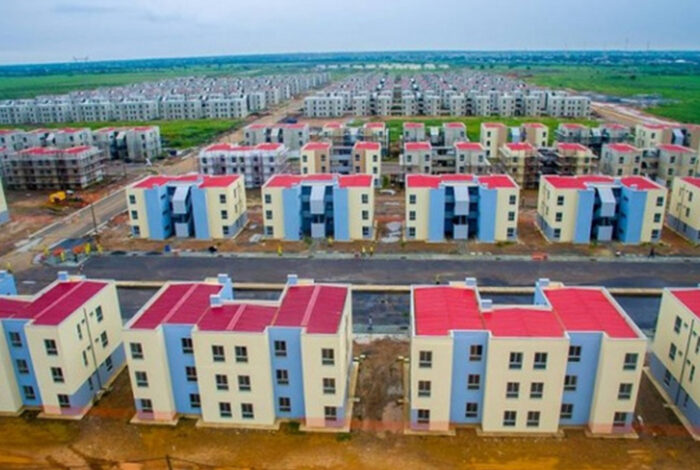
The infamous Saglemi Housing Project stands as a stark monument to this failure. Originally intended to provide over 5,000 affordable housing units, the project was abandoned in its early stages amid disputes over cost inflation and legal wrangling. Today, the skeletal structures at Prampram tell a story of opportunity lost and lives deferred.
Meanwhile, the Rent Control Department tasked with mediating landlord-tenant issues remains under resourced and toothless. The Rent Act of 1963 (Act 220) is outdated, and though a Rent Bill was drafted in 2021 to revise it, it still hangs in limbo, leaving tenants vulnerable to exploitation.
Unregulated and extortionate rent practices have become the norm. It is common for landlords to demand two years’ rent in advance, a practice that though technically illegal, persists due to lack of enforcement. For many young workers, saving up GH¢24,000 just to rent a modest apartment is impossible.
Students too, are bearing the brunt. In major university towns, hostels charge fees than rival luxury hotels. On campus, accommodation is limited, pushing students into unsafe and overcrowded spaces off-campus. Some even sleep in lecture halls or convert makeshift spaces into sleeping areas sacrificing both comfort and dignity for education.
Ghana cannot build a prosperous society on the backs of its homeless and hopeless. Access to affordable housing is not a privilege, it is a human right. The state has a constitutional obligation under Article 18 of the 1992 Constitution to ensure that every Ghanaian enjoys the right to privacy, dignity, and secure accommodation.
There is the need to revise and enforce rent laws. Parliament must expedite the passage of the Rent Bill to reflect current realities and protect both landlords and tenants. Enforcement mechanisms should be decentralized and strengthened.
Secondly, there should be Public-private partnerships in housing. Government should work with credible developers to roll out low cost housing schemes with transparent pricing and clear eligibility criteria, particularly for young workers and low income families.
There should be laws to regulate agent practices. Licensing and regulating accommodation agents will reduce fraud, prevent exploitation, and protect desperate house hunters.
Ghana’s accommodation crisis is not just an infrastructure issue, it is a reflection of failed systems, misaligned priorities, and social inequality. It calls for moral leadership and bold action, not another round of political slogans. “Our homes shape our hopes” a community leader in Nungua once said. If we fail to fix housing, we fail our people. Ghana must rise to the challenge, not tomorrow, but today.