

Invest in proactive cybersecurity measures, world leaders told
Story: Olive Gibbon, Accra
THE World Economic Forum’s Global Cybersecurity Outlook for 2025 has included evaluations of Africa’s regional difference in terms of cyber resilience, as well as small and medium enterprises’ vulnerability, when managing cybersecurity.
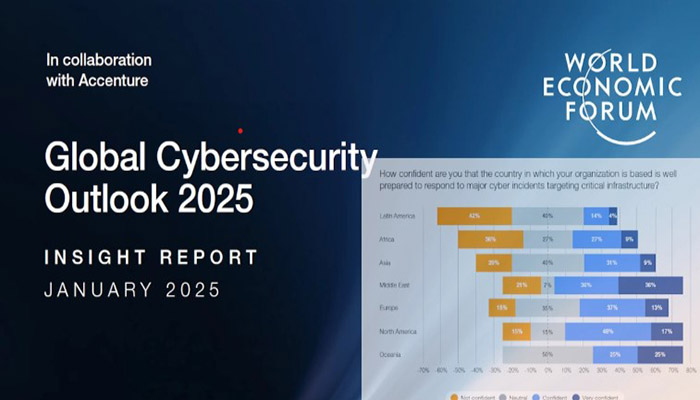
An enquiry was made into how confident respondents were in their organization being well prepared to respond to major cyber incidents targeting critical infrastructure. Just 15% of respondents in Europe and North America lacked confidence, whereas this figure rose to 36% for those in Africa.
Factors that are complicating the management of cyber security include the speed of emerging technologies and AI, geopolitical tensions, complexity and oversight within supply chains, sophistication of cybercrime, and a widening cybersecurity skills gap.
Costs of proactive security measures like multifactor authentication, firewalls and security-awareness training, the report deems “negligible compared to the financial consequences of a cyberattack”.
WEF therefore urges that “leaders must adopt a security-first mindset”, ensuring essential skills to meet security requirements are employed at every level of electronic system use.
The report described costs of cybersecurity measures as particularly challenging for small and medium enterprises, with 35% of small organizations believing their cyber resilience is inadequate, and just 7% of large organizations saying the same.
To overcome these vulnerabilities, the WEF suggested incentives aimed at SMEs from governments to encourage businesses to invest in their cybersecurity. Job creation through cybersecurity, the report mentions, can also contribute to overall economic development.
It also advises that businesses quantify cyber risk in financial terms in order to effectively manage it.
With 2024 witnessing the largest cyber-event in history, with an estimated 8.5 million Microsoft Windows devices disabled, this report is crucial to managing our reliance on devices and vulnerabilities that arise from this. The report therefore not only outlines growing risks and complexities within cybersecurity, but also provides practical advice to both governments and businesses to protect themselves from potentially devastating attacks.



