What if I’m wrong: Reflections on adaptability and growth

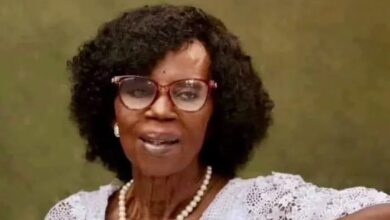
By Prof. Samuel Lartey
Introduction
IN What if I am Wrong: Try Another Way, Prof. Samuel Lartey tackles a profound theme many leaders, thinkers, and professionals have grappled with, from accepting the possibility of error and the courage to pivot when necessary.
Drawing from his multifaceted career as a teacher, banker, and educationist, Prof. Lartey explores the importance of resilience, adaptability, and humility in personal and professional growth.
His work resonates in a Ghanaian context, weaving in data, financial insights, and broader reflections on learning from mistakes.
Personal and Professional Flexibility
Prof. Lartey’s journey in the financial sector as a banker, combined with his experiences as an educator, has afforded him a unique vantage point on how errors and alternative thinking shape success.
His career began in banking during a time when Ghana’s economic landscape was shifting under significant reforms in the 1990s and early 2000s. Financial institutions faced challenges due to high inflation rates, which were 39.8% in 1995 and 40.1% in 2023. These pressures demanded bankers possess not only technical acumen but also the foresight to adapt to a fluctuating market.
He relates how his experience taught him the value of questioning assumptions in financial analysis. Often, decisions based on conventional wisdom proved ineffective.
For instance, during his banking career, he recalls a project involving agricultural financing, which initially seemed unfeasible due to high-interest rates.
By exploring alternative solutions, such as partnerships with local cooperatives and applying a risk-sharing model, the project succeeded, demonstrating that stepping back to “try another way” can yield transformative results.
Adaptive Thinking
Prof. Lartey’s work finds echoes in publications by authors like Dr. Carol Dweck, known for her book Mindset: The New Psychology of Success, where she discusses the value of a “growth mindset.” Like Dweck, Prof. Lartey argues for an openness to challenge one’s own beliefs, seeing setbacks as opportunities to refine one’s approach. He emphasises that adaptability is not merely a personal trait but a strategic advantage.
Similarly, Prof. Lartey’s reflections resonate with Adam Grant’s Think Again, which advocates for “mental flexibility” and encourages readers to “rethink” their approaches continuously.
Both authors see the act of revisiting one’s strategies as essential to enduring success. Grant’s concept of “confident humility” which is the ability to stay secure in one’s abilities while recognising gaps in knowledge is a lesson that Prof. Lartey incorporates in his approach to mentoring students and learners.
The Role of Error in Teaching and Education Reform
In his long tenure as an educationist, Prof. Lartey has sought to instill a culture of open-minded learning among Ghanaian learners.
According to 2022 data from the Ghana Education Service, only 21% of Ghanaian high school graduates pursue higher education, a stark indicator of educational barriers. Prof. Lartey advocates for reform, aiming to create an environment where students are not afraid to “fail” but instead see mistakes as opportunities to innovate and improve.
In one of his notable contributions, he introduced the “Alternative Solutions” course in 2020 at Regent University College, aimed at equipping students with practical problem-solving skills.
Drawing from Ghanaian proverbs and philosophies, he highlights that many traditional teachings encourage an “either-or” perspective. Prof. Lartey’s course challenged this, introducing principles of “thinking outside the box” and showing students that “what if” scenarios are valuable paths to explore.
Re-evaluating Success
In the Ghanaian business ecosystem, adaptability is equally crucial. The economic volatility Ghana has faced, including a high debt-to-GDP ratio of 77.5% in 2021, underscores the need for organisations and individuals alike to rethink traditional paths to financial success.
Prof. Lartey’s reflections hold that by questioning conventional success metrics like profit margins alone, businesses can redefine value, exploring more sustainable and community-centered models.
For instance, during his banking years, Prof. Lartey observed that small enterprises in Ghana often face cash flow issues, leading to high failure rates. He proposed that, instead of dismissing these companies as risky investments, banks could re-evaluate their funding models.
This could include initiatives like tiered interest rates or community-backed funding, ideas similar to concepts discussed by economist Muhammad Yunus in Banker to the Poor. Prof. Lartey’s argument is that taking a different approach to risk could help foster an entrepreneurial climate in Ghana that supports long-term, sustainable growth.
A Call for a Mindset Shift
In the context of national development, Prof. Lartey believes that embracing “What if I am Wrong” could have transformative effects. Ghana’s dependency on imported goods, imports made up approximately 37% of GDP in 2023, illustrates the need for a resilient, adaptable economy.
He suggests that policymakers and business leaders alike would benefit from a similar willingness to reconsider strategies, especially regarding economic self-reliance and innovation.
Conclusion
Prof. Lartey envisions a Ghana where leaders, entrepreneurs, and students adopt a mindset that welcomes re-evaluation.
His experiences in the fields of finance and education underscore his belief that Ghana can carve a path forward by embracing error as an inherent part of growth. In the end, What if I am Wrong: Try Another Way is more than just a reflection of personal experiences; it’s a call for a mindset that aligns with Ghana’s future growth ambitions, flexible, resilient, and forward-thinking.