Economist proposes key reforms to combat Ghana’s persistent inflation

By Isaac AIDOO, Accra
Economist Leslie Dwight Mensah with the Institute for Fiscal Studies (IFS) has proposed a series of long-term reforms aimed at stabilizing inflation in Ghana, calling for critical improvements in domestic production and exchange rate management to address the country’s inflation crisis.
In an exclusive interview with this paper, Mr Mensah explained that while Ghana’s inflation rate dropped from 54.1% in 2022 to 23.2% in 2023, inflation remains stubbornly high at 22.1% in 2024. He stressed that to achieve sustained, low inflation levels, Ghana must undergo a transformation in both agricultural and industrial sectors, allowing the economy to increase its supply of goods and services. “If we aim to achieve and sustain much lower inflation rates, then there has to be a big supply-side transformation,” he stated, emphasizing the importance of boosting domestic production to reduce reliance on imports.
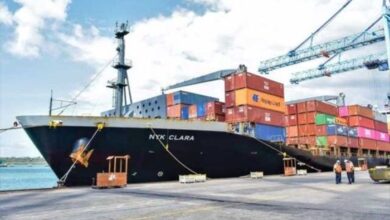
Mensah’s primary recommendation centers on strengthening Ghana’s agricultural and industrial sectors to increase output and meet domestic demand. According to him, enhancing production in these sectors could significantly reduce inflationary pressures by decreasing dependence on imported goods, which are subject to fluctuating exchange rates. By improving local supply capabilities, Ghana can build resilience against global economic shifts and stabilize prices in the long term.
In the short term, however, Mensah acknowledged that inflation is likely to remain high, as it has been largely driven by the persistent depreciation of the Ghanaian cedi, which fell nearly 30% in 2024 alone. He highlighted that inflation in Ghana historically mirrors the performance of the exchange rate, and until the currency stabilizes, inflationary pressures are likely to continue. Mensah advised that effective exchange rate management is essential, noting that addressing the root causes of cedi depreciation, such as trade imbalances and reliance on imports, is vital.
To further curb inflation, Mensah urged policymakers to prioritize fiscal discipline, especially in managing public spending, which he argued could ease exchange rate pressures. By maintaining fiscal discipline and implementing policies to enhance productivity, Ghana could achieve a stable currency, a critical factor for long-term price stability. Mensah’s recommendations underscore a two-pronged approach to controlling inflation: short-term measures focused on exchange rate stabilization and fiscal discipline, paired with long-term reforms aimed at transforming Ghana’s agricultural and industrial production. His insights emphasize the importance of a strategic response to Ghana’s inflation crisis, which he believes can only be resolved by both enhancing domestic production and managing external economic pressures effectively.