AGI needs our support to deliver
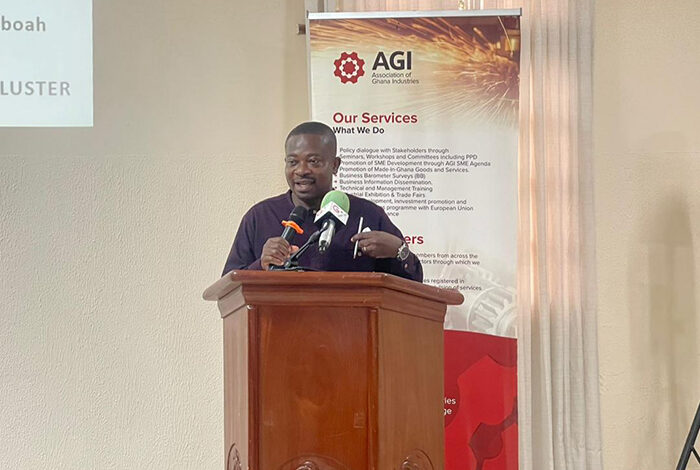
THE Annual General Meeting of the Association of Ghana Industries (AGI) in Accra highlighted critical steps forward for Ghana’s industrial sector, with the call for an increased focus on sustainability and workforce development at the forefront.
AGI CEO Seth Twum Akwaboah’s message to prioritize environmental responsibility and local talent development underscores the evolving demands of global markets, where sustainability has shifted from a business advantage to a non-negotiable standard.
Mr. Akwaboah’s emphasis on sustainability reflects the international pressures on supply chains to meet eco-friendly criteria, with major trading blocs like the European Union enacting stringent environmental regulations.
For Ghanaian businesses aiming to thrive globally, meeting these requirements is no longer optional. Failure to adapt could result in missed opportunities, limiting Ghana’s ability to export goods to environmentally conscious markets.
AGI’s collaboration with institutions such as the Kwame Nkrumah University of Science and Technology (KNUST) and German partners to train young professionals in sustainable practices is a proactive step, preparing the next generation to meet these challenges head-on.
Sustainability and workforce development are intrinsically linked. As AGI trains future professionals to prioritize environmental standards, they equip them with vital skills that will fuel Ghana’s industrial growth for years to come.
However, the government and private sector must support AGI’s efforts by promoting more incentives for companies that adopt sustainable practices, ensuring that Ghanaian industries not only comply with global norms but lead the charge in environmentally responsible innovation across Africa.
The Greater Accra Chapter Chairman, Tsonam Cleanse Akpeloo, extended this call for modernization by underscoring the importance of advocacy for policy changes. Notable achievements, like the Value Added Tax (VAT) relief on imported raw materials and extended license renewal periods by the Food and Drugs Authority (FDA), reflect the AGI’s impactful advocacy.
These measures not only ease financial pressures on local businesses but also pave the way for industry expansion. Such efforts are more than beneficial—they are essential in ensuring that Ghanaian industries remain competitive and resilient in a challenging economic environment.
Furthermore, initiatives like the job fair hosted by AGI, in partnership with the Ghana Enterprise Agency and Mastercard Foundation, are significant steps in tackling Ghana’s employment challenges.
As Mr. Akwaboah noted, Ghanaian industries often face a talent shortage. By connecting young professionals with employers in critical sectors, AGI fosters economic growth and builds a future-ready workforce that meets the needs of an evolving industrial landscape.
The AGI’s initiatives in promoting sustainability, job creation, and advocacy mark pivotal shifts toward a more resilient and competitive industrial sector in Ghana.
However, these goals will only be fully realized if the broader business community and policymakers continue to support and amplify AGI’s efforts.
In an increasingly interconnected world, Ghana’s ability to compete relies on its commitment to sustainable growth, local advocacy, and the nurturing of a skilled workforce. The path forward is clear: prioritize sustainability, champion policies that ease business operations, and invest in local talent—doing so will secure a robust future for Ghana’s industries on the global stage.