

Global Climate Action: Ghana Makes Bold Move
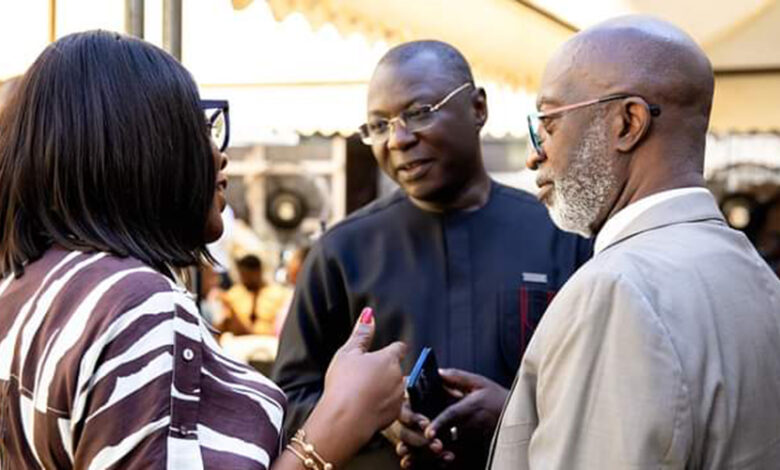
– Operationalizes division under MoF
By Isaac AIDOO, Accra
IN a bold move to boost resource mobilization and intensify climate action, the Government of Ghana has operationalized the Climate Financing Division under the Ministry of Finance.
The newly-established division is expected to enhance Ghana’s ability to attract international funding and forge partnerships with both domestic and external private sector investors, aiming to finance projects that will drive the nation’s green growth agenda.
Speaking at the official launch, Minister of Finance, Dr. Mohammed Amin Adam, highlighted the significance of the division in aligning Ghana’s institutional structures with the evolving global climate finance landscape.
“The Climate Financing Division will serve as the central pillar for implementing the government’s climate finance strategies, enabling us to attract sustainable funding for green growth,” he said.
Dr. Amin Adam added that the division will help the country secure the necessary expertise and provide strategic leadership, ensuring greater focus on climate finance across government ministries and departments.
“We are aware that climate resilience is not just an environmental goal; it is fundamental to our sustainable development and long-term economic prosperity.
“By leveraging innovative financing tools, we can build an ecosystem conducive to climate action and drive financial resources toward climate-resilient growth,” he noted.
The Climate Financing Division was created from the nucleus of the former Natural Resource, Environment, and Climate Change Unit, previously under the Economic Strategy and Research Division (ERSD) of the Ministry of Finance.
The new division is expected to coordinate closely with other government divisions and external partners to streamline and elevate Ghana’s climate finance initiatives.
Ghana’s Nationally Determined Contributions (NDCs), the country’s commitment under the Paris Agreement, are expected to require between USD 9.3 billion and USD 15.5 billion in funding over the next decade. According to Dr. Amin Adam, this underscores the importance of green finance in driving sustainable development.
“These figures reflect the magnitude of the task ahead. Green and climate finance are the finance of the future, and we must ensure that we have the requisite skills and institutional readiness to take full advantage of the opportunities presented by the global climate finance landscape,” he remarked.
Recent climate challenges, such as the dry spells in Ghana’s Northern and Middle Belt regions, have demonstrated how closely linked economic management is with ecological stewardship.
In August 2024, the government had to postpone a scheduled meeting with Official Creditors to address the impact of these dry spells, which threatened the country’s agricultural output.
The Ministry of Finance responded by mobilizing nearly GHC2 billion from the 2024 national budget, including GHC500 million from the Contingency Fund, after parliamentary approval, to mitigate the effects of the near-drought conditions.
Dr. Amin Adam pointed out that these events prompted economic analysts to consider a downward revision of Ghana’s economic growth, despite a five-year high of 5.8% at the mid-year mark.
Chief Director of the Ministry of Finance, Mrs. Eva Esselba Mends, expanded on the government’s broader efforts to position Ghana’s economy for growth.
In addition to the Climate Financing Division, she highlighted the establishment of the Public Investment and Asset Division, which aims to enhance supervision of state-owned Enterprises (SOEs) and foster private sector engagement through Public-Private Partnerships (PPPs).
“This has led to the production of the State Ownership Reports since 2016, informing the public about the performance of Specified Entities, including SOEs,” Mrs. Mends said.
She further noted that, in line with the government’s infrastructure program anchored on strong private sector collaboration, the development of the Tema Motorway under a PPP arrangement has commenced
“This intervention has helped to better position the private sector to drive economic growth, in accordance with the objectives articulated in the 2024 Budget,” she added.
Mrs. Mends also emphasized that the Climate Financing Division will collaborate with other key divisions, such as the External Resource Mobilization and Economic Relations Division (ERMERD), as well as with various Ministries, Departments, and Agencies, to maximize resource mobilization for climate action. As global attention intensifies on climate change mitigation, the operationalization of the Climate Financing Division marks a significant step forward for Ghana, reinforcing the country’s commitment to green growth, sustainable development, and economic resilience in the face of environmental challenges.



