

AfCFTA offers Africa a path out of poverty – Wamkele Mene
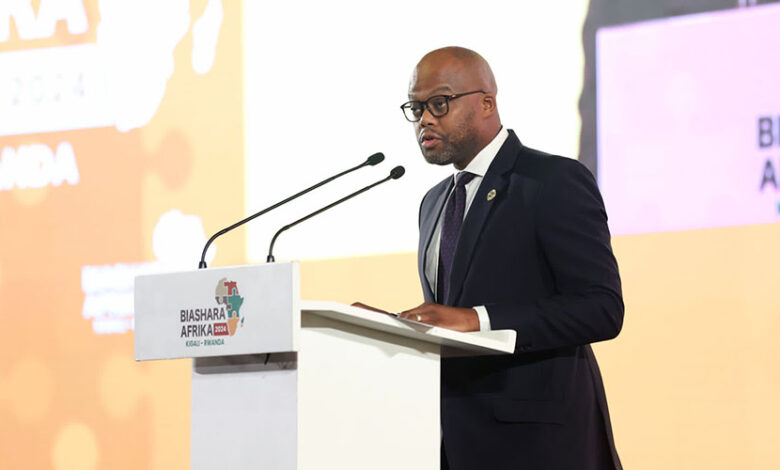
AT the official opening ceremony of Biashara Afrika and the launch of the second edition of the AfCFTA Guided Trade Initiative (GTI), Secretary-General of the AfCFTA Secretariat, Wamkele Mene, stressed the critical role of trade in addressing poverty across Africa.
Mene emphasized that with over 400 million people on the continent living in extreme poverty, expanding access to new markets through the African Continental Free Trade Area (AfCFTA) offers a promising path to reduce poverty and promote economic integration.
“The AfCFTA, with its comprehensive and continental scope, provides a way to defeat extreme and moderate poverty through trade. As we intensify efforts toward economic integration and establish the groundwork for a single market, we enhance our opportunity to reduce poverty rates,” Mene stated during his address.
Since the historic signing of the AfCFTA in March 2018, 48 countries have ratified the agreement, marking significant progress in negotiations and the adoption of protocols by the Assembly of Heads of States and Government of the African Union.

Mene underscored that the AfCFTA is moving beyond agreements on paper to the practical phase of trade, as seen in the commencement of commercially meaningful trade under the Guided Trade Initiative, which was launched in 2022 with seven participating countries and has expanded to 39 countries this year.
Mene highlighted a recent shipment from Rwanda to Ghana under the AfCFTA, which included tea, coffee, avocado oil, and honey. Although modest in volume, this trade reflects a growing trend of value-added exports, signaling Africa’s shift away from traditional raw commodity exports toward diversified products.
“Commercially meaningful trade is happening, and both large and small economies are issuing AfCFTA Certificates of Origin for exports,” Mene noted. He praised the example of Nigeria issuing its first Certificate of Origin to a woman-owned SME, Mama Chinwe Ezenwa, the CEO of Lelook, which represents the potential for women-led SMEs to benefit from the AfCFTA.
The AfCFTA is also looking to leverage Africa’s burgeoning digital economy. Mene pointed out that the newly adopted Protocol on Digital Trade will enable Africa’s youth to tap into an expanded digital market.
With the launch of the Pan-African Payment and Settlement System, promoted by AfCFTA in collaboration with Afreximbank, local currency transactions are now possible on a digital platform. Mene projected that Africa must become a Digital Single Market by 2030 to remain globally competitive, and the Protocol on Digital Trade is a key step in that direction.
Addressing the challenges of fragmentation and varying levels of export readiness across the continent, Mene discussed the AfCFTA Adjustment Fund, created in partnership with Afreximbank and domiciled in Rwanda, with an initial $1 billion capital injection. The fund aims to support countries in trading under the AfCFTA, with a target of raising $10 billion to ensure inclusive benefits across countries.
While celebrating the progress made under the leadership of the African Union, Mene acknowledged that challenges remain, including high trade finance costs, infrastructure deficits, expensive transport and logistics, and the lack of progress in achieving the free movement of persons.
Despite these hurdles, Mene remained optimistic, stating, “We should not allow the magnitude of the challenges to define our resolve to achieve a better Africa.” The launch of the second edition of the Guided Trade Initiative, alongside Biashara Afrika, marks another significant milestone in Africa’s journey toward creating a unified market that will drive sustainable development, enhance trade, and improve livelihoods across the continent.



