

‘BoG’s monetary policy creating liquidity challenges’
Story: Isaac AIDOO, Accra
THE Bank of Ghana’s (BoG) tight monetary policy, while instrumental in slowing inflation, is creating liquidity challenges in the country’s financial sector, raising concerns about its broader implications for economic growth.
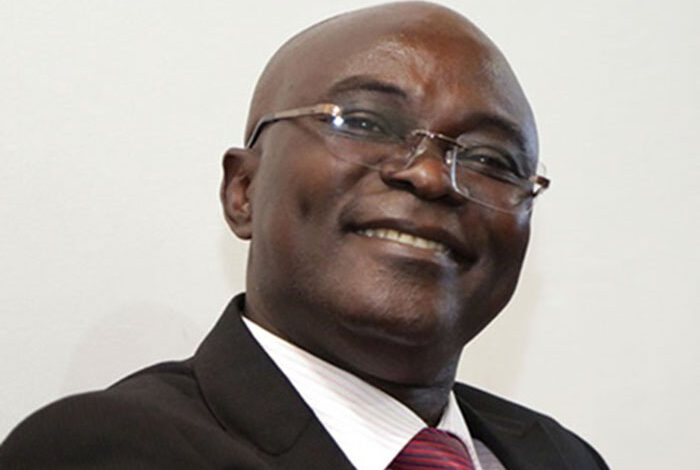
Dr. Raziel Obeng-Okon, an economist and adjunct lecturer at the Ghana Institute of Management and Public Administration (GIMPA), has warned that while the policy may have succeeded in containing rising inflation, it is straining the ability of financial institutions to meet the needs of depositors and businesses.
Dr. Obeng-Okon highlighted that the BoG’s tight monetary stance, marked by elevated interest rates, is negatively affecting financial institutions, particularly those outside the traditional banking sector.
“Many savings and loans companies, finance houses, and other non-bank financial institutions are facing liquidity problems,” he said. “When you go to some of these institutions, they are unable to pay depositors their funds. This is a serious issue that cannot be ignored.”
He explained that a tight monetary policy, which typically involves raising interest rates to control inflation, often leads to slower economic growth. “Tight monetary policy is anti-growth. When you increase interest rates, you make borrowing expensive, which slows down business activities and investments,” he said.
“While it may help reduce inflation, it also has a cost-push effect, leading to higher production costs for businesses. In the long run, this is not a sustainable model for economic growth.”
Concerns over Inflation
Despite the gains made in bringing down inflation from an alarming 56% to the current range in the 20s, Dr. Obeng-Okon was not entirely optimistic. He expressed concern that Ghana’s progress is being measured against historically high inflation levels rather than the more sustainable single-digit inflation rates the country achieved in the past.
“We are congratulating ourselves for reducing inflation from 56% to the 20s, but that is not the real picture. We need to start comparing our current performance with our best years when we managed to achieve single-digit inflation.
“Both the NDC and NPP governments have, at different times, brought inflation down to single digits. Why aren’t we trying to match those years?” Dr. Obeng-Okon questioned.
He also drew comparisons with other African nations that are faring much better in terms of inflation control. “There are African countries like Rwanda and Morocco where inflation is well below 2%. Rwanda’s inflation is around 1.7%, and Morocco’s is just 1%. Why can’t we aspire to those levels? Why are we settling for inflation in the 20s when we have seen much better days?” he stressed.
progress but never really achieve the economic stability we need.”
The Struggles of Non-Bank Financial Institutions
A key issue that Dr. Obeng-Okon emphasized is the impact of the tight monetary policy on non-bank financial institutions, which form an essential part of Ghana’s financial ecosystem.
“We cannot overlook the fact that many savings and loans companies, finance houses, and smaller financial institutions are under tremendous pressure. These institutions are essential for the everyday Ghanaian, yet they are struggling to meet their liquidity needs,” he noted.
He explained that these institutions are often more vulnerable to the effects of high interest rates because they rely heavily on deposits and are unable to access the same level of liquidity support as larger banks
.
A Path Forward: Balancing Monetary and Fiscal Policies
To address these challenges, Dr. Obeng-Okon called for a more balanced approach to economic management. He suggested that while tight monetary policy may be necessary in the short term to control inflation, it must be complemented by fiscal policies that support growth, particularly in key sectors like manufacturing.
“We need to create an environment where businesses can thrive and grow. That means not only controlling inflation but also ensuring that there is enough liquidity in the system to support economic activity. “The manufacturing sector, in particular, needs to be supported because it has the potential to drive sustainable growth and create jobs. Mining and construction, while important, cannot be the sole drivers of our economy,” he said.



