Cautious optimism over economic growth
Story: Isaac AIDOO, Accra
GHANA’S economic growth, driven by sectors like mining, construction, and ICT, and praised by the International Monetary Fund (IMF) has been met with cautious optimism.
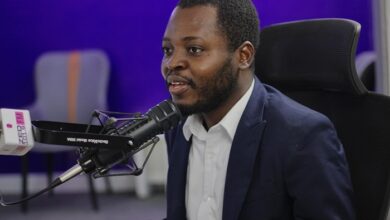
Economist and adjunct lecturer at the Ghana Institute of Management and Public Administration (GIMPA), Dr. Raziel Obeng-Okon, has raised concerns about the sustainability of the growth in the long term.
Speaking on Zed 101.9FM in response to the IMF’s announcement of revising Ghana’s growth projections for 2024 and beyond, Dr. Obeng-Okon highlighted structural challenges in the economy, particularly in agriculture and manufacturing.
Dr. Obeng-Okon noted that while growth in the mining and construction sectors had contributed to stronger-than-expected economic performance, significant issues remain in other critical sectors.
“The prospects look good, but the problem is that the growth is primarily coming from mining and construction,” he said. “We are not doing well in agriculture, especially given the recent dry spell affecting productivity in the northern part of Ghana, and manufacturing is also struggling.”
He emphasized that reliance on mining and construction growth alone might not be sustainable. “If mining is becoming a problem, agriculture is a problem, and manufacturing is a problem, then we cannot rejoice too much over this partial growth,” he added. “A more balanced and sustainable growth would ideally come from stronger performance in agriculture and manufacturing.”
Looking ahead, Dr. Obeng-Okon warned that the projected economic outlook for 2025 might not be as promising as the IMF suggests. He pointed out that the challenges in key sectors could dampen the optimistic forecasts and suggested that focusing on supply-side reforms to reduce inflation would be a more sustainable approach. “It’s growth, yes, but we need better growth, one driven by agriculture and manufacturing,” he stated. “2025 will not be as easy as the IMF forecast seems to imply.”
Addressing the broader economic reforms under Ghana’s IMF program, Dr. Obeng-Okon stressed the importance of discipline in government spending. He noted that Ghana’s repeated reliance on IMF programmes—17 times—underscores a pattern of fiscal indiscipline. “If we could have a disciplined government, the IMF’s involvement would be unnecessary. But since we are not disciplined, we need the IMF to keep us in check,” he remarked.
Despite the completion of the debt restructuring process, Dr. Obeng-Okon cautioned that the real challenge lies ahead. “Once you finish your restructuring, it’s good news. But the real battle starts when you have to find money to pay off those you owe, especially with the ongoing challenges in the energy sector, where independent power producers are demanding payments,” he warned. In conclusion, while acknowledging the positive signs of economic growth, Dr. Obeng-Okon reiterated that long-term sustainability would require stronger performance in agriculture, manufacturing, and a disciplined approach to fiscal management. “The growth is real, but it needs to be more balanced and backed by serious reforms in key sectors,” he emphasized.