

EU pushes for greater digitalisation in agric sector
By Abdulai SAAKA, Accra
ON day two of the Association of Ghana Industries’ Ghana Industrial Summit and Exhibition, the European Union (EU) reiterated its commitment to advancing the digitalization of Ghana’s agricultural sector.
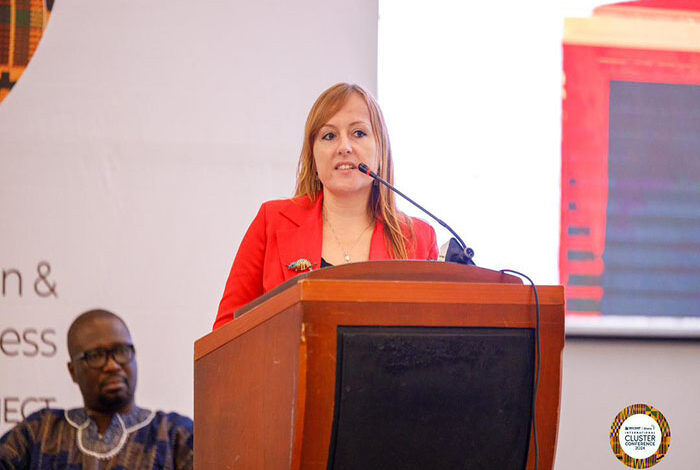
Speaking to journalists at the Accra International Conference Centre, Malgorzata Pitura, Economic Program Officer at the Private Sector and Trade Section of the EU Delegation to Ghana, highlighted the transformative potential of digital technologies in improving agricultural productivity, sustainability, and market access for Ghanaian farmers.
“The EU believes that the digitalization of practices in Ghana’s farming sector could be further advanced,” said Pitura. To support this effort, the EU has financed a study, implemented by the Council of Scientific and Industrial Research (CSIR), that assessed digital technology adoption among small, medium, and large-scale farmers.
The study evaluated the use of computers, laptops, mobile phones, and digital tools such as weather forecasting systems. According to Pitura, while there is growing uptake of these technologies, more can be done, particularly in remote areas where internet access is limited, and farmers lack the necessary equipment to connect with markets.
“Digital technology is an enabler for farmers, connecting them to markets, providing access to the latest trends, and offering crucial information like weather forecasts,” she explained. The EU urged the Ghanaian government to formulate a national digital agricultural policy with a robust implementation plan to ensure that all farmers, regardless of location, are equipped to embrace digitalization.
In addition to promoting digital technologies, the EU has made significant financial investments to support Ghana’s agricultural sector. “In terms of financing, we have implemented various instruments,” Pitura noted.
She highlighted the West Africa Competitiveness Program (WACOM), which has provided matching grants, as well as the EU’s partnership with SINAPI ABA, a financial institution that offers farming loans in Ghana’s northern regions. This collaboration has enabled entrepreneurs to access much-needed financing through EU-backed schemes.
Further financial support has come through partnerships with some institutions who has invested in farming businesses focused on sustainability. “We are supporting agro-entrepreneurs through capacity-building programs, often targeting specific value chains to promote sustainable practices,” Pitura added. These programs aim to reduce pollution, limit waste, and ensure environmentally and socially responsible practices within Ghana’s agricultural sector.
Over the past seven years, the EU has invested over €200 million in programs to support agri-businesses in Ghana, with many of these initiatives focused on northern Ghana, such as market-oriented agriculture programs, and partnerships with southern mango farmers. Looking ahead, Pitura indicated that similar levels of investment would continue, with future programs set to further enhance the sector.
As part of its commitment to sustainability, the EU is preparing to introduce a new due diligence directive, which will require agro-businesses exporting to Europe to meet stringent environmental and social responsibility standards. “This forthcoming EU law will ensure that Ghanaian agricultural businesses adopt sustainable practices as they access European markets,” she stated. With a focus on digitalization, access to finance, and sustainability, the EU has reaffirmed its role as a vital partner in modernizing Ghana’s agricultural sector, working closely with local stakeholders to drive growth and long-term success.



