

NDC promises economicstabilization, job creation
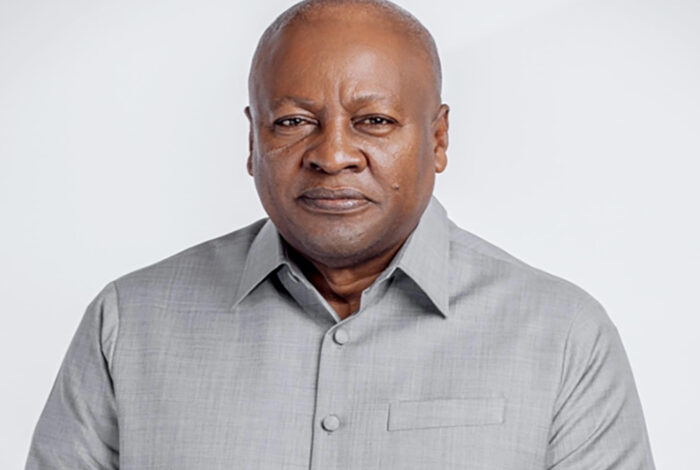
From Daniel NONOR, Winneba
THE National Democratic Congress (NDC), led by its flagbearer, John Dramani Mahama, has laid out an ambitious and comprehensive plan for Ghana’s future in its 2024 manifesto.
The manifesto, which was launched on Saturday, August 24, in Winneba, outlines a series of policies and programmes aimed at revitalizing the economy, creating jobs, promoting good governance, and improving the lives of Ghanaians.
A national economic dialogue and fiscal consolidation
At the heart of Mahama’s economic strategy is a commitment to convening a National Economic Dialogue within his first 120 days in office, should he win the 2024 elections.
This dialogue, according to John Mahama, will be a critical step towards creating a four-year fiscal consolidation programme.
“We must have a clear and sustainable plan to restore fiscal discipline and ensure economic stability. This dialogue will bring together stakeholders from various sectors to chart a course for our nation’s economic recovery,” Mahama stated.
The NDC’s economic blueprint also includes a range of measures aimed at stabilizing the macro-economy and the Ghanaian cedi. These include rationalizing taxes, abolishing unpopular levies such as the E-levy, COVID levy, and the 10% levy on bet winnings, and reviewing import duties and levies on vehicles and industrial equipment.
Mahama emphasized that these policies are designed to ease the burden on businesses and consumers, while also fostering an environment conducive to growth and investment.
“We will implement emergency measures to stabilize the Ghana cedi and ensure that our macro-economy is on a firm footing. Our government will be transparent and accountable, and we will investigate the opaque Gold-for-Oil deal and review the Gold Purchase Programme of the Bank of Ghana,” he said.
The 24-Hour Economy and Women’s Development Bank
One of the standouts in the manifesto is the 24-hour economy policy, which aims to encourage businesses and public organizations to operate around the clock, in three shifts of eight hours each. This policy, according the former President Mahama, is designed to boost production, increase productivity, and create well-paying jobs, ultimately transforming Ghana into an import-substitution and export-led economy.
“The 24-Hour Economy will not only create jobs but also make Ghana a hub of economic activity, attracting investment and promoting sustained growth. We are committed to making this vision a reality,” he noted
In addition to the 24-Hour Economy, the NDC plans to establish a Women’s Development Bank, a special-purpose bank run by women to support women-owned and women-led businesses with low-interest loans and other tailored financial services. This initiative aims to economically empower at least one million Ghanaian women.
“Women are the backbone of our economy, and this bank will ensure they have the financial support they need to thrive,” Mahama said.
Agriculture and Industrialization
Agriculture and industrialization also featured prominently in the NDC’s job creation strategy. The party plans to implement a robust FEED GHANA PROGRAMME aimed at modernizing agriculture, ensuring food security, and creating jobs. This will include establishing Farmer Service Centres in all districts to provide farmers with access to modern agricultural equipment, technologies, and inputs.
The NDC flagbearer also announced plans to create Farm Banks within agricultural zones to ease access to land and irrigation facilities, particularly for young people interested in farming. “Agriculture is the lifeblood of our economy. We must invest in it and make it attractive to our youth,” he declared.
On the industrial front, the NDC’s manifesto proposed an accelerated plan for value addition in domestic consumption and exports. This includes setting up Agro-Industrial Zones in all regions based on their comparative advantage, establishing mini-processing plants for commodities like cassava and tomatoes, and revamping the textile and cotton-allied industries.
We will revive defunct factories, such as the Komenda sugar factory, and promote the establishment of new industries, creating jobs and adding value to our natural resources,” Mahama explained.
The ‘Big Push’: A $10 Billion Infrastructure Development Plan
The NDC’s manifesto also includes an ambitious $10 billion ‘Big Push’ policy for rapid infrastructure development. This initiative, Mahama noted, is designed to build on the NDC’s legacy of massive infrastructure development, which has been a cornerstone of their previous administrations. The ‘Big Push’ will focus on constructing roads, bridges, hospitals, schools, and other critical infrastructure across the country.
“Infrastructure development is key to job creation and economic growth. Our ‘Big Push’ will not only create jobs but also lay the foundation for a prosperous future,” Mahama emphasized.
Healthcare: Expanding access and addressing chronic diseases
Healthcare was another priority in the NDC’s 2024 manifesto. Former President Mahama pledged to establish a Ghana Medical Care Trust (MAHAMACARE) to support individuals with chronic diseases, such as kidney failure, cancer, and diabetes. He also outlined plans to expand health infrastructure and ensure the timely posting of medical personnel to facilities across the country.
“We are not going to wait until elections to announce that we have opened the recruitment portal… The portal will be opened, and we will do continuous employment of health workers, doctors, and nurses,” Mahama assured.
In addition to expanding healthcare access, the NDC plans to provide free primary healthcare from the CHPS compound to the polyclinic level, offer affordable housing within health facility premises, and introduce ‘Risk Exposure Insurance’ for health workers. “Our healthcare workers are our heroes, and we must ensure they have the support and protection they need to do their jobs effectively,” Mahama stated.
Good Governance and Fighting Corruption
Mahama reaffirmed his commitment to good governance and the fight against corruption, promising to establish a lean yet efficient government by capping the number of ministers at 60.
He also vowed to abolish ex-gratia payments to public officials, address disparities in remuneration, and establish an Independent Emoluments Commission to ensure transparency and accountability in the determination of salaries and benefits for public officials.
“We will run the leanest but most efficient government under the Fourth Republic by appointing not more than 60 ministers and deputy ministers in our bid to cut down on government expenditure,” Mahama declared. He further pledged to launch an ‘Operation-Recover-All-Loot’ initiative to investigate, prosecute, and recover proceeds of corruption, and to initiate legislation prohibiting political appointees and public officials from purchasing state assets. “We will leave no stone unturned in our fight against corruption. The people of Ghana deserve better, and we will deliver,” Mahama asserted.



