

GNPC Projects One Billion Cubic Feet Daily Gas Demand by 2036
Ghana’s natural gas demand is expected to rise sharply over the next decade, reaching an estimated one billion cubic feet per day by 2036, according to projections by the Ghana National Petroleum Corporation (GNPC).
The forecast has raised concerns about the country’s ability to meet future energy needs as demand from households, industries and the power generation sector continues to grow. Officials warn that current domestic production levels and existing import arrangements may be insufficient to bridge the anticipated supply gap.
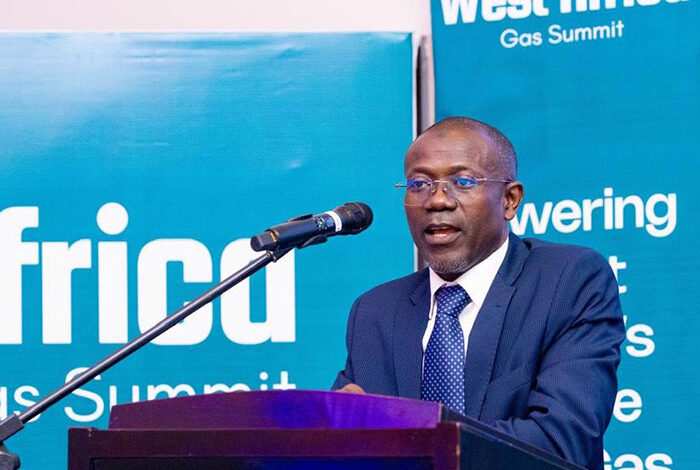
Speaking at the West Africa Gas Summit 2026, Deputy Chief Executive Officer for Finance, Commercial and Administration of GNPC, Hamis Ussif, said demand is projected to reach about 840 million standard cubic feet per day by 2030 before climbing to one billion cubic feet per day six years later.
“By 2030, we are looking at around 840 million standard cubic feet per day, and by 2036, we are looking at hitting one billion cubic feet of demand per day. From our projections, we can’t meet this from domestic production, nor even with imports from Nigeria. That’s why we are working with partners to import LNG,” he stated.
To address the looming challenge, GNPC is pursuing a range of measures aimed at strengthening the country’s gas supply infrastructure. The corporation says more than 3.5 billion dollars has been committed to upstream investments to boost production from existing offshore fields.
Partners in the Jubilee and TEN fields have committed about two billion dollars toward drilling and infrastructure upgrades through 2028, while the Sankofa-Gye Nyame consortium is investing an additional 1.5 billion dollars to improve gas processing capacity.
GNPC is also accelerating work on the Tema Liquefied Natural Gas import terminal, which is currently about 95 per cent complete. The facility is expected to diversify Ghana’s gas supply sources and reduce reliance on a single pipeline network.
Energy planners are further advocating stronger regional cooperation and expanded pipeline infrastructure to ensure long-term supply security. Officials believe that combining increased domestic production, LNG imports and enhanced regional integration will help Ghana meet rising demand while supporting industrial growth and energy stability in the years ahead.



