

Experts stress strict fiscal discipline to support economic recovery
By Daniel NONOR, Accra
Key speakers at the inaugural quarterly Economic Roundtable forum have highlighted the urgent need for the government to ensure strict fiscal discipline to ensure long-term macroeconomic stability.
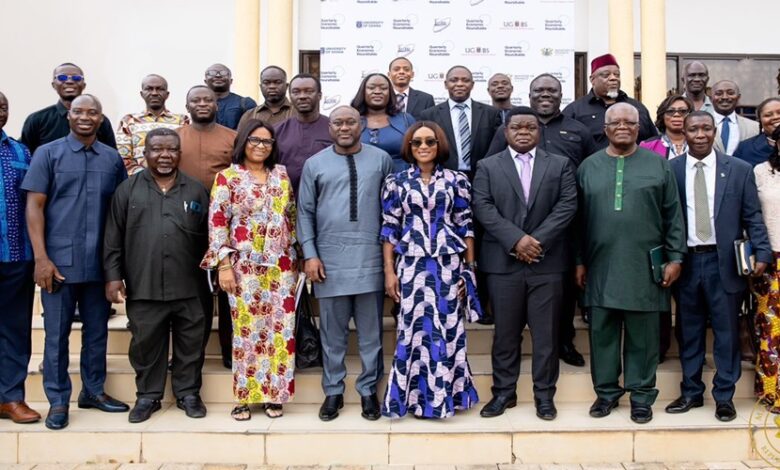
The programme, under the theme “Restoring Macroeconomic Stability,” brought together seasoned economists, government officials, policy think tanks, and academia to brainstorm on the subject.
Dr. Nii Kwaku Sowa, a renowned economist and Country Director of the International Growth Centre, the keynote speaker at the forum, highlighted Ghana’s historical struggle with sustained macro stability, pointing to the persistent challenges such as ballooning budget deficits, soaring debt levels, and volatile exchange rates.
He critiqued the government’s incessant reliance on International Monetary Fund (IMF) bailouts, which he said only offer temporary relief.
He likened them to emergency surgery, advocating instead for sustainable, long-term solutions.
Addressing the structural deficit, Dr. Sowa underscored the need to rectify inherent weaknesses in Ghana’s economic framework to boost revenue generation effectively.
Prolonged tax holidays criticized
He criticized prolonged tax holidays and exemptions, which, he argued, undermine revenue streams crucial for national development.
“There are too many exemptions, particularly in the mining and construction industry. Someone wants to establish a company in your country, and then you give them a 10-year tax holiday. What do you gain by allowing them to establish a company here?” he queried.
Dr. Sowa urged prudent fiscal management amidst unpredictable economic disruptions and cautioned against unbudgeted spending that often characterizes government spending during election years.
“This is an election year, and we should be very careful because it is mostly in election years that you find things slipping into the budget which are not approved.”
He outlined various methods of deficit financing but cautioned against over-reliance on borrowing and urged strategic investments to enhance economic output.
Unpredictable events
Dr. Sowa also highlighted the impact of unforeseen and unpredictable events on the economy, such as the COVID-19 pandemic and social and political issues, like debates around LGBTQ rights, which can influence economic ratings and stability, demonstrating the vulnerability of the economy to both external and internal shocks.
He called for improved efficiency in revenue collection without imposing additional taxes, arguing that the current tax system already heavily burdens businesses. “There are too many taxes and levies killing businesses in the country.”
Thorough review of expenditure practices
He emphasized the need for a thorough review of expenditure practices, noting that a significant portion of the budget is consumed by interest payments on loans and salaries, leaving little room for other essential expenses.
He stressed the importance of better resource allocation to address these imbalances.
He outlined the various strategies available, such as using reserves, borrowing domestically or internationally, and printing money, but cautioned that each method carried its own set of challenges, including the risk of crowding out private sector financing and other economic repercussions.
Dr. Sowa thus called for the implementation of programmes that generate more economic output and reduce the deficit, stressing the importance of careful deficit management and the need for innovative solutions to achieve sustained macroeconomic stability.
Minister’s acknowledgment
Madam Osei-Asare, Minister of State at the Ministry of Finance, acknowledged that Ghana faces significant economic challenges but also opportunities for lasting reforms and change.
She noted that recent years have seen volatility in key economic indicators, with high inflation, currency depreciation, and wide fiscal deficits exacerbated by external factors like global commodity price fluctuations and the COVID-19 pandemic. Despite these challenges, Madam Osei-Asare highlighted positive trends in the macroeconomic landscape.
She indicated that growth is robust, averaging 4.7% in Q1 of 2024, driven by industry, agriculture, and the services sector. Inflation fell to 23.1% in May from 25% in April, marking the lowest rate since March 2022.
The exchange rate has stabilized since 2023, and recent pressures on the cedi are being contained.
Additionally, gross international reserves are improving, fiscal consolidation is holding, and public debt accumulation is declining following the successful completion of the debt restructuring program.
She emphasized the importance of fiscal discipline as the foundation of macroeconomic stability.
She stressed that the Ministry of Finance remained committed to implementing stringent fiscal policies to reduce deficits and manage public debt sustainably.
“The foundation of macroeconomic stability is fiscal discipline. We are committed to implementing stringent fiscal policies to reduce deficits and manage public debt sustainably.”
She emphasized that the Ministry of Finance also aims to rationalize and contain expenditures, especially in the third and fourth quarters, to prevent unbudgeted expenditures.
She noted that controlling inflation is critical to protecting the purchasing power of Ghanaians, adding that the Bank of Ghana continues to pursue prudent monetary measures to address this issue.
To reduce vulnerability to external shocks, the government encourages private investment in key sectors such as agriculture, manufacturing, and technology through flagship programmes like Planting for Food and Jobs and One District, One Factory. Industrialization is key to boosting exports and enhancing economic resilience.
A stable financial sector, she said, is vital for overall economic stability, and the Ministry is committed to implementing regulatory reforms to bolster the resilience of financial institutions, ensuring the soundness of banks and other financial entities.
Madam Osei-Asare called for collective action and strategic policymaking to restore macroeconomic stability.
She acknowledged the growing skepticism regarding such engagements due to the absence of actions and results, emphasizing the need to make this forum a trusted platform for structured national economic engagement.
“While action is needed and indeed paramount, it is through constructive dialogue and informed discourse that the seeds of impactful actions are sown.”
Indigenous solutions
Professor Gordon A. Awandare, the Pro Vice-Chancellor of the University of Ghana, on his part, called for the nation to develop indigenous solutions to ensure long-term macroeconomic stability. ‘
He emphasized the critical role a stable macroeconomic environment plays in fostering business innovation, expansion, and investment.
While acknowledging some positive outcomes of the recent IMF program, such as the reduction in inflation rates, Professor Awandare also pointed to the ongoing challenges, which include the persistent pressure on the cedi and unplanned expenditures during election cycles, contributing to fiscal deficits and macroeconomic instability.
Professor Awandare urged policymakers, economists, and researchers to utilize their comprehensive understanding of Ghana’s economy to devise effective solutions, adding that the expertise and knowledge within the country are crucial for overcoming economic difficulties.
He emphasized that Ghana must leverage its internal resources and expertise to craft sustainable economic strategies, reducing its dependency on external assistance and fostering a robust and stable economic future.
He also praised the collaboration between the government and the University of Ghana, noting that the involvement of the university’s experts is essential in formulating effective economic policies and a vital component in the quest for economic resilience and stability.



