$360M arrives today
-To bring total IMF disbursements to $1.56bn
By Elvis DARKO, Accra
The International Monetary Fund (IMF) is set to transfer a $360 million tranche to the Bank of Ghana (BoG) today, bringing the total disbursements under Ghana’s Post COVID-19 Programme for Economic Growth (PC-PEG) to $1.56 billion.
This follows the IMF Executive Board’s approval on Friday for the continuation of the country’s economic recovery programme.
The approval marks the completion of Ghana’s second review under the Extended Credit Facility (ECF) programme.
Achieving macroeconomic stability
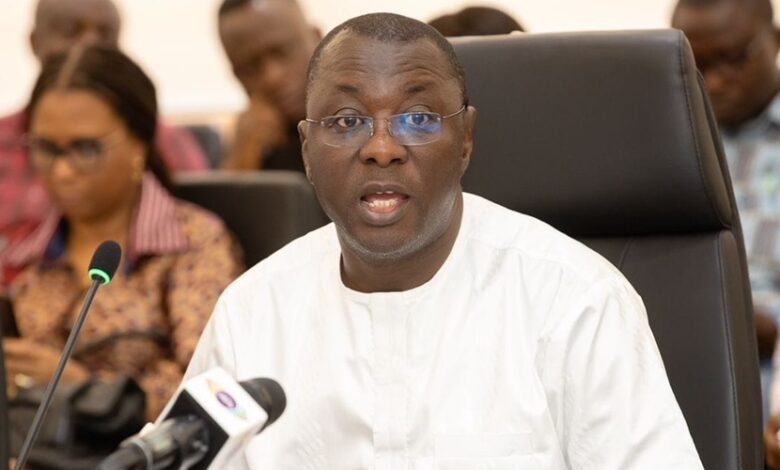
Finance Minister Dr. Mohammed Amin Adam hailed the development as a significant step towards achieving macroeconomic stability.
“I am very confident that we can travel this journey together and bring back an economy that’s strong enough to deliver the benefits to you all over the country,” Dr. Amin Adam stated.
The IMF emphasized the importance of maintaining macroeconomic policy adjustments and reforms, particularly during the upcoming electoral period, to ensure long-term economic stability and debt sustainability.
Ghana’s recent debt agreement with the Official Creditor Committee (OCC) provided the necessary assurances for the completion of the second review.
All quantitative performance criteria met
The IMF noted that Ghana met all quantitative performance criteria for the second review and most indicative targets, with significant progress made on key structural reforms despite some delays.
The country’s primary balance improved by over four percent of Gross Domestic Product (GDP) last year and the BoG maintained a prudent monetary policy to support rapid inflation reduction.
However, the IMF highlighted the need for ongoing structural reforms to foster a more conducive environment for private sector investment, enhance governance, and improve transparency, all of which are crucial for boosting economic potential and creating sustainable jobs.
IMF’s Deputy MD
Kenji Okamura, IMF Deputy Managing Director, summarized the Executive Directors’ views, acknowledging Ghana’s generally strong performance under the ECF programme.
He praised the country’s efforts to restore macroeconomic stability and reduce debt vulnerabilities but stressed the importance of maintaining fiscal discipline, particularly in the lead-up to the December 2024 general election.
Okamura urged the government to continue improving tax administration, strengthening expenditure control and arrears management, enhancing fiscal rules and institutions, and improving the management of State-Owned Enterprises (SOEs). He also emphasized the need for reforms aimed at private sector development to promote inclusive growth and reduce poverty.
$2.32bn inflows expected
Government is expecting $2.32 billion in inflows from its development partners to stabilize the cedi.
The disbursements, expected before the end of the year, will add to the significant foreign exchange reserves already built up by BoG.
$6.2bn reserves
The country’s foreign reserve stood at $6.2 billion as of April 5, 2024.
Disbursement from ongoing projects, includes the $150 million World Bank loan following parliamentary approval.
The expected disbursement of $300 million under the World Bank DPO2, possibly in the 3rd quarter of 2024, disbursements of $200 million to Ghana EXIM Bank and GCB by ECOWAS Bank for Investment and Development (EBID) later in the year are expected to boost the economy.
The expected 2024/25 cocoa syndication proceeds in the 4th quarter of 2024 would also support the strengthening of the cedi as they boost the supply of forex to the markets.
Factors that caused Ghana’s default
Ghana defaulted on most of its $30 billion in external debt in 2022, following the fallout from the COVID-19 pandemic, a surge in inflation, Cedi depreciation, the war in Ukraine, and higher global interest rates, which exacerbated economic strains and made the country’s debt unsustainable.
The country just completed three major debt restructuring operations: domestic debt restructuring, external bilateral debt restructuring, and commercial bondholders debt restructuring.
$4.7bn (GH¢65bn) cancelled from Eurobonds
The restructuring of $13.1 billion of Eurobond debts resulted in significant savings cancellation of $4.7 billion, or GH¢65 billion involving a 37% effective nominal haircut, an increase from the initial 33% offer.
This comprises principal savings of $1.5 billion and interest savings of $2.9 billion.
$4.4bn (GH¢60bn) debt service relief on Eurobonds
Additionally, Ghana will save $4.4 billion, or GH¢60 billion, in debt service, providing further financial relief during the International Monetary Fund (IMF) Programme.
$2.8bn (GH¢39bn) relief on bilateral debts
The $5.4 billion agreement signed with bilateral debt holders will provide a cash flow relief of approximately $2.8 billion, or GH¢39 billion, in debt service, postponed between 2023 and 2026 to be repaid later at a cheaper interest rate.
GH₵61bn haircut for domestic bondholders
Overall GH₵203 billion were exchanged in the Domestic Debt Exchange Programme (DDEP) which has resulted in debt service savings of GH₵61 billion over 2023.
The domestic debt restructuring, achieved a high participation rate of almost 95%.
Domestic Coupon rates drop to 9%
Coupon rates were reduced from 21% to 9% on average, and maturities were extended, easing the near-term local debt service burden that previously consumed more than 40% of the country’s tax revenues.