

Media’s role vital

-Needs enhanced support of all-Chief of Staff
By Selorm GBORBIDZI, Accra
The Chief of Staff, Akosua Frema Osei-Opare, has called for enhanced support for the media industry to promote press freedom and environmental sustainability in Africa.
She said this can be achieved through collaboration between media, civil society organizations, governments, and international bodies to strengthen the media.
She acknowledged that the harsh conditions of climate change on the continent required concerted efforts by all stakeholders to tackle it head-on.
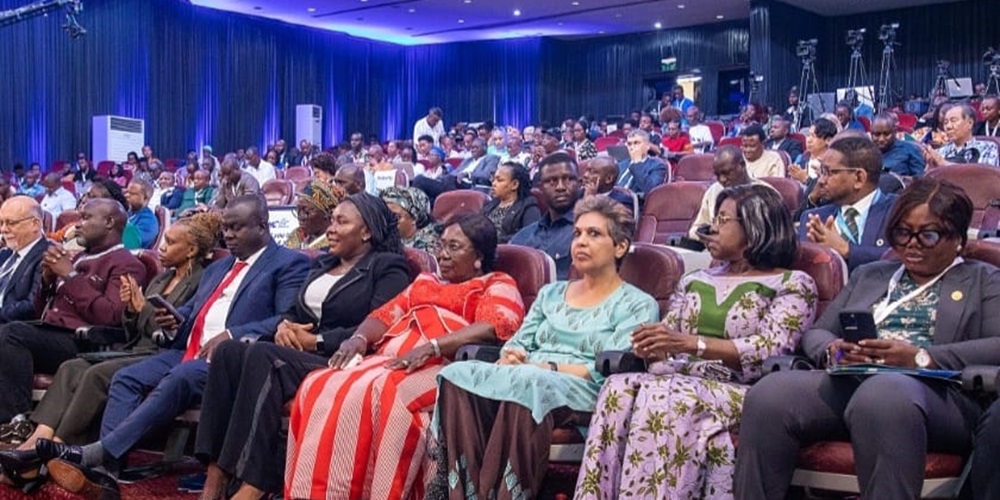
She made the call in a speech on behalf of President Nana Akufo-Addo at the formal opening of the 3rd African Media Convention (AMC), a landmark event aimed at shaping the future of African media.
Madam Osei-Opare highlighted the vital role of the media in shaping public opinion, fostering democracy, and driving positive change.
She underscored the importance of providing the necessary support and resources to enable media professionals to fulfill their crucial mandate effectively.
“The media is a vital pillar of democracy and plays a pivotal role in informing, educating, and empowering citizens.”

“We must recognize the invaluable contributions of journalists and media organizations and ensure they have the support they need to carry out their work,” Madam Osei-Opare stated.
She called for a concerted effort to create an enabling environment that fosters media freedom, innovation, and sustainability.
She said it is imperative to enhance the capacity of media practitioners on environmental reporting to ensure timely and accurate information on climate change issues and avert false information to the public.
The media should be ambassadors to raise awareness about climate change crises and highlight the importance of reliable and accurate information in addressing environmental challenges, especially climate change’s disproportionate impact on the continent, Mrs. Osei-Opare stressed.
Influencing public opinion
The Chief of Staff was convinced that the media could play a pivotal role in influencing public opinion on environmental issues, which would positively impact people’s lives.
On tackling environmental challenges, she said it would require a strict regulatory regime, law enforcement, and effective media education and sensitization campaigns.
“We cannot underestimate the importance of a free and vibrant media in Africa, especially in the face of pressing challenges such as climate change and misinformation.
“It is imperative that we work together to strengthen the media ecosystem and provide the necessary support for journalists to fulfill their essential role,” Madam Osei-Opare said.
Fatimatu Abubakar
Echoing the Chief of Staff’s sentiments, Information Minister-designate Fatimatu Abubakar emphasized the government’s commitment to supporting the media industry.
She outlined various initiatives implemented by the Ghanaian government, including the launch of media capacity enhancement programs and the establishment of mechanisms to combat misinformation.
“We recognize the vital role of the media in our society and are committed to providing the support and resources needed to ensure journalists can perform their duties effectively,” Abubakar stated.
President of the Ghana Journalists Association (GJA), and Co-Chair of the Local Organising Committee, Mr. Albert Kwabena Dwumfour in his opening remarks, assured that the media would promote free and objective reporting on Ghana’s upcoming elections.
He underscored the need to harness the power of the media to build a brighter future for Africa.
The GJA President was hopeful that the Convention would serve as a platform to bring innovative ideas and forge partnerships towards promoting the socio-economic development of the continent.
He said hosting the conference in Accra was historic as it coincided with the Association’s 75th Anniversary and expressed profound gratitude to President Akufo-Addo for giving his blessings and support in making the Convention a reality.
“As we gather here, we recognize the critical role that the media plays in shaping our continent’s narrative and driving progress. We acknowledge the important work that you do, and we appreciate your dedication to telling the African story,” Mr. Dwumfour stated.
Leslie Richer
On her part, Director of Information and Communication at the African Union Commission, Leslie Richer, emphasized the pivotal role of the media in advancing the AU’s agenda for a prosperous and integrated Africa.
She underscored the importance of collaboration between the AU and media stakeholders to effectively communicate the organization’s initiatives and achievements to the African populace.
She called for increased support for media capacity-building initiatives to ensure journalists are equipped with the skills and knowledge necessary to accurately report on AU developments and promote the organization’s vision for the continent.
Makmid Kamara
Additionally, Makmid Kamara, Regional Director for the International Fund for Public Interest Media (IFPIM), highlighted the need for a conducive environment for media freedom and independence across the continent.
He stressed the importance of safeguarding journalists’ rights and freedoms, particularly in regions where press freedom is under threat.
He called on African governments to uphold their commitments to press freedom and ensure the safety and protection of journalists as they carry out their essential role in society.
3-day Convention
The three-day Convention is on the theme: “The African Media We Want: Enhancing Freedom, Innovation, and Environmental Sustainability in a Dynamic Media Landscape.”
2,000 participants
It brought together about 2,000 participants across the continent, including policymakers, Ministers of State, diplomats, academia, researchers and media practitioners to brainstorm and advance press freedom in Africa.
The AMC is an annual conference providing a platform to reflect on the fundamental role of journalism on the continent, celebrate the fundamental principles of press freedom and deliberate on measures to safeguard media freedoms.
The inaugural AMC took place in Arusha, Tanzania in 2022, followed by a successful second gathering in Lusaka, Zambia in 2023.
The forum also focuses on promotion of access to information, the safety of journalists and media viability in the African Union Member States.
It is organised by UNESCO Addis Ababa Liaison Office to AU and UNECA, the African Union, hosted by the Ministry of Information, the Ghana Journalists Association, and various media partners.
During the conference, the stakeholders would collaborate to develop action plans and advocate policies that foster a free, vibrant, and impactful press across the continent.
It would also deliberate on ways to leverage Artificial intelligence (AI) in promoting efficient media work on the continent.
Key objectives
Key objectives of the Convention are to evaluate the status of press freedom, access to information, safety of journalists and media viability in Africa, defend the media from attacks on their independence, promote public interest media and pay tribute to journalists who have lost their lives in the exercise of their profession.
It is a date to encourage and develop initiatives in favour of media viability in Africa, press freedom, access to information and to assess the state of press freedom in the digital era.
It acts as a reminder to governments of the need to respect their commitment to press freedom and a day of reflection among media professionals about issues of press freedom and professional ethics.



