Terkper calls for vigilance to sustain Ghana’s recent economic gains
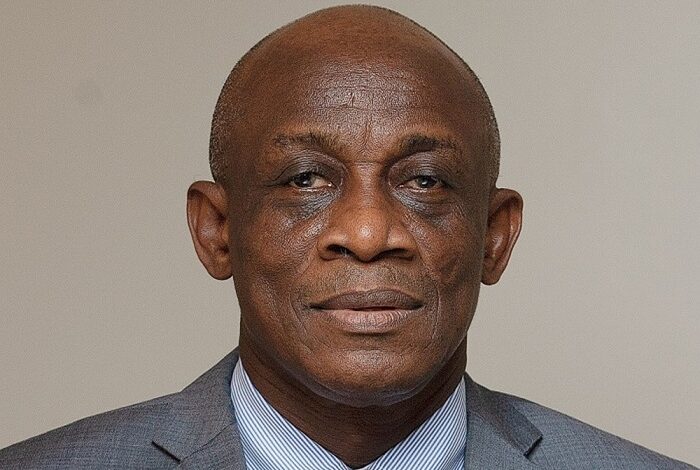
Former Finance Minister Mr. Seth Terkper, has cautioned the government against complacency as Ghana begins to see some positive signs of economic growth under the ongoing $3 billion loan-support programme with the International Monetary Fund (IMF).
He admitted that the Fund’s programme, though in its formative phase, has led to the Ghanaian economy showing some bright prospects but described it as “a lackluster (an uninspiring) performance, which does not give much hope.”
Responding to a question from the Ghana News Agency on the performance of the economy so far, he said, “it’s good for the economy, and Ghanaians, but it’s important not to allow things to get bad, particularly the depletion of buffers.”
He was speaking during a virtual media briefing on Ghana’s ongoing IMF Extended Credit Facility (ECF), backed by a homegrown Post-COVID-19 Program for Economic Growth (PC-PEG)
“For a true assessment of every Fund program, normally it’s going to the end of the program; we’re barely a year into this one from the first review, but we’ve shown the positives,” he said.
Mr. Terkper, who is now the Executive Director of a consulting firm, Public Financial Management (PFM) Tax Africa Network, said more ought to be done, especially on reducing the country’s expenditure and debt.
He called for the setting up of a credible debt repayment system and a debt management office, which he said would be helpful in refinancing and reducing debt accumulation.
“This is as urgent as it was when we set up the sinking fund in 2013/2014. Immediately we set up the Sinking Fund, and we did the refinancing, the rate of debt accumulation started to decline,” he said.
“If you do not set aside money for debt repayment when you’re growing, it’s a mirage, you can never reduce your debt accumulation,” the former Finance Minister emphasized.
Zero financing by the Bank of Ghana, a 2015 World Bank bond, and a Treasury Single Account, and ESLA to pay off Independent Power Producers (IPP) debts, all helped to slow down debt accumulation, he noted.
“You can grow your way out of debt, if it were possible, we would have achieved it. You cannot grow your way out with one major qualification if you do not channel part of that growth into debt repayment,” he said.
Going forward, he called for more domestic tightening to reduce expenditure, noting that, “revenue is still stagnant though targets were exceeded last year. The significant levies we imposed did not bring in the necessary revenue boost.”
Regarding cost-cutting measures under the 2015 IMF program to ensure fiscal consolidation particularly in an election year, he urged the government to temporarily suspend some school and hospital projects.
To improve creditors and investors’ confidence in the economy, Mr. Terkper encouraged the Ministry of Finance to provide timely information on the country’s debt and arrears situation.
Ghana’s $3bn loan-support programme is aimed at restoring macroeconomic stability and debt sustainability, build resilience, and lay the foundation for stronger and more inclusive growth. The country has in the first two tranches received some $1.2bn, which impact has been a growth in Gross Domestic Product (GDP) of 2.9% at the end of 2023, reduction in inflation, and exchange rate depreciation.