

Those who can afford should pay for secondary education – Moses Baiden
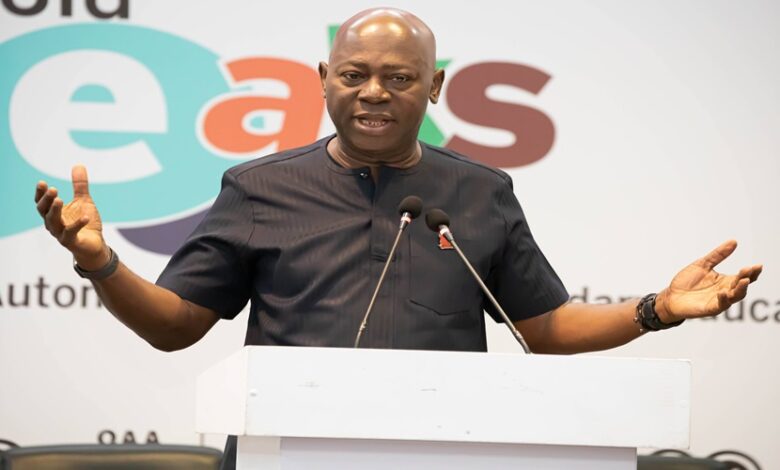
By Daniel NONOR , Accra
The Alumni Alliance of Secondary Schools in Ghana is advocating for a policy framework that allows modules to attain some degree of financial and administrative autonomy by churches and the private sector to co-administer secondary schools for better educational outcomes.
The call is for the establishment of an autonomous, sustainable model that strikes a fine balance between financial sustainability and educational excellence.
The model emphasizes the importance of meritocracy, where scholarships are awarded to deserving students based on both financial needs and academic merits.
This is to ensure that those who can afford to pay for secondary education contribute to the school’s sustainability while also providing opportunities for talented but financially disadvantaged students to access the same high-quality education, all backed by an endowment fund.
The group argues that while Ghana’s Free Senior High School policy has had very notable outcomes such as granting more access and alleviating financial burdens on families, there have been significant challenges and strain on educational standards.
These constraints, they said, result from the influx of students into the system, leading to overcrowded classrooms, stretched resources, and sometimes difficult learning environments.
Mr. Moses Kwesi Baiden Jnr., keynote speaker at the 2024 edition of Achimota Speaks held in Accra under the theme “Exploring Models of Autonomy in Ghana’s Secondary Education,” argued that while education must be free as much as possible when a country can afford it, room must be made for collaborations with other relevant stakeholders based on international benchmarks to improve outcomes.
He noted that the current state of public schools post-Free SHS and the concerns raised about standards and the ability of the products to compete in an increasing digital global world are putting a strain on parents in making difficult choices for their wards.
“Many who can afford it feel compelled to transfer their children to private institutions despite the considerable financial strain this entails,” he said.
However, he emphasized that while private schools may offer superior academic standards, there are often losses in their curriculums, missing a national and cultural richness that was previously inherent in mission and public secondary schools.
“Those who experienced secondary education in previous decades were fortunate to receive both academic excellence and a culturally enriching experience. Reclaiming this balance in today’s educational landscape is paramount,” he added.
Mr Baiden, President (Ebusyapanyin) Elect of Mfantsioim Old Boys Association (MOBA) and CEO and of Founder of the Margjns ID Group emphasized that it was time to revisit past educational models that successfully integrated these elements while still meeting international benchmarked standards, academic rigor, and market relevance.
“Exploring avenues for autonomy within education systems globally could provide opportunities to reintroduce cultural components into the curriculum and elevate the overall quality of education in Ghana’s secondary schools,” he said.
Exploring some successful models of autonomy in secondary schools globally, such as the Chartered Schools in the United States of America, the Academies in the United Kingdom, the Bridge International Academies in Kenya, Uganda, and India, among others, Nigeria Mr. Baiden emphasized the key elements of flexibility, control, and responsibility in these models that drive continuous improvement in teaching quality, student outcomes, and overall school performance.
He emphasized that the advocacy on the subject of collaboration, autonomy, and semi-autonomy of the administration and ownership of secondary schools is geared towards addressing the challenges facing second cycle education in the country and to support and enhance free SHS to the next level.
“By working together with policymakers, educators, community leaders, and other stakeholders, we can design and implement policy reforms that leverage alumni, churches, and private sector resources and expertise to enhance educational access and outcomes,” he noted.
He insisted that for better educational outcomes from the proposed models, there must be a range of schools at the second cycle of education, and within that range, premier schools for premier students, selected on merit.
He thus called for bipartisan discourse to build a national consensus on the best way forward for the evolution of second-cycle education, adopting the best autonomous or semi-autonomous models that fit the purpose for Ghana.
Transaction advisor, serial entrepreneur, advocate for education, personal and community development, Mr. Yaw Benneh-Amponsah, a panelist that discussed the matter, stressed that the idea of autonomy should not be seen as an individual-driven agenda but a well-structured institution that will bring the best outcomes in the country’s educational system.
Executive Director of Africa Education Watch, Mr. Kofi Asare, a co-panelist on the program, indicated the need to strengthen the coalition and to break the autonomy idea into smaller segments to make it more appealing to policymakers.
A former Director-General of the Ghana Education Service, the Very Reverend Ama Afo Blay, also a panelist on the program, said the timing for the advocacy was ripe and doable with the right policy framework.



