Government to revamp Tax System to spur growth
Government has reaffirmed its commitment to creating a business-friendly environment while ensuring a fair and efficient tax system, aiming to broaden the tax base and improve compliance to reposition the country on a path of robust economic growth.
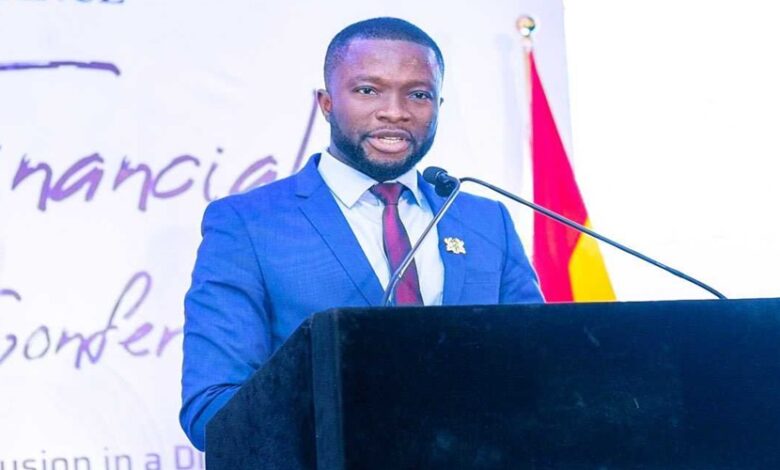
Addressing the Ghana Investment Promotion Center (GIPC) breakfast meeting with the esteemed members of the Club 100, the Deputy Minister for Finance, Dr Alex Ampaabeng underscored the government’s dedication to fostering a collaborative economic environment to sustain the current growth trajectory.
He emphasized the government’s ongoing efforts to attract both local and foreign investments, a key component of their strategy to revitalize the economy.
“As indicated in the mid-year budget presented last week, Ghana’s medium-term macroeconomic outlook remains very strong and positive,” stated the Deputy Minister. Highlighting the progress made, he pointed to the GDP growth of 4.7% in the first quarter of 2024, a significant improvement from the 2.9% recorded in 2023. Additionally, inflation has decreased to 22.8% in June 2024, down by 31 percentage points from December 2022.
The government’s fiscal policies have also stabilized the exchange rate, which saw an 18.6% depreciation against the dollar by June 2024, improving from the 22% recorded during the same period last year. The Gross International Reserve has strengthened, now covering 3.1 months of imports as of June 2024. The successful conclusion of the second review of the IMF extended credit facility, with a disbursement of $360 million, has brought the total disbursement to date to $1.6 billion.
Debt restructuring efforts have provided significant relief, including a $2.8 billion relief from the International Official Creditor Committee and $4.7 billion savings from Eurobond holders. This represents a debt cancellation of $4.7 billion, alongside a $4.4 billion saving on debt servicing up to the end of the IMF program.
Moreover, the government has launched an $8.2 billion SME Growth and Opportunities Program to support the high growth potential of small and medium-sized enterprises (SMEs). This initiative is designed to drive the growth of SMEs, making them as productive as the Ghana Club 100 entities and significantly contributing to economic growth and development.
Dr Ampaabeng noted further that government plans to continue targeted investments into strategic sectors, including robust support for agribusiness, technology, digitization, and essential infrastructure projects. This policy orientation assures that the Ghana Investment Promotion Centre (GIPC) will play a pivotal role in creating a conducive business environment.
He explained that from 2017 through the first quarter of 2024, total investment recorded was approximately $13.1 billion across 1,193 projects in various sectors, reflecting robust investment activity and diverse opportunities in the economy.
Furthermore, several initiatives are underway to further enhance the investment climate, including the review of the GIPC Act 2013, Act 865, aimed at improving Ghana’s global competitiveness. The development of a new investment code, an investor-driven mechanism system, and comprehensive customer relationship management software also reflects the government’s commitment to continuous improvement and digital transformation.
He emphasised that public-private collaboration will be crucial to driving economic progress. Adding that the Minister for Finance’s recent engagement with private sector players, including CEOs of banks in Ghana, AGI, GUTA, and the Chamber of Commerce, underscores strategic collaborations aimed at supporting economic goals through private sector participation.
Additionally,the government is collaborating with the Ghana Revenue Authority to streamline and revise administrative processes associated with tax administration, assessing and revising the entire tax system to address concerns from the business community about the complex tax system.
“While we are committed to creating a business-friendly environment, it’s imperative that we also ensure a fair and efficient tax system,” he emphasized.
He added that government aims to broaden the tax base and improve compliance to generate the needed revenue for development.