BoG acted decisively to save economy – Dr Bawumia
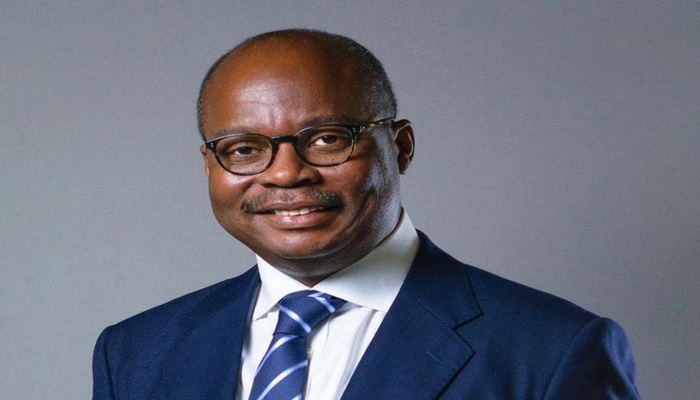
Flagbearer for the New Patriotic Party (NPP), Dr. Mahamadu Bawumia, has praised the Bank of Ghana (BoG) for its proactive measures in rescuing Ghana’s economy from the brink of collapse during challenging times.
Addressing a public lecture at the University of Professional Studies, Accra (UPSA), Dr. Bawumia commended the central bank for responsibly providing vital financing to sustain the economy during critical moments.
He highlighted the central bank’s crucial role in averting an economic downturn, emphasizing its dedication to prioritizing the welfare of Ghanaian citizens.
Acknowledging the unfair criticism faced by the BoG for its decisive actions, Dr. Bawumia lauded the institution’s commitment to safeguarding Ghana’s economic stability.
He noted that data indicated the temporary nature of the financing provided to the government by the BoG, dispelling misconceptions surrounding its interventions.
He attributed the gradual return of confidence in the financial system, stabilization of inflation, and economic activity to the BoG’s prudent actions.
There has been zero financing in 2017, 2018, 2019 and 2021.
But, BoG only financed government in the pandemic year of 2020 and the crisis year of 2022.
In 2020, parliament suspended the Fiscal Responsibility Act, 2018 (Act, 982), due to the pandemic-induced crisis.
In response to these economic challenges, government introduced a unique COVID-19 Relief Bond programme amounting to GH¢10billion.
By December 2022, the Bank of Ghana’s net claims on government had increased by GH¢44.5billion considering all claims and deposit liabilities.
The main intervention amounted to GH¢37.9billion, addressing auction shortfalls and matured bond payments where government lacked adequate resources.
In 2017 and 2018, BoG incurred negative equity from the impairment of legacy liquidity support loans granted in 2015 and 2016 to insolvent banks, which external auditors impaired due to the doubtful prospects of recovering from those insolvent banks.
However, BoG recovered and generated profits of GH₵1.6 billion in 2019, GH₵1.5 billion in 2020 and GH₵1.4 billion in 2021.
From ¢53b in 2016, the Bank’s assets have grown by nearly one and a half to ¢126 billion as of the end of 2022.
A major plank of the corrective action required for the IMF programme was the Domestic Debt Exchange, where the stock of government debt was to be halved from 105% of Gross Domestic Product (GDP) to 55% by 2028.
The holders of Government debt had their debt instruments exchanged for new ones with lower interest payments and longer terms.
The outcome of DDEP shows that the threshold of 55% of GDP was not met. BoG therefore acted as a loss absorber used to close the gap to enable Ghana to meet the debt threshold that qualified Ghana for the IMF programme.
This means the Bank of Ghana had to absorb a 50% haircut on its non-marketable holdings of Government debt instruments.
This singular act led to significant impairment losses of GH₵32.3 billion to the Bank’s accounts.
Impairments of marketable instruments also accounted for another GH₵16.1 billion, bringing the total impairments of government holdings to GH₵48.4 billion.
As experienced by central banks globally, price and exchange rate movements led to a loss of GH₵S5.2 billion while impairments of Ghana Cocoa Board (COCOBOD) loans amounted to GH₵4.7 billion.
These are the reasons BoG reported a loss of GH₵60.08 billion in 2022, resulting in GH₵55.1 billion negative equity.