18 Strategic policies agreed
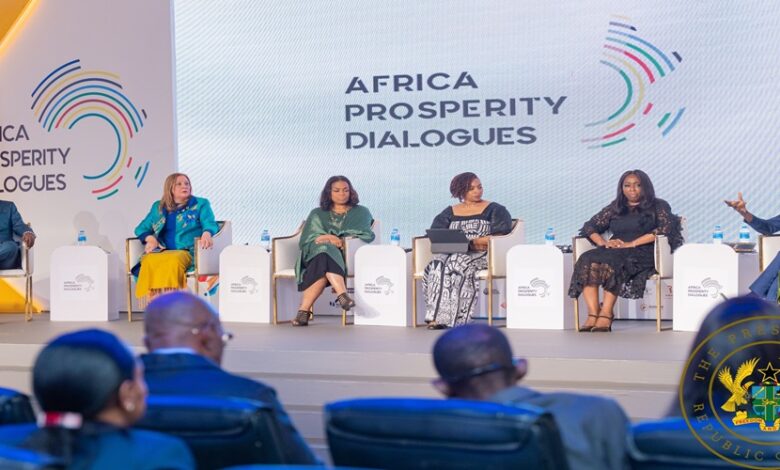
-By Heads of state, business leaders to drive Africa’s prosperity
By Elvis DARKO, Accra
Heads of state and business leaders from across the African continent have unveiled a collective commitment to drive the prosperity of the continent.
In all, 18 policies comprising five by business leaders and 13 by Heads of state were agreed upon.
Top business leaders, after thorough deliberations, articulated a vision encapsulated in five major endeavors.
Array of initiatives
These policies encompass a wide array of initiatives, ranging from leveraging public-private partnerships for infrastructure development to fostering an enabling environment for industrialization, and promoting climate-smart agricultural methods.
Their first commitment was to forge collaborations with central banks, financial institutions, and key stakeholders, aiming to amplify investments in technology.
This initiative seeks to ensure the interoperability and standardization of payment systems across the continent, with a focus on enhancing efficiency and consistency in the payment ecosystem.
Their second commitment centers on boosting the production of diversified and value-added manufacturing goods, intending to elevate African nations along the value chain.
Simultaneously, a third commitment was made to amplify investments in digitalization and technology, fostering integration within regional and global value chains.
Recognizing the pivotal role of technology in transforming agriculture, the fourth commitment involves embracing technologies such as precision farming, drone technology, and IoT-based solutions to enhance agribusinesses.

This step aims to significantly improve productivity, efficiency, and sustainability within the agricultural sector.
In a final and crucial commitment, business leaders pledged to prioritize investments in critical minerals essential for various emerging technologies, all while maintaining environmentally sustainable mining practices.
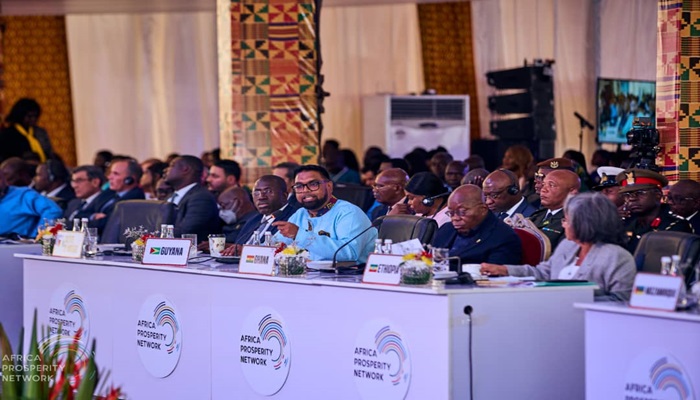
These historic pledges were made during the 2024 Africa Prosperity Dialogues (APD), a pivotal gathering organized by the Africa Prosperity Network (APN) and the Africa Continental Free Trade Area (AfCFTA).
The three-day APD centered around the theme “Delivering Prosperity in Africa: Produce, Add Value, Trade.”
A new era for the continent with 13 strategic policies
As the commitment to African prosperity echoed through the APD, the collaborative spirit between business leaders, governments, and development partners heralds a new era for the continent, poised for sustainable growth, economic prosperity, and a brighter future.
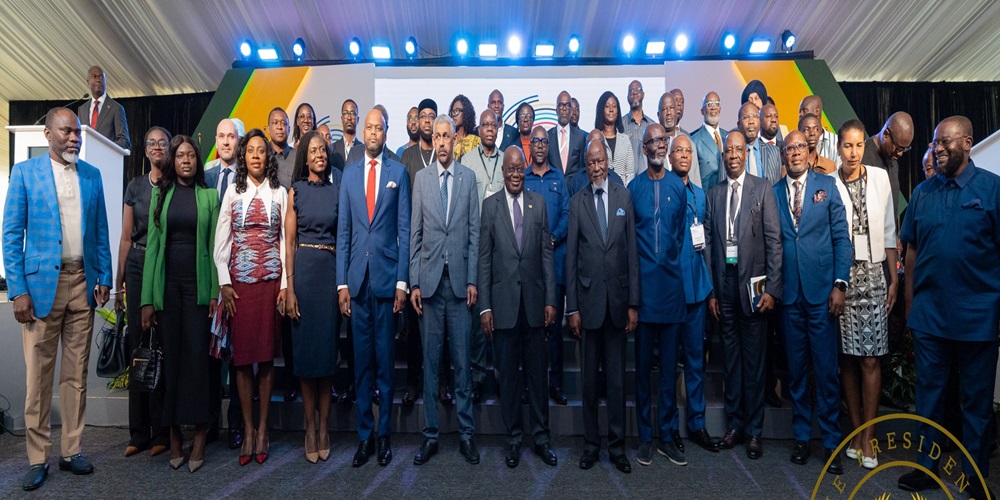
After their summit with business leaders on the third day of the dialogues, heads of state and government representatives committed to 13 strategic policies.
These policies include leveraging public-private partnership (PPP) arrangements for increased investments in infrastructure development, with a focus on transportation, logistics, and digital infrastructure.
Intra-African trade and enhanced connectivity
The aim is to foster deeper intra-African trade and enhance connectivity for African countries to global markets.
Another commitment involves incentivizing financial institutions to increase support for businesses in the manufacturing sectors by offering favorable interest rates.
This entails providing loans for capital investment, expanding production facilities, or acquiring machinery and equipment.
Innovative financing mechanisms will be utilized to mobilize necessary funding for addressing infrastructure gaps on the continent, including advancing road transportation and services, energy, railway, air, and maritime transportation systems.
The development and uptake of innovative financial technologies (FinTech) will be nurtured, including mobile payments, digital wallets, and online payment platforms.
Trade facilitation will be enhanced by simplifying customs procedures, reducing trade barriers, and standardizing regulations, strengthening Africa’s integration into regional and Global Value Chains.
Oil-rich African nations to develop integrated refineries
Oil-rich African nations committed to actively fostering the development of integrated refineries, aiming to diminish reliance on imported petrochemicals and relieve pressure on constrained foreign exchange reserves, contributing to improved macroeconomic stability.
To establish an enabling environment for industrialization, the focus will be on promoting diversified and value-added manufacturing, fostering innovation, skill development, and investments beyond primary commodities within and beyond the Global Value Chains.
Efforts will be made to deepen regional integration and leverage the AfCFTA agreement to integrate into regional and global value chains.
Regional economic communities will be utilized to enhance intra-African trade, creating larger markets and economies of scale.
Regional and global value chains
Policies will be formulated and implemented to bolster African companies, including start-ups, enabling their integration at higher levels within regional and global value chains.
The overarching goal is to achieve substantial economic growth, prosperity, poverty reduction, and sustainability in the social sector.
Increased investments in agriculture will significantly support smallholder farmers, providing them access to modern farming techniques, high-quality seeds, fertilizers, irrigation systems, and essential agricultural infrastructure to enhance food production and increase productivity.
Promotion of climate-smart agricultural methods, including conservation farming, agroforestry, and the cultivation of drought-resistant crop varieties, is prioritized.
Support for farmers
Support will be provided to farmers in adapting to shifting climate patterns and mitigating crop losses caused by extreme weather events.
Emphasis will be placed on the value addition of natural resources through refining, manufacturing, and producing finished or semi-finished goods to attract higher prices in global markets.
Additionally, mining practices will be environmentally sustainable, with costs aligned with global standards and stringent enforcement measures.
Enhancing telecommunication networks
Efforts will be made to enhance telecommunication networks, expand internet accessibility, and establish resilient financial infrastructure to support electronic transactions efficiently.
One pivotal theme that resonated throughout the dialogues was interoperability.
Interoperability, the fundamental ability of different computerized products or systems to connect and exchange information, emerged as a key focus during the dialogues among business leaders, heads of state, and industry players.
Selorm Adadevoh of MTN, Patricia Obo-Nai of Vodafone Ghana, Dr. Ernest Addison, Governor of the Bank of Ghana, and President Akufo-Addo voiced their support for interoperability.
They emphasized the importance of giving due attention to interoperability and its necessary architecture in decision-making across the African continent.
The role of AfCFTA
The AfCFTA Secretariat pledged to provide support to member states that have not ratified the agreement, encouraging them to do so.
Additionally, they expressed a commitment to progress from the Guided Trade Initiative and implement comprehensive trading among all state parties under the AfCFTA agreement.
Multilateral Development Banks
Various financial institutions, including Multilateral Development Banks, Regional Development Finance Institutions, commercial banks, investors, and other financiers, express their commitment to collaborate with governments and the private sector.
Their aim is to provide accessible and affordable trade finance, supporting private sector engagement with the Africa Continental Free Trade Area (AfCFTA) market.
Development partners, including UNECA, UNDP, Africa Development Bank, Afriexim Bank, and others, affirm their dedication to offering coordinated support for the full implementation of the AfCFTA.
This involves assistance to governments, businesses, and the AfCFTA Secretariat.
Eight high-level sessions at APD
Eight high-level sessions covered topics such as innovative business approaches, unlocking Africa’s food and agribusiness potential, integrating into the global value chain of Africa’s natural resources, and enhancing intra-African trade through improved transportation and logistics.
Additional sessions focused on critical enablers for single market success, including leveraging infrastructure, innovation, and technology; strategic financing and investment in infrastructure; scaling up mobile interoperability for financial inclusion and intra-African trade; and smart market access strategies and incentives for manufacturing.
Before each high-level panel discussion, leading figures, including Briggette Harrington, President & CEO of Igire Coffee, and Josefa Leonel Correia Sacko, AU Commissioner for Agriculture, set the context for deliberations.
Government officials and industry leaders, such as Ousmaila Joof, Minister of Trade, and Solomon Quaynor, Vice-President of the African Development Bank, contributed to shaping the discussions.
The commitment to pursue prosperity in Africa was made during the 2024 APD, where business leaders, governments, and development partners convened under the auspices of the Africa Prosperity Network, AfCFTA, and the government of Ghana.
The heads of state and government representatives participating in the dialogues on the African continent included prominent leaders such as Nana Addo Dankwa Akufo-Addo, President of Ghana, Dr. Mohamed Irfaan Ali, President of Guyana, and Sahle-Work Zewde, President of Ethiopia.
Other notable participants were Adriano Maleiane, Prime Minister of Mozambique, Tiémoko Meyliet Koné, Vice-President of Côte d’Ivoire, Mr. Ibrahim Boughali, Speaker of the People’s National Assembly of Algeria, and Mohamed M. Abou El Enein, Deputy Speaker of Egypt’s House of Representatives, and Chairman & Founder of Cleopatra Group, Egypt.
The event took place at the Peduase Presidential Lodge in the Eastern Region from January 25 to January 27, 2024.