EU sets tough terms for cocoa trade amid deforestation alert
By Prince Opoku DOGBEY, Accra
The European Union (EU) Delegation to Ghana, represented by Raffaele Quarto, has cautioned cocoa-producing nations in Africa against global deforestation.
The directive declares that nations facing deforestation challenges will no longer be able to export cocoa to the lucrative EU market.
A law passed by the European Parliament, extends to various industries, including cocoa, cattle, coffee, palm oil, rubber, soy, and wood.
Companies engaged in these sectors must demonstrate that their products are not sourced from deforested land or land with forest degradation.
Companies involved in cocoa exports are specifically required to submit “due diligence” reports that outline the steps taken to verify the origins of their products, ensuring they comply with local regulations on human rights and respect the rights of Indigenous people.
While the EU has clarified that no country or company will face an outright ban, access to the EU market will be contingent upon the supplier providing a “due diligence” statement confirming that the cocoa product is not sourced from deforested land.
Furthermore, the EU delegation to Ghana emphasized that nations involved in cocoa production must cease the use of child labor and labor slavery, stating that stringent actions will be taken against countries found to be in violation of this mandate when it comes to trade.
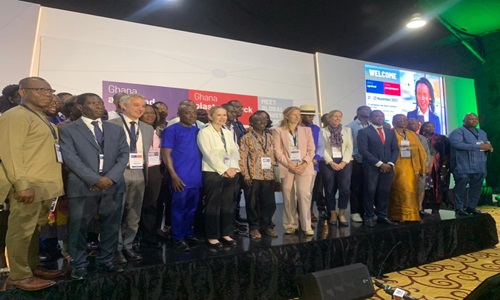
Speaking at the sixth international trade show and conference in Accra, under the theme “Export Procedures and Opportunities in the EU Market,” Mr. Quarto stated that these regulations are designed to ensure sustainability in the cocoa sector and address the challenges posed by climate change.
“The EU has a regulation, and that is that it won’t accept cocoa from any country in Africa facing the issue of deforestation. We are doing this to ensure that cocoa production is sustainable,” said Mr. Quarto.
He further explained that these regulations aim to guarantee the high standards and quality of cocoa beans exported to the European market.
Mr. Quarto expressed optimism that the directive would contribute to increased livelihoods for farmers, boost trade, and create equal opportunities by preventing labor exploitation.
In response to the EU directive, the Deputy Chief Executive Officer of Ghana Cocoa Board (COCOBOD), Dr Emmanuel Opoku assured that COCOBOD is fully prepared to meet the new requirements.
He highlighted the ongoing efforts to preserve forests, emphasizing the commitment to sustainability in cocoa production.
The EU’s stringent measures underscore a growing global commitment to responsible and sustainable practices in the agricultural sector, reflecting the urgency of addressing environmental and social challenges.