

EU commits to boost Ghana’s economic development through trade and technology
By Prince Opoku DOGBEY, Accra
Ghana has secured support from its European Union (EU) counterparts to enhance its economic development through manufacturing expertise, technology, and trade.
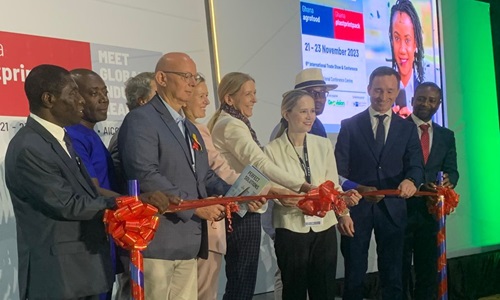
The commitment from the EU was announced at the sixth International Trade Show and Conference in Accra, which focused on “Export Procedures and Opportunities in the European Union (EU) Market.”
The event aimed to strengthen relationships between Ghana and the EU, providing a platform for sharing technological and manufacturing expertise to improve critical sectors of the Ghanaian economy, including agriculture, food processing, goods manufacturing, and technology.
Italian Ambassador to Ghana, Daniela d’Orlandi, emphasized the potential for Italian technology to transform Ghana’s abundant natural resources into value-added products for the export market. She highlighted the need for Ghana to leverage Italian expertise in manufacturing, equipment, and capital goods to add value to its natural resources.
“We believe that the economy could benefit from the Italian technology expertise to transform its natural resources and raw materials and create added value here,” she stated, noting that the fair provided an opportunity for Ghanaian companies to learn from Italian counterparts.
Italy’s economy, primarily based on manufacturing and agroprocessing of food products, serves as a model for increasing exports and economic power through manufacturing.
Ambassador d’Orlandi disclosed that Ghanaian delegates had been sent to Italy as part of the international trade show to acquire practical skills in manufacturing sectors such as agroprocessing, plastic recycling, and product manufacturing.
The ambassador expressed optimism that the training in Italy would contribute to Ghana’s economic growth, increase foreign earnings, and boost bilateral trade.
She highlighted Italy’s commitment to providing training and opportunities across various sectors, fostering a strong partnership with Ghanaian companies.
Paul März, Managing Director of Fair Trade, emphasized the company’s support for boosting agricultural development in Ghana through sustainability methods.
The objective is to make Ghana food-sufficient, import less from abroad, create jobs, and reduce dependence on imports.
Anthony Morrison, CEO of the Chamber of Agribusiness Ghana, expressed optimism that the EU’s support would facilitate trade between Ghana and the EU market.
He viewed the event as a platform to promote agribusiness and reward outstanding agripreneurs, emphasizing the importance of projecting African products beyond the local market.
The commitment from the EU to share expertise and support economic development is seen as a positive step in fostering stronger economic ties between Ghana and European nations.
The event is expected to attract investors, further contributing to Ghana’s economic growth and sustainability.



