

Cabinet outlaws off-book arrears
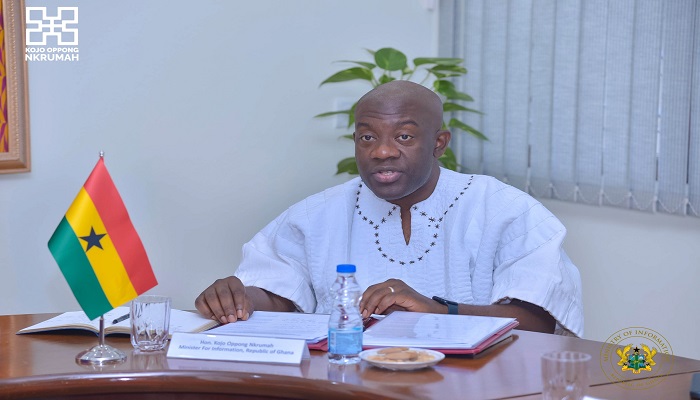
– Orders stringent spending controls
Cabinet has taken a strong stance against off-book arrears that have historically strained the nation’s financial health.
It has therefore demanded strict adherence to the Public Financial Management System to ensure stringent spending controls.
To achieve this target, government commits to ensure that all public entities adopt the Integrated Financial Management Information System (GIFMIS) platform.
This is one of the several decisions taken at a three-day Cabinet retreat to review the economy which started from Friday, October 20 and ended on Sunday October 2022.
Minister for Information, Mr Kojo Oppong Nkrumah announced this to journalist during an interview at the end of the retreat.
The Cabinet retreat deliberated on the economy and the humanitarian crisis that has hit many parts of Lower Volta following the spillage of the Akosombo and the Kpong Dams.
The inter-ministerial committee established to help address havoc caused downstream by the Akosombo Dam spillage is expected to hold a media briefing tomorrow to share details of planned government interventions and the way forward.
According to Mr Oppong Nkrumah, the retreat sanctioned a host of economic measures to further bolster Ghana’s economic foundations, catalyze growth, and foster an environment conducive to job creation and prosperity.
He stated that the decisions taken are poised to play a pivotal role in government’s effort to revitalize the economy.
Mr Oppong Nkrumah said Cabinet is satisfied with the progress in implementing the Post COVID-19 Programme for Economic Growth (PC-PEG), which has contributed to a sense of relative stability.
He noted that the stability has led to a decline in inflation, a more stable national currency, an improved international reserve position, and significant advancements in fiscal consolidation.
“The first thing was to take note of the implementation of the progress of the Post COVID-19 PC-PEG and cabinet was pleased with the results so far; the relative stability that is returning to the Ghanaian economy and the relative recovery that we’re beginning to see.
“As you can notice inflation is coming down, though currently about 38.1% which is still high but there is a combination of efforts to ensure that it comes down a bit more.
“The cedi is largely stabilized, the international reserve position is improving and then most importantly the fiscal consolidation that we’ve been trying to achieve since last year is being achieved and even as a forecast to next year, we have some confidence that will be achieved,” the Minister said.
Mr Oppong Nkrumah said structural reforms, particularly focusing on the medium term are central to these approved measures.
He assured that government is set to collaborate closely with the Bank of Ghana (BoG) to curb inflation saying the Central Bank has committed to maintaining a tight monetary policy, aiming to reduce inflation from its current level of approximately 38.1% to around 15% by the end of 2024.
The Minister for Information said ensuring the stability of the exchange rate is also a focal point of these economic measures, preventing significant fluctuations as the year progresses.
Mr. Oppong Nkrumah emphasized that government-approved economic measures are designed to strengthen Ghana’s economic foundations, drive growth, and create a conducive environment for job creation and prosperity.



