

3-day meeting on rollout of pre-exposure prophylaxis treatment for HIV underway in Accra
By Selorm GBORBIDZI & Zeenatu Abubakar, Accra
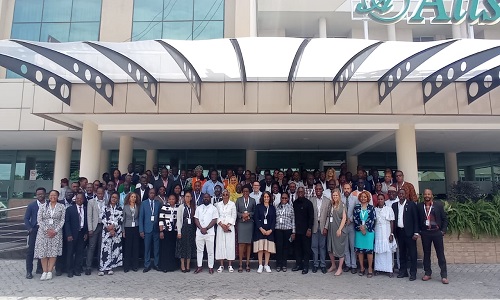
A three-day collaborative meeting on accelerating the rollout of Pre-exposure prophylaxis (PrEP) among the most vulnerable groups for HIV infection is underway in Accra.
The workshop is aimed finding ways of scaling up the use of pre-exposure treatment as a way of reducing the rate of infection of the Human Immune Virus (HIV) in the West and Central African Region in particular, and the entire continent of Africa as a whole.
Addressing the opening ceremony of the Collaborative Regional Convening on HIV PrEP yesterday, the Director General of the Ghana AIDS Commission, Dr Kyeremeh Atuahene, said that “the use of PrEP is one of the most proven methods of preventing the transmission of HIV, that involves the use of anti- retroviral medications by individuals who are HIV-negative, but at increased risk of acquiring the virus.”
These drugs, explained, when taken consistently, PrEP has been demonstrated to reduce the risk of HIV transmission by 95%.
He therefore indicated that for countries to record rapid decline in new HIV infections, they would have to accelerate progress towards achieving continental prevention targets by vigorously pursuing strategic planning and implementation of PrEP as a top priority prevention strategy.
Dr Atuahene noted that even as international funding has shrunk over the years, domestic funding for HIV and AIDS must increase to ensure adequate investments in high-impact prevention, treatment and care services, social justice and programmatic enablers.
He said, “it is high time for African governments to come to the realization that external donors’ transition and sustainability plans underscore the need for country transition readiness. Failure of countries to prepare sustainability and transition plans/roadmaps and increase domestic funding to address any funding gaps will spell doom for the HIV and AIDS programmes.”
He went further to say that the global burden of the HIV epidemic exceeds the resources available to address it, making it necessary to optimize the use of existing resources as the way forward for all African countries.
He also told this paper in an interview that Ghana adopted PrEP treatment two years ago, and that this would continue for as along as there are resources to sustain the programme.
Dr Francis Kasolo Chisaka, the World Health Organisation’s Country Representative, in a statement delivered on his behalf, cautioned that even though PrEP is a ground-breaking intervention in the fight against HIV, there are still obstacles to overcome.
These include the stigma surrounding the use of anti-retroviral medications, as well as a lack of resources for routine screening and medication monitoring, and limited availabilty of trained healthcare professionals for the distribution and administration of PrEP.
It is therefore imperative for African nations to address the PrEP implementation constraints while also sharing best practices, lessons learned and cutting-edge methods for demand creation.
He expressed his optimism that the meeting will produce insightful discussions and paradigm- shifting insights that will enhance the rollout of PrEP and help all of Africa’s nations progress towards attaining the 95-95-95 targets.
Hector Sucilla Perez, the Country Director for the United Nations Programme on HIV/AIDS (UNAIDS) reminded the participants that the Global AIDS Strategy 2021-2026 calls for the urgent strengthening and rapid scale-up of HIV combination prevention services that will have the greatest impact to end AIDS.
He thus described the HIV PrEP as “a game changer and cornerstone of our approach, considering its significant contribution to empowering individuals to protect themselves from infection, especially those most at risk.”
He stated that “by scaling up PrEP we are taken a giant leap towards achieving the target of ensuring that 95% of people use combination prevention.”
He was optimistic that the discussions to be held during the meeting, as well as the knowledge and experiences to be shared, will help in advancing efforts and making PrEP as well as combination prevention more accessible to those who need it.
Programme Director at the South to South HIV Prevention Learning Network, Kerry Mangold, said that “there is much that countries in this room can learn from one another’s experiences, and there is a huge potential offered by this great congregation of people who are gathered here from around the continent.
She described PrEP as “the newest pillar that the 15 countries in the SSLN have opted into, and for many countries, still a programme where a lot of planning, learning and adaptation is taking place.”
This space offers us the opportunity to talk. And reflect and solve. It offers us the space to ask ourselves what will we do differently to make sure that we meet PrEP targets. It gives us room to consider how are we going to respond to social determinants of risk, and contributing factors to PrEP uptake and adherence,” she said.



