Engineer seeks Supreme Court order to collect signatures for Constitutional amendment
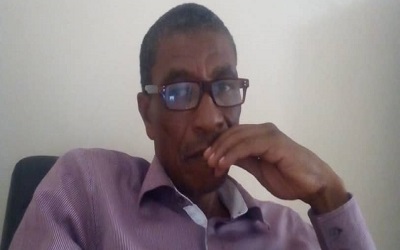
An Engineer, Mr Henry Mensah, is seeking a declaration the Supreme Court to allow him to collate signatures across the country to back the demand for a referendum to comprehensively amend the 1992 constitution.
He is bringing the action under Article 2 (1) and 130 (1) of the 1992 constitution of Ghana.
Mr Mensah noted that there have been fervent calls by Ghanaians, public servants, civil society organisations, research institutions and many others for a comprehensive amendment of the 1992 Constitution in order to achieve advancement in good governance and socio – economic development goals.
He also noted that the African Peer Review Mechanism (APRM), in its comprehensive review of Ghana, identified several shortfalls in the country’s democratic development and governance procedures, including the excessive powers of the President, his immunity from prosecution for corrupt practices, the large size of the Cabinet, Separation of Powers between the Executive and the Legislature, the lack of independence of the Judiciary, among others.
The John Agyekum Kufuor and Prof John Evans Atta Mills Administrations pledged but failed to amend the Constitution, although the latter started a Constitution Review process.
From the foregoing, the plaintiff is convinced that there is no political will, to have the constitution amended.
He holds the view that the amendment of the Constitution is long overdue, to entrench a national economic plan, and policies on education, health, accountability, continuation of Government of Ghana (GoG) developmental projects.
Mr Mensah is of the belief that the granting of his request will be a great constitutional service to the ‘silent majority’ of Ghanaians.
He is also of the view that since the return to constitutional rule on January 7, 1993, under the Fourth Republic, Ghana’s economy has witness gross mismanagement, under a bureaucratic system of governance and abuse of state resources.
For instance, he argues that Ghana has witnessed abandoned developmental projects commenced by previous administrations by successive government even though Article 35 clause 7 1992 constitution binds them to complete such projects.
These administrations have taken advantage of the non-mandatory nature of the law to saddle the nation with a host of uncompleted projects.