Oil and gas: Ghana and Gayana discuss leveraging local content
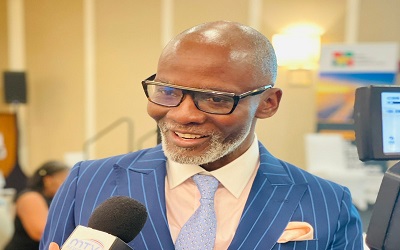
Chairman of Ghana Chamber of Commerce Guyana, Gabby Asare Otchere-Darko, says local content in oil and gas sector is meaningless without the capacity of local players to deliver.
He said without the capacity, the policy becomes but a frustrating fetter on the main business of pumping oil from the ground.
According to him, building capacity in local content in upstream oil and gas operations is, perhaps, the most important priority item for any oil-rich country that is serious about capturing and retaining locally value from its hydrocarbon resources as much as it possibly can.
He made these observations at the opening of a 2-day Ghana-Guyana Local Content and Capacity Building Conference taking place in Gayana.
The conference which opened yesterday and will close today is focused on insights, knowledge sharing, strategy exchanges, networking and partnership agreements.
Conversations revolved around education and building up the technical skill set for the young people of Guyana to prepare them for the boom that is before them.
Both days highlighted case studies on success stories on capacity Building and localising job roles.
Sessions shared case study on Ghana’s Accelerated Oil & Gas Capacity Building Programme (AOGC), implemented by the Petroleum Commission.
Some amazing success stories of Guyanese companies and entrepreneurs were also shared.
Presentations on how to craft a joint venture agreement in a way that optimises value for the local partner were made.
The conference provided the opportunity for panel chats on technology transfer, knowledge sharing, opportunities to network and form partnerships, behind closed-door meetings, building financial capacity to build local participation as well how to develop local content strategies.
Mr Otchere-Darko, stated that the lack of capacity should never be allowed to serve as a legitimate excuse against guaranteeing and deepening local participation.
He pointed out that if the current global focus on energy transition makes getting the oil out a matter of utmost urgency, then empowering locals to also transition into active participants in the upstream business is also a matter of utmost urgency.
“For some of us, local content is a human right. It is a moral right. It is a social right.
“It is an economic right. It is a development right. It is a prosperity right. And, perhaps, most importantly, it is right and proper for all and beneficial to all stakeholders.
“In other words, local content is good for the government. It is good for citizens.
“And, it is actually good for the international oil companies themselves, as well,” he said.
While calling for a deliberate affirmative policy action by the state, Mr Otchere-Darko said it also requires balancing the needs of policymakers, regulators, the local private sector, local communities, International Oil Companies (IOCs) and the overall interest of the national economy.
He recalled that Ghana played some modest role in the crafting of Gayana’s Local Content Act.
Chairman of Ghana Chamber of Commerce Guyana noted that the intention of a local content law is to allow the country that owns the resource and her people to capture and retain as much value as they are willing to make practically possible within the local economy.
This he said is to be through local production, the supply of skills and goods, the offer of services and the conduct of activities along the value chain of the oil and gas resource.
Justifying the importance of Ghana-Guyana Local Content Conference, Mr Otchere-Darko said “We are here to share with you what we did right. Where we went wrong. And, to encourage you to do better”.
Considering the infancy stages of Guyana’s hydrocarbon production, he said a local content conference of this nature where the main participants include a nation which has over a decade of experience in implementing and enforcing a local content legislation provides vital direction.
He pointed out that over the last decade alone, Ghana has managed to learn the hard way to build local companies that are now bidding and winning international tenders outside of Ghana.
He is optimistic that, with a more deliberate strategy, Guyana has an even greater potential to build much bigger global champions of Guyanese citizens than Ghana.
He emphasized that Ghana’s commitment to Guyana is therefore, real, genuine and sincere saying, “We are not here to exploit. No. We come to share with you what we have learned; we come to listen to you, what you can teach us, and hopefully we can explore together the value we can each bring to our common table of interest”.
He recalled that Ghana and Guyana in December 2021 signed a cooperation agreement, witnessed by Dr Bharrat Jagdeo, Vice-President of Gayana and Ghana’s Vice-President, Dr Mahamudu Bawumia.
In pursuit of agreement, he noted that many things have happened, including the formation of the Ghana Chamber of Commerce Guyana, the only African chamber of commerce operating in the whole of the Caribbean.