MoU on $5.4bn bilateral debt to be signed in May – Dr Adam
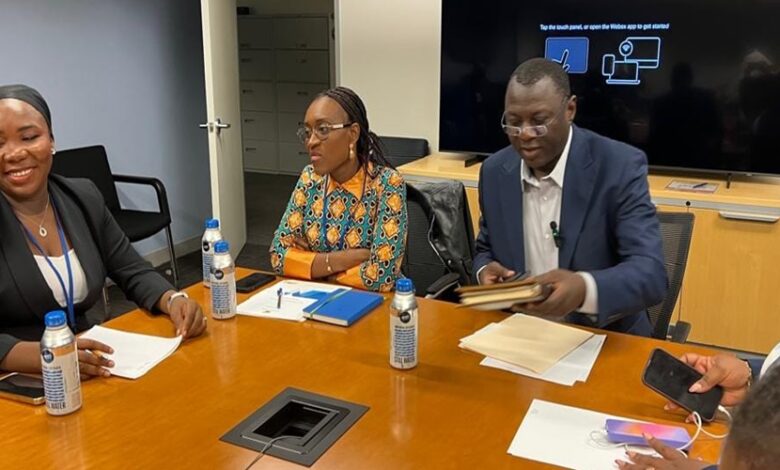
Finance Minister Dr. Mohammed Amin Adam anticipates that Ghana would sign a Memorandum of Understanding (MoU) with its official bilateral creditors in May.
This crucial step is part of the process to restructure the country’s $13 billion external debt to meet International Monetary Fund’s (IMF) debt sustainability parameters.
He revealed that the bilateral creditors through the Official Creditor Committee have shared the draft document on Ghana’s debt restructuring with members for consideration.
The Finance Minister added that this could lead to an agreement on the Memorandum of Understanding soon when the draft is shared and accepted by the creditors.
The MoU follows an agreement Ghana reached in principle with bilateral creditors in January to rework $5.4 billion of obligations under the Group of 20 Common Framework for Debt Treatment.
According to the Finance Minister, Ghana has fulfilled all necessary requirements for the second review programme to proceed to the IMF Board, with the pending draft MoU being the final outstanding issue.
Dr. Adam expressed confidence that the timely signing of the MoU would enhance Ghana’s chances of accessing a third tranche of $360 million when the IMF Executive Board convenes in June.
Notably, the IMF staff mission team clarified that while the signing of the MoU is important, it would not be a prerequisite for the disbursement of funds to Ghana.
Dr. Adam highlighted the collaborative efforts between Ghana and the Official Creditors Committee, noting that the committee had already shared a draft of the MoU with its members regarding the country’s debt restructuring.
He emphasized that once Ghana receives the draft and is satisfied with its contents, it would signify agreement on the MoU.
Meanwhile, an interim deal reached with Eurobond holders did not meet IMF debt sustainability targets and has to be tweaked.
The government will therefore regroup to continue Eurobond negotiations which started in mid-March until it reaches a deal consistent with IMF debt sustainability targets.
International investors hold about 40% of Ghana’s $13 billion of defaulted Eurobonds.
International bondholders had agreed to a 33% effective nominal haircut, according to one of two options provided for the restructuring.
They had also backed down on the inclusion of value-recovery instruments, which would have tied interest payments to the country’s future economic growth.
The IMF, in a statement regarding Ghana’s ongoing negotiations with its external creditors, observed that the “working scenario” presented by the government of Ghana needs further consideration to align it fully with the debt sustainability agreement between the IMF and the government of Ghana.
Ghana is set to receive another $360 million from the International Monetary Fund (IMF) as the third tranche under the bailout programme.
It is expected that when the IMF Board meets in June this year, it will approve of disbursement of $360m third tranche.
When the $360m third tranche is disbursed, it will bring the total IMF financial support disbursed under the ECF arrangement since May 2023 to about $1.560 billion.
Already, the country had received the sum of $1.2 billion from the first two tranches since the implementation of the $3bn- three-year IMF loan-support program.
The Finance Minister’s optimism stems from Ghana’s commitment to fulfilling its obligations under the Extended Credit Facility (ECF) programme with the IMF.
This programme, supported by the Post-COVID-19 Programme for Economic Growth (PC-PEG), aims to restore macroeconomic stability, debt sustainability, and foster inclusive growth.
During the spring meetings, Ghana also announced the procurement of one million modern meters through the World Bank’s Programme-for-Results initiative.
This initiative seeks to enhance revenue collection, particularly amid ongoing power outages attributed to liquidity challenges in the energy sector.
Overall, Ghana’s active participation in the spring meetings served as a platform to engage with creditors and development partners, furthering the country’s economic stability and resilience efforts.