Prof Olukoshi chides debt-ridden African countries
By Isaac AIDOO, Accra
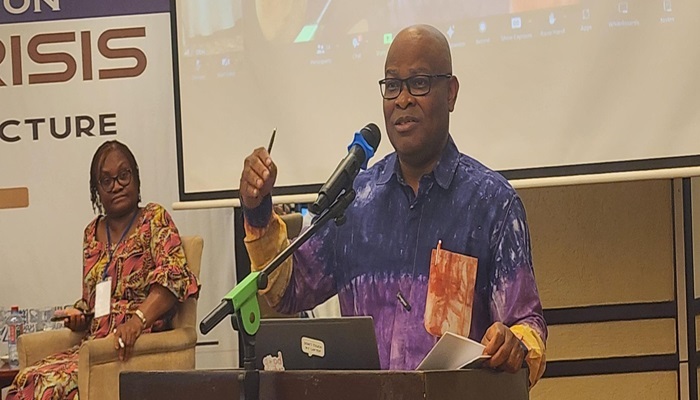
Distinguished Professor Adebayo Olukoshi, from the Wits School of Governance at the University of the Witswatersrand, South Africa, has delivered a scathing critique of debt-distressed governments in Africa.
Speaking at the conference, themed ‘The African Debt Crisis – Past, Present, and what the future holds,’ Prof Olukoshi highlighted concerns over how these governments manage their loans, accusing them of saddling their countries with unsustainable debt burdens.
According to Prof Olukoshi, there appears to be a troubling pattern involving a cartel of both international and local individuals, collaborating to secure loans from the international capital market.
He alleges that these loans are often manipulated in a way that benefits the cartel members, rather than the countries they are intended for.
Moreover, the distinguished professor pointed out the complicity of some finance ministers and central bank governors in these arrangements, further complicating the issue.
“They are backed by global consultancies that include lawyers, tax specialists, safe haven specialists, accountants, which also incorporates many domestic actors in our countries; domestic actors which I will include some finance ministers and central bank governors who sometimes also own their own consultancies and act as brokers in the process of procuring loans,” Prof Olukoshi explained.
The impact of such collusions are costly to the countries and are borne by the largely by the citizens.
“The impact of this arrangement is that it makes borrowing far more expensive then it normally should be because you have to build in all kinds of considerations. If you borrow a billion, it is not impossible that at the end of the day, maybe only 800million will come,” he pointed out.
Executive Director of the IDEAs, Mr Charles Abugre observed that “African governments may do their part but it will not be sufficient for as long as the international architecture in which they operate is not fit for purpose or is stuck against developing countries.”
He maintained that a system that works for the global economy should enable poorer countries access resources for development affordably.
“This is what the development banks were set up for. When they are in temporary balance or liquidity problems, they should have adequate resources to back their efforts to undertake adjustment without prolonged or deep austerity. That’s what the IMF and the SDRs were meant for,” Mr Abugre submitted.
He contended that the Bretton Woods institutions appeared to be playing roles other than what they were meant to be doing thereby making temporary difficulties of poorer countries worse.
“Whilst we look into the future, there is the immediate problem of addressing the current crisis. The solutions are well known. Debt restructuring must lead to debt reduction. There are instruments to achieve this,” Mr Abugre stated, confident the conference will provide proposals for consideration by policy makers.
The three-day conference is under the aegis of the International Development Economics Associates (IDEAs).