2024 elections target of Misinformation – MFWA
By Selorm GBORBIDZI, Accra
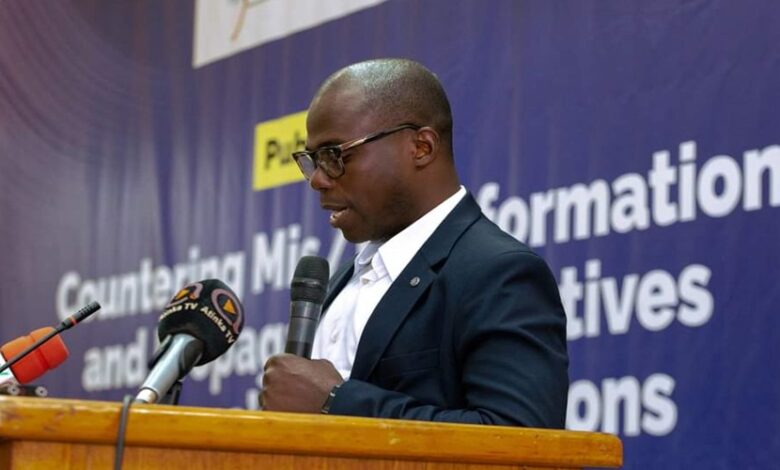
The Executive Director of the Media Foundation for West Africa (MFWA), Sulemana Braimah, has warned that the upcoming 2024 general elections could be the target of misinformation campaigns.
Speaking at a forum organised by the Foundation on finding ways to combat misinformation and disinformation, he said that the country had been the victim of misinformation attacks last year 2023, and this can only be expected to worsen as the elections draw near.
Sulemana stated that a publication by the Africa Centre for Strategic Studies had revealed that in 2023, 189 disinformation campaigns were waged on the continent, a figure that is almost four times that recorded in 2022.
Of these, 72 of which were recorded in the West African sub-region, as against as15 targeted at North Africa, 33 in East Africa, 21 in Southern Africa and 21 in Central Africa.
With specific reference to Ghana, he indicated that seven disinformation attacks were documented, and warned that “the situation will certainly get worse in the lead up to the 2024 election. This is because, across the continent and indeed, around the world, elections are seen to provide fertile grounds for disinformation campaigns.”
Sulemana Braimah pointed out that many of these campaigns orchestrated by foreign actors with the aim of disrupting elections, with over 60% of them being state sponsored campaigns from China and Russia, and a smattering of domestic sources.
Other sources of these attacks also include technology firms that specialise in election disruptions, he indicated.
He cautioned that Ghana is a prime candidate for these attacks, exhibiting many of the traits that target nations usually have, like a growing number of social media users, a polarized political environment, a large educated, yet unemployed youth population, a large diaspora that engages in political conversations through social media.
The Chairman of the National Peace Council, Reverend Ernest Adu-Gyamfi, stated that countering misinformation and disinformation has become a major challenge for many nations in the fast paced digital age.
He stressed that the need to tackle the spread of false information and manipulative narratives has never been more pressing.
The Peace Council Chairman said, “misinformation has become a weapon in the world of politics, capable of influencing public opinion and potentially swaying election outcomes. The 2020 elections were no exception as false narratives and misleading content spread like wildfire.”
This phenomenon he cautioned, has the potential of eroding public trust in the democratic system, and making it difficult for citizens to make informed decisions, undermining the foundations of democracy.
Reverend Adu-Gyamfi said, “when false narratives dominate public discourse, it become s challenging to separate facts from fiction.”
He also cautioned against the increasing spread of hate speech, which he warned, “not only contributes to a toxic political climate, but also undermines the principles of democracy and equally.”
Minister of Information Designate, Fatimatu Abubakar, on her part, outlined some measures taken by government to counter the threat of misinformation.
These include the establishment of a website, www.ghanatoday.gov.gh, managed by the Information Services Department (ISD), to serve as a channel for combating misinformation, offering unfiltered information from Government sources.
She indicated that as the nation approaches the election cycle, “this website will serve as a reliable resource for voters seeking reliable information from government institutions.”
She explained that “the Ministry of Information recognises the importance of equipping citizens with skills to navigate the complex digital information landscape. To this end, the Ministry has implemented media literacy programmes to educate the public on critical thinking, source evaluation and verification. These initiatives aim to empower individuals to discern reliable information from falsehoods.”
The Ministry of Information, she said, has taken the lead in bringing together stakeholders in Ghana’s media landscape to draft a National Action Plan —a blueprint for combating misinformation and disinformation at its roots.
Abubakar said, “the National Action Plan outlines strategic objectives, including enhancing media literacy among citizens, strengthening fact-checking mechanisms, introducing a structured reporting system for false information, promoting ethical journalism, reviewing existing legislation, and collaborating with technology platforms.”