Economist Warns Gov’t Against Election-Year Spending Spree
By Khadijah Issifu Anaba
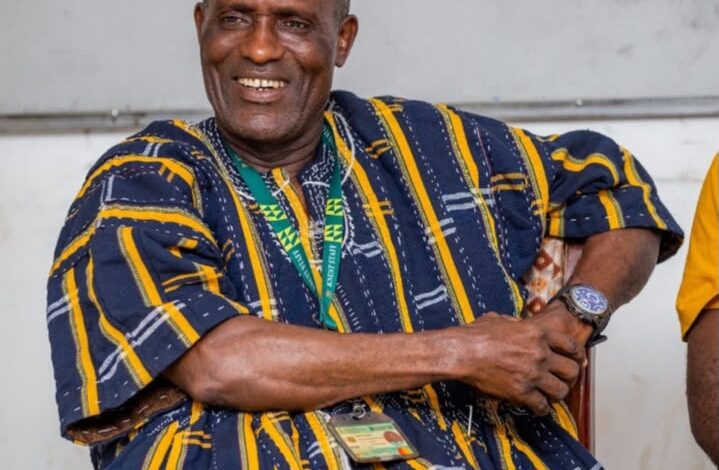
Associate Professor of Economics at the Department of Economics, Kwame Nkrumah University of Science and Technology (KNUST), Professor Anthony Kofi Osei-Fosu, has cautioned government against abandoning its spending discipline as the country approaches the 2028 general elections, warning that excessive expenditure could undermine the gains made in stabilising the economy.
He says government must resist political and public pressure to increase spending indiscriminately during the election period, stressing that a return to extravagant expenditure could reverse progress in macroeconomic management and frustrate Ghana’s long-term economic transformation agenda.
Speaking on ZED FM’s The Focus, Professor Osei-Fosu said the government’s ability to maintain fiscal discipline over the next two years would be critical to sustaining economic stability.
He acknowledged that the government’s decision to reduce expenditure on what it considers unnecessary activities had affected economic activities, especially for traders who depend on government spending and the circulation of money within the economy.
According to him, complaints about reduced business activities and declining sales were understandable, given the impact that reduced public expenditure could have on businesses and livelihoods.
“This government decided to curtail spending on unnecessary issues and people were complaining the government is not spending, and that traders are not making sales. It’s true,” he admitted.
He however argued that economic stabilisation often comes with difficult decisions and sacrifices, insisting that government must not abandon its expenditure controls simply because sections of the population are dissatisfied with the immediate effects of its policies.
“But for every stabilization [of the economy], there is a need for sacrifice,” he stated.
Professor Osei-Fosu said the current spending discipline demonstrated by government was necessary to support its broader macroeconomic objectives, but cautioned that maintaining the same approach could become more challenging as the country moves closer to the next general elections.
He expressed concern that the pressure to satisfy voters, undertake development projects and respond to political demands could influence government spending decisions in the run-up to the elections.
He therefore urged government to remain committed to responsible expenditure management and avoid measures that could compromise the economic gains being pursued.
“For now, government has been disciplined [in spending], and let’s hope that, coming next two years when there will be elections, government will not break down in its discipline and begin to spend extravagantly,” he cautioned.
The economist stressed that fiscal discipline should not be treated as a temporary measure adopted only when government is seeking to restore economic stability.
Rather, he said, it must remain a consistent feature of public financial management, irrespective of the political calendar, if Ghana is to consolidate its economic recovery and pursue sustainable development.
He warned that any breakdown in spending discipline could render the government’s achievements in macroeconomic stabilisation ineffective, particularly if excessive expenditure creates new economic pressures.
“When fiscal discipline breaks down, then all the macroeconomic stability the government is singing praises to will be meaningless, and gradual transformation will never see reality of the day,” he emphasised.
His comments underscore the importance of protecting economic policy decisions from short-term political considerations, especially as government balances the need to stimulate economic activity with the responsibility to manage public resources sustainably.
For Ghana, this means sustaining prudent expenditure management, protecting economic stability and ensuring that the pursuit of political objectives does not undermine the foundations required for long-term transformation.
As the country moves towards the 2028 elections, the economist’s warning places renewed attention on the need for government to maintain its current spending discipline and ensure that the gains from economic stabilisation are not sacrificed for short-term political considerations.