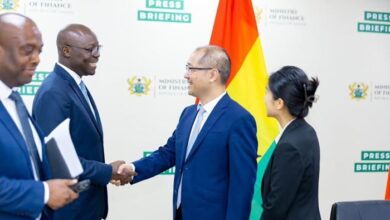
IMF urges GOLDBOD to rethink gold programme financing
The International Monetary Fund (IMF) has called on the Ghana Gold Board (GOLDBOD) and the government to carefully review the financing structure of the Domestic Gold Purchase Programme (DGPP) to reduce its costs while ensuring that the country derives maximum value from the initiative.
IMF Resident Representative to Ghana, Dr Adrian Alter, said the financing of gold purchases should no longer be carried out through the Bank of Ghana (BoG), stressing that the central bank must remain focused on its core mandate of maintaining price stability.
Dr Alter made the remarks while discussing the financial losses associated with the programme on Channel One TV on Monday, August 24.
He said the transfer of the programme’s operations from the BoG to GOLDBOD was an important step, but argued that the government and the Gold Board now needed to determine a financing model that would be both sustainable and cost-effective.
“When you talk about fiscal dominance, basically lending to the government, you need an independent central bank; the BoG should not lend to government entities; they should get financing from the markets, from the commercial banks.
“Basically, the operations have moved from BoG to GOLDBOD, both buying and selling gold and therefore the government, together with GOLDBOD, we need to think thoroughly about the financing model, about how to minimise the cost and at the same time maximise the benefits of this programme. “
The IMF representative said central bank independence remained critical to sound economic management, particularly because allowing the BoG to finance government-related activities could weaken its balance sheet and ultimately affect its ability to pursue monetary policy effectively.
He said the central bank could, where necessary, raise funds through market-based sources and commercial banks, rather than directly financing government agencies.
Dr Alter also stressed that the BoG’s primary responsibility should remain the preservation of price stability and that it should avoid taking on activities that are essentially fiscal in nature.
According to him, the experience with the DGPP provides important lessons for Ghana, particularly in the areas of governance, transparency, financial reporting and the overall cost of implementing the programme.
“The lessons from the domestic gold purchase programme: we also need to be very careful about governance, transparency, reporting and care about the cost incurred by the programme.
“The IMF analysis basically shows that the DGPP, throughout its history, has led to significant losses to the BoG, which ended up with equity of negative 7% at the end of 2025; part of that was driven by DGPP,” he said.
The comments come amid renewed debate over the financial performance of Ghana’s domestic gold purchasing initiative and the implications of the programme for the BoG’s balance sheet.
Dr Alter maintained that the central bank’s involvement in the programme had created financial pressures that could complicate the conduct of monetary policy.
“The main point here is that the central bank, it cannot be involved in these activities because it is fiscal activity; its balance sheet is deteriorating, which basically can interfere with its primary mandate, which is price stability.
“How it can interfere is basically that the central bank has operational costs, it has costs for sterilisation, and if it decides that this is too expensive, then it affects its balance sheet. We want them to maintain price stability as their primary objective.”
He nevertheless acknowledged the broader importance of gold to Ghana’s economy, noting that increased gold exports had contributed to stronger export proceeds, while the stabilisation of the cedi had supported the rebuilding of the country’s foreign exchange reserves.
The IMF’s position therefore appears to favour preserving the strategic objectives of the domestic gold programme while changing the way it is financed and managed.
With GOLDBOD now taking a central role in the purchase and sale of domestic gold, the focus is shifting towards how the institution can finance its operations without imposing excessive costs on the public sector or undermining the financial position of the central bank.