

Road Carnage: Who Will Take Responsibility Before More Ghanaians Die?
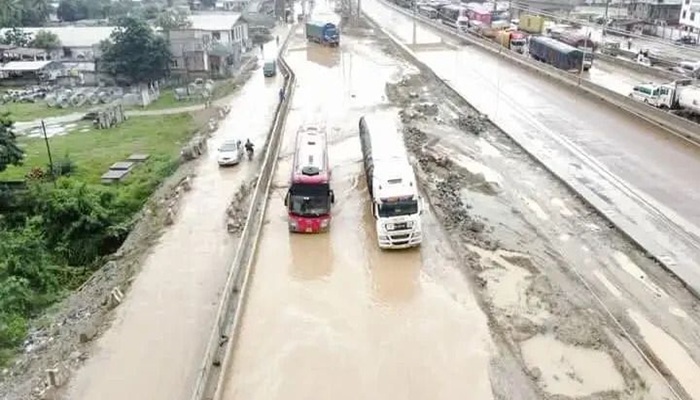
The horrific multiple-vehicle crash on the Ofankor-Pokuase stretch of the Accra-Kumasi Highway on Thursday is yet another painful reminder that Ghana’s road safety crisis can no longer be treated as a seasonal problem or explained away as simple driver error.
The crash, which occurred around 4 a.m., involved seven vehicles and left at least 11 people dead and 13 others injured, according to the Ghana National Fire Service. Investigations are underway to establish exactly what caused the tragedy.
But while investigators establish the immediate cause, the bigger question must be asked: who is responsible for Ghana’s continuing road carnage? The uncomfortable answer is that responsibility is shared.
Drivers have a major role to play. Speeding, reckless overtaking, fatigue, drunk driving, distracted driving and disregard for traffic regulations can turn a moment of impatience into a death sentence for innocent passengers and other road users. Commercial drivers, in particular, must understand that carrying human lives is not merely a business transaction. It is a public responsibility.
Passengers and pedestrians also have responsibilities. Pedestrians must stop crossing highways carelessly, walking along dangerous sections or ignoring designated crossing points. Passengers should not remain silent when drivers speed, use phones or drive dangerously. A passenger who speaks up may save lives. But we must not place the entire burden on road users.
Government also has a responsibility to build and maintain roads that are safe, properly marked and appropriately designed. It must provide adequate lighting, pedestrian facilities, signage, barriers and other safety infrastructure at dangerous locations. Government must also ensure that road construction and maintenance do not leave motorists navigating poorly marked or hazardous sections.
The National Road Safety Authority has itself identified inadequate facilities for non-motorised transport, poor road signs and markings, weak speed-limit enforcement and slow emergency response as challenges requiring attention.Then there is enforcement.
What exactly is the Motor Traffic and Transport Department (MTTD) doing between major accidents? The MTTD’s mandate includes accident investigation, public education, policy development and collaboration on effective traffic law enforcement.
Yet enforcement cannot be reduced to occasional checkpoints and visibility exercises after the death toll has already risen. We need sustained speed enforcement, vehicle checks, monitoring of commercial drivers and firm action against repeat offenders. Technology must also become a central part of enforcement. Government has already been exploring automated traffic enforcement systems, but implementation must move with urgency.
The statistics should shame us into action. Pedestrian knockdowns alone rose from 590 deaths in 2024 to 704 in 2025, with 181 pedestrian deaths recorded in just the first four months of 2026.
This is not simply an accident problem. It is a governance, enforcement, infrastructure and behavioural problem. We cannot continue mourning victims today, blaming drivers tomorrow, launching investigations the next day and returning to business as usual afterwards.
Every crash should trigger accountability: Was the road safe? Was the vehicle roadworthy? Was the driver fit to drive? Were traffic laws enforced? Were dangerous behaviours known and ignored? Was emergency response adequate?
Ghana does not need more condolences. We need consequences, enforcement and prevention. The dead cannot answer for what happened to them. Those responsible for keeping our roads safe must.



