

Uganda Urged to Rethink Border Closure
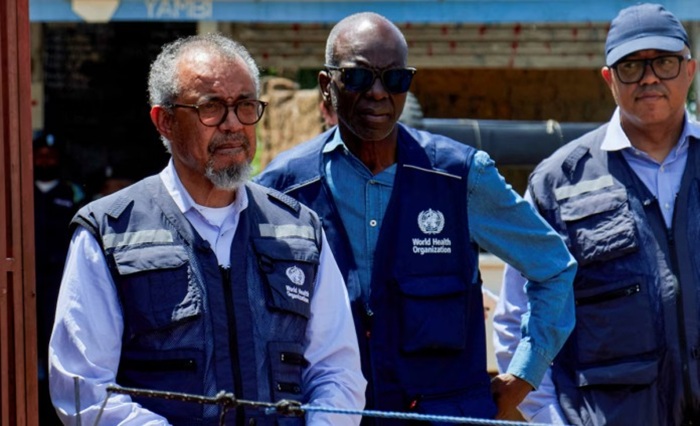
Uganda is facing calls to reconsider its decision to close its border with the Democratic Republic of Congo as the Ebola outbreak spreads. The appeal came from World Health Organisation Director General Tedros Adhanom Ghebreyesus during a visit to an isolation unit in Kampala.
Tedros praised Uganda’s response, describing it as prompt and capable. But he warned that blanket travel restrictions are not effective in stopping Ebola. He urged authorities to rethink the closure announced late last month, stressing that stronger surveillance, rapid testing, and community engagement are more effective ways to control the disease.
The outbreak involves the rare Bundibugyo strain of Ebola, which the WHO has declared a public health emergency of international concern. The epicentre is in Congo’s Ituri province, where Africa’s top public health agency reports 544 cases, including 515 confirmed. Uganda has recorded 19 confirmed cases, mostly involving people who crossed from Congo.
Uganda’s decision to shut its border was aimed at limiting the spread of the virus. However, health experts caution that such restrictions can disrupt trade and movement without preventing transmission. They argue that building strong health systems and community trust is more effective than blanket closures.
International partners are supporting Uganda’s efforts, providing resources to strengthen monitoring and treatment. The outbreak has raised regional concerns, with calls for coordinated action to prevent further spread. Officials are now focused on balancing public health safety with regional cooperation, weighing the risks of keeping borders closed against the need for effective disease control.
For Uganda, the challenge is protecting citizens while maintaining ties with neighbours. The WHO insists that the true solution lies in quick detection, strong surveillance, and community engagement rather than blanket restrictions.
Public health experts also stress that regional cooperation will be vital in containing the outbreak, urging neighbouring countries to share information, coordinate border health checks, and support joint response measures to prevent Ebola from spreading further across East Africa.
Observers say the coming weeks will be crucial, as both Uganda and Congo work to contain the outbreak. Success will depend on whether governments can combine international support with local action to stop Ebola before it spreads more widely across the region.



