

When Buildings Collapse: The Hidden Economic Cost of a Preventable National Crisis
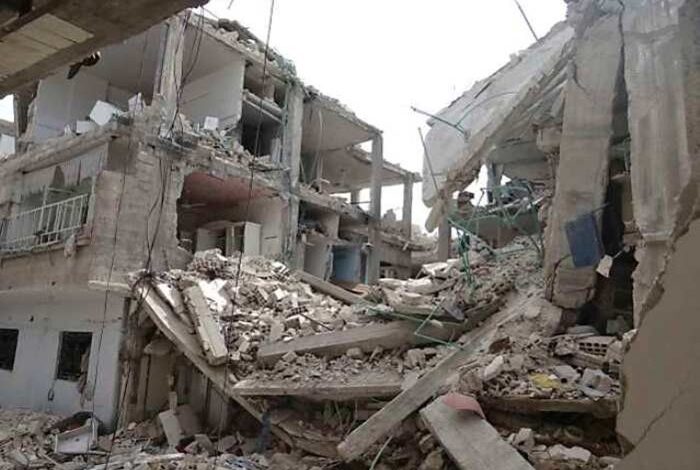
In Ghana’s rapidly growing urban centres, building collapses and structural failures are no longer isolated tragedies, they are becoming a recurring economic and public safety concern. From construction sites to completed structures, reports of collapsed buildings and unsafe developments raise a painful question: are these just engineering failures, or are they symptoms of a deeper economic and governance problem?
While the immediate focus is often on loss of life and emergency response, the deeper damage is economic and it is far more far-reaching than most public discussions acknowledge.
When a building collapses in Accra or any other urban centre, the visible destruction is only the beginning. Beneath the surface lies a chain of economic losses that ripple through households, businesses, and the national economy.
These include: loss of private investment (homes, shops, offices under construction), destruction of bank-financed projects and mortgage exposure, job losses for construction workers and artisans, delays in infrastructure delivery, increased insurance risk and premiums and reduced investor confidence in real estate markets.
Each collapse represents not just physical damage, but capital destruction, money that has been invested but never recovered. The construction sector is a major contributor to employment and GDP, linking engineers, labourers, suppliers, cement producers, architects, and financial institutions.
When building failures occur frequently, the entire value chain is affected: developers face higher borrowing costs, contractors lose credibility and future contracts, banks become more cautious in lending to construction projects and materials suppliers experience project delays and payment defaults.
Over time, repeated collapses can slow down urban development and discourage long-term investment in housing and commercial infrastructure.
Building collapse is rarely caused by a single factor. It is usually the result of multiple failures along the construction and regulatory chain:
Approval systems exist, but enforcement is often inconsistent. Some structures proceed without full compliance checks or proper monitoring.
Developers sometimes reduce costs by using substandard materials, compromising structural integrity.
Construction projects are occasionally executed without certified engineers or proper oversight.
In some cases, approvals and inspections may be influenced, weakening safety compliance.
High demand for housing pushes developers to rush projects, sometimes at the expense of safety standards.
One of the hidden drivers of building collapse is the pursuit of lower construction costs in a high-cost economy. While affordability is important, cutting corners on structural integrity creates long-term economic losses that far exceed short-term savings.
A collapsed building represents: wasted capital, lost rental income, legal disputes, compensation liabilities and rebuilding costs that are often higher than initial investment In economic terms, it is negative return on investment at scale.
Banks and mortgage providers are increasingly exposed to construction-related risks. When financed buildings collapse, financial institutions face: loan defaults, asset devaluation, recovery delays and reputational risk.
This can make banks more cautious, tightening credit conditions for genuine developers and slowing housing supply growth.
Frequent structural failures also affect the broader housing market. They contribute to reduced housing supply confidence, higher rental prices due to construction delays, slower urban expansion planning and increased demand for verified and premium developers. In the long term, this can worsen housing affordability challenges.
Assigning blame in building collapses is complex, but responsibility is shared across multiple actors:
- Government and regulators for weak enforcement and monitoring
- Local authorities for approval gaps and oversight failures
- Developers and contractors for cost-cutting and negligence
- Engineers and professionals for lapses in supervision
- Clients and property owners for prioritising low cost over safety
However, the most critical issue is systemic: a regulatory environment that is often reactive rather than preventive.
Beyond individual cases, building collapse is a warning signal about the quality of economic growth.
A growing economy should not repeatedly lose capital through preventable structural failures. If anything, such incidents suggest that expansion is not always matched by regulation, safety enforcement, and institutional capacity.
Building collapse is not just a construction problem, it is an economic leakage problem. Ghana loses money twice: first when capital is invested in unsafe structures and second when those structures fail and must be rebuilt.
Until enforcement becomes consistent and construction standards are taken seriously across the entire value chain, the economy will continue to suffer silent losses behind every collapsed wall.
Ultimately, the question is not just who is to blame but how much longer the economy can afford these preventable losses before reform becomes unavoidable.



