

Without Kudus, Can the Black Stars Still Shine at the 2026 World Cup?
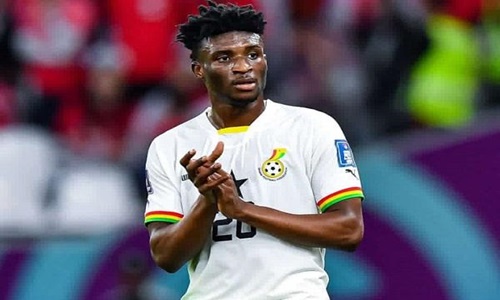
The possibility of the Ghana national football team heading into the 2026 FIFA World Cup without one of its most influential modern stars, Mohammed Kudus, has triggered serious debate among fans and analysts alike. For a team still searching for consistency on the global stage, the question is not just about one player; it is about identity, depth, and readiness.
So what happens if Kudus is absent? In addition, more importantly: are the Black Stars truly ready for a World Cup without their creative engine?
Mohammed Kudus has become one of Ghana’s most important football exports in recent years. His ability to carry the ball, break defensive lines, and create moments out of nothing has made him central to Ghana’s attacking structure.
In modern football, teams are often built around difference-makers, players who can shift a game in seconds. Kudus fits that profile.
Without him, Ghana loses; creativity in tight spaces, transition speed from midfield to attack, goal-scoring threat from midfield and tactical unpredictability.
In short, he is not easily replaceable. If Kudus is unavailable for the 2026 World Cup, Ghana would likely be forced into a tactical rethink.
Possible consequences include; Ghana may struggle to connect midfield and attack smoothly, especially against top-tier defensive teams. The team may revert to a more direct, physical style rather than creative build-up play.
Strikers and wide players will need to contribute more goals and creativity, increasing individual pressure.
Without a player like Kudus, opponents may find Ghana easier to read and contain.
While Kudus is important, World Cup success is never built on a single player. Ghana’s strength has historically come from collective effort, discipline, athleticism, and team spirit.
If Kudus is absent, it opens the door for others to step up, emerging midfield talents, european-based attackers and local league prospects given a chance to prove themselves. This is where squad depth becomes critical.
Readiness for a World Cup is not only about star players. It is about systems. The key concerns for Ghana remain: Ghana has struggled in recent tournaments with inconsistency in performance and coaching transitions.
The team still oscillates between possession-based football and direct play, without a clearly defined long-term style. Against top nations, defensive lapses have often been costly. Reliance on a few stars has historically exposed Ghana when injuries or suspensions occur.
Beyond tactics, there is psychology. Losing a key figure like Kudus can affect dressing room confidence, fan expectations, and media pressure. However, it can also create a different dynamic: freedom from over-dependence. Sometimes, teams perform better when responsibility is shared rather than concentrated.
The bigger conversation is not just about Kudus, it is about planning. Top World Cup teams do not prepare around availability uncertainty. They build systems that can survive injuries, suspensions, and tactical shifts.
For Ghana, this moment should force reflection: is the team building a long-term playing philosophy? Are there enough creative midfield alternatives? Is youth development producing ready replacements? Can the system function without one superstar?
If Mohammed Kudus misses the 2026 World Cup, Ghana will undoubtedly feel the difference. His absence would remove one of the team’s most dynamic attacking weapons.
However, the deeper truth is this: no national team should be defined by one player, especially on the world stage.
For the Ghana national football team, the real test is not whether Kudus plays or not. It is whether the team has finally matured into a structure that can compete at the highest level regardless of individual availability.
Because at the World Cup, talent helps you qualify, but systems decide how far you go.



