Financial Sector Assets Hit GH¢647bn
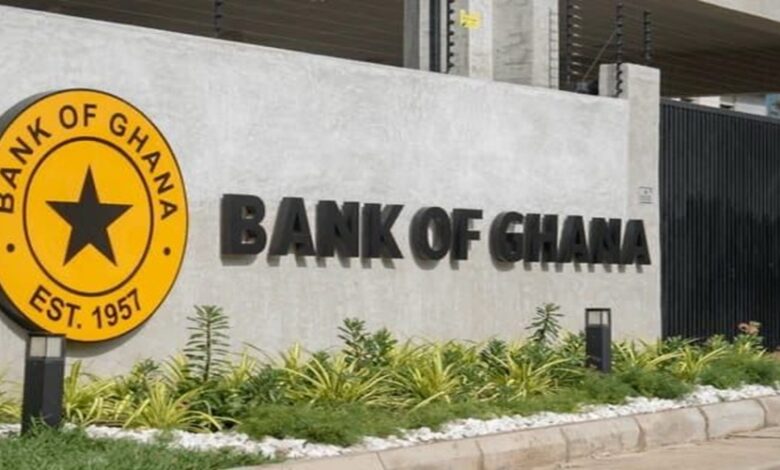
Ghana’s financial sector recorded a strong rebound in 2025, with total assets rising to GH¢647.25 billion, representing about 45.1 per cent of the country’s Gross Domestic Product (GDP), according to the latest Financial Stability Review.
The report highlights a significant recovery in the financial system, supported by improved macroeconomic conditions and a stronger domestic economy, where real GDP growth accelerated to 6.0 per cent, up from 5.8 per cent in the previous year.
Launching the report in Accra, the Second Deputy Governor of the Bank of Ghana, Matilda Asante-Asiedu, said the theme of this year’s review, “From Stress to Stability: Staying on Course”, reflects the resilience of the financial sector following years of macroeconomic shocks and debt restructuring pressures.
According to her, the sector has gradually transitioned from periods of significant stress to a more stable environment, supported by coordinated regulatory efforts and improved economic fundamentals.
“The theme reflects how the financial sector has navigated through the twin stresses the macroeconomic shocks and the debt restructuring risks over the past few years, to the current state of stability that we enjoy,” she stated.
She added that regulators remain committed to sustaining stability over the medium to long term through continued oversight and policy coordination.
Macroeconomic Performance Improves
The Financial Stability Review noted that Ghana’s economic recovery was largely driven by strong performance in the services and agriculture sectors.
Inflation also recorded a sharp decline, easing from 23.8 per cent in December 2024 to 5.4 per cent by December 2025, supported by tight monetary policy and relative stability in the local currency.
Sector-by-Sector Financial Recovery
The banking sector showed improved financial soundness, stronger profitability and sustained liquidity conditions throughout the year. However, the report indicated that Non-Performing Loans (NPLs) remain elevated, prompting further regulatory action to strengthen credit risk management.
Mrs Asante-Asiedu noted that the financial system as a whole had become more resilient, with stronger solvency and profitability across key financial subsectors.
The Ghana Stock Exchange also emerged as Africa’s second-best performing market in 2025, driven by gains in financial stocks and renewed investor confidence.
The pensions industry posted strong growth, supported by the expansion of private pension schemes, improved compliance enforcement and increased portfolio diversification into equities.
Similarly, the insurance sector recorded steady revenue growth backed by high solvency levels and new regulatory measures, including compulsory local insurance for commercial cargo.
Strengthening Financial Oversight
The report also outlined new regulatory initiatives aimed at enhancing financial system stability.
These include the rollout of a conglomerate supervision framework designed to improve oversight of financial groups operating across multiple sectors and reduce regulatory arbitrage.
“This is aimed at strengthening oversight of financial groups with cross-sectoral activities, thereby minimising regulatory arbitrage,” Mrs Asante-Asiedu explained.
The Bank of Ghana is also expanding its monitoring of emerging financial technologies and digital assets following the passage of the Virtual Asset Service Providers Act, 2025.
The Financial Stability Council has tasked its technical committee with developing risk metrics to monitor developments in the virtual assets space, ensuring innovation is balanced with financial stability considerations.
Risks on the Horizon
Despite the strong recovery, regulators cautioned that several risks could affect future stability. These include sovereign debt vulnerabilities, climate-related financial risks, cybersecurity threats, and the rapid rise of artificial intelligence and cryptocurrencies.
Authorities stressed that financial institutions are already adjusting their risk models to respond to these emerging challenges.
Mrs Asante-Asiedu reaffirmed the Bank of Ghana’s commitment to working with stakeholders under the Financial Stability Council framework to safeguard the gains achieved.
Regulators further emphasised that maintaining macroeconomic discipline and strengthening risk-based supervision will be critical to sustaining the sector’s recovery momentum in the coming years.